Mar
21
Date: March 21
Time: 8:30 am
Location:
Description:
An annual conference at UVU for Historic Preservation, hosted by the Architecture
Department at Utah Valley University. Registration Required To Attend Event.
Historic preservation today stands at a crossroads. The past century has witnessed a profound two-fold failure in architectural culture: we have lost both irreplaceable buildings and the knowledge and skills to care for them. In a world increasingly governed by short-term economic priorities and the illusion of unlimited growth, architecture now risks losing even its ethical grounding – its responsibility toward place, memory, and continuity. Preservation is no longer optional or nostalgic; far from being a backward-looking exercise, preservation is a critical corrective for re-establishing architecture’s humanist foundation.
As Paolo Portoghesi warned, the domination of economic priorities and the illusion of infinite growth have placed the humanist tradition of architecture in crisis, making its revival essential for the cultural survival of contemporary society1. Historic, classical, and traditional architecture is not obsolete but a coherent language, a body of knowledge, a system of proportion, material logic, climate intelligence, and civic necessity. Its loss is not creative liberation, but cultural amnesia. Its recovery is essential to an authentic modernity.
"To conserve does not mean to embalm," - Paolo Marconi
This position is powerfully reinforced by Paolo Marconi, who insisted that preservation is neither nostalgia nor immobilization. “To conserve does not mean to embalm,” he argued, but rather to understand architecture as a living construct, transformed by time and use. For Marconi, restoration is fundamentally “a critical and design act” that requires architectural intelligence, historical knowledge, and ethical judgment. Restoration and Historic Preservation embrace change as a carefully guided process grounded in knowledge, continuity, and responsibility, to minimize failure and irreversible loss.
The consequences of neglecting this responsibility are not abstract. Research increasingly demonstrates that historic environments measurably strengthen social cohesion, foster a sense of belonging, support mental and physical well-being, and anchor community identity. Historic neighborhoods consistently exhibit higher walkability, lower embodied carbon, and greater long-term economic resilience. Demolishing durable buildings to replace them with energy-intensive new construction represents a fundamental contradiction in the modern era. As the inscription on the Palazzo Canossa in Verona reminds us: “And the sons of the sons and their offspring will dwell there for centuries.” This intergenerational logic aligns closely with Indigenous principles of planning for future generations and stands in stark contrast to the disposability of much post-war construction.
From antiquity onward, the quality of the built environment has been inseparable from civic life. Plato’s assertion that “a city, if it is well built, will also be wise, courageous, temperate, and just” remains a foundational architectural principle. Cities and buildings are not neutral containers, but moral and spatial frameworks through which societies articulate values, transmit memory, distribute resources, construct collective identity, and steward the future. The erosion of historic fabric weakens not only the built environment but our collective imagination itself.
Historic Preservation: Why It Matters advances preservation as an architectural discipline, a research methodology, and a civic responsibility. Rooted in the UVU Architecture Program’s UNESCO-aligned research agenda, the conference foregrounds multidisciplinary approaches that integrate architectural documentation, surveying, digital technologies, life-cycle assessment, environmental stewardship, and pedagogy. Just as important, it insists on rebuilding a living tradition – one in which architects, designers, and craftspeople are trained not merely to admire historic buildings, but to understand them, repair them, and extend their principles into new work that is harmonious, durable, contextual, and beautiful.
Ultimately, this conference advocates for a heritable architecture: one designed not for immediate consumption, but for continuity, stewardship, and collective benefit. By confronting the failures of the recent past, recommitting to craft and responsibility, and by bringing together scholarship, professional practice, and education, Historic Preservation: Why It Matters affirms the UVU Architecture Program’s commitment to shaping architects capable of designing with time, place, and future generations firmly in mind.
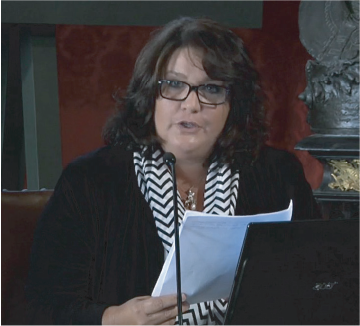
Dr. Nicoletta Marconi
Professor at the University of Rome Tor Vergata and member of the Commission of the School of Arts and Crafts at the Fabbrica of St.Peter in Vatican.
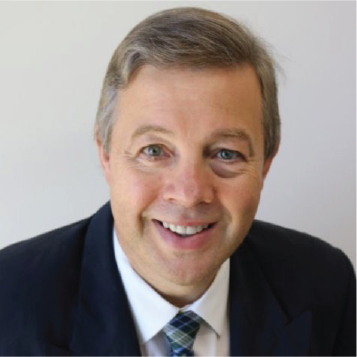
Baldomero Lago
Chief International Officer at UVU, UNESCO Chair on AI, Environmental Stewardship and Sustainable FuturesHon
Registration Required for all who plan to attend.
Students - FREE | Professionals - $25
Join us for the event March 21, 2026 in the UVU
Computer Science Building - CS 404