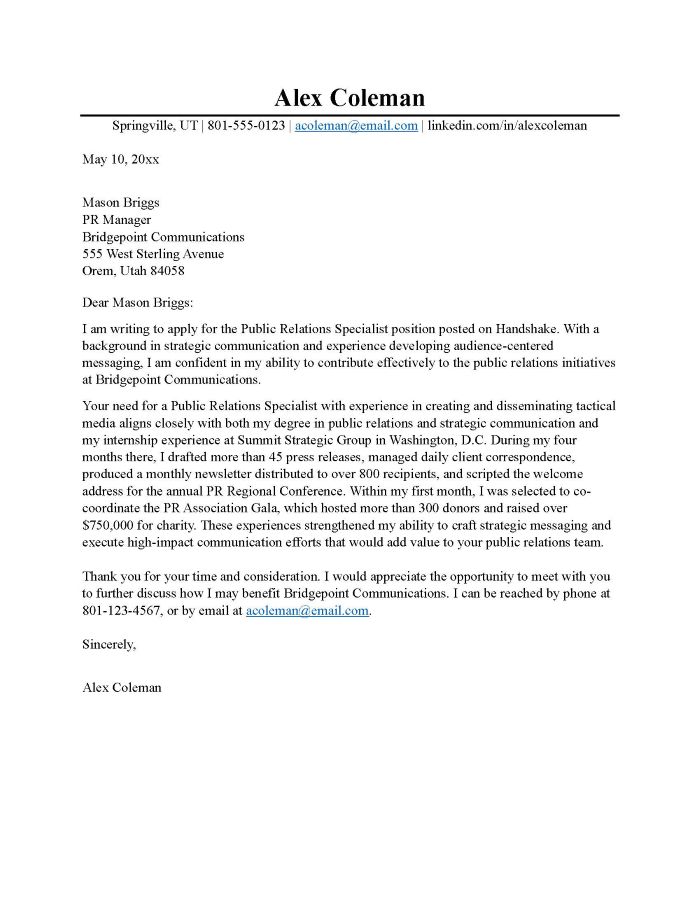
A cover letter is your personalized introduction and a valuable opportunity to connect with an employer on a more personal level. It accompanies your resumé and introduces your interest in a specific organization and position. A strong cover letter should highlight how your background, skills, and interests align with the company’s goals and the requirements of the role.
It should complement—not repeat—your resumé and demonstrate your understanding of both the position and the organization. When tailored effectively, a cover letter showcases your professionalism, effort, and insight into what the employer values. It also allows you to express your enthusiasm, clarify your fit, and make a compelling case for why you should be interviewed.
Think of it as your strategic sales pitch—a chance to make a strong first impression and stand out in a competitive applicant pool.
In today’s fast-paced hiring world, not all employers read cover letters, but the ones who do use them to screen for effort, communication skills, and cultural fit. A thoughtful, customized letter shows:
Even if the application says “optional,” take that as your chance to stand out. A strong cover letter can sell the applicant to an employer.
Each cover letter should be targeted to a specific company and position and reflect knowledge of the company’s needs and goals. Mass producing the same letter for multiple positions is impersonal and much less effective. An employer can tell when you’ve taken the time to personalize it and that effort can make all the difference.

A cover letter can be submitted in different formats, depending on how the company accepts applications:
Always use a professional file name (e.g., Firstname_Lastname_CoverLetter.pdf) and double check for formatting consistency before submitting.

State the position you’re applying for, how you heard about it, and why you’re interested. This is your chance to show enthusiasm and offer a preview of why you're a strong candidate. You might also include a sincere compliment about the company or a brief comment on how its mission aligns with your goals.
Opening Paragraph Example:
I am writing to apply for the Data Analyst position at Onyx Group. With a strong foundation in statistical analysis and hands-on experience working with large datasets, I am confident in my ability to contribute meaningfully to your team.
This section is your opportunity to show how your background aligns with the needs of the position. Review the job description and identify a few key priorities or qualifications. Then, speak directly to how your experience and skills match those priorities. Show credentials through specific examples that make a clear connection of how prior performance indicates excellence in the new position. Use this section to demonstrate relevance, not just list accomplishments.
Middle Paragraph Example 1:
In reviewing your job posting, I noticed your emphasis on network security, problem-solving, and collaborative project work. While working as an IT support intern for a regional healthcare organization, I helped identify and patch security vulnerabilities in internal systems, assisted in a successful software migration, and responded to user requests with a resolution rate of over 95%. I also contributed to a cross-functional team tasked with improving password protocols, which led to a 60% drop in internal support tickets. My ability to troubleshoot issues quickly, think analytically, and work closely with technical and non-technical teams makes me a strong fit for this position.
Middle Paragraph Example 2:
This role requires strong project management skills, the ability to meet tight deadlines, and a passion for meaningful, data-informed community work. As a research assistant in the Behavioral Science Department at UVU, I coordinated survey distribution, managed participant scheduling, and analyzed preliminary findings under tight IRB deadlines. I also co-authored a literature review on trauma-informed care and presented findings at a regional undergraduate research conference. These experiences helped me develop strong organizational skills and the ability to synthesize complex information in ways that support real-world application.
Another key emphasis in your job posting is the ability to build trust with clients and communicate effectively with diverse populations. While interning with a local nonprofit focused on youth mental health, I facilitated intake interviews, helped design resource packets, and participated in community outreach events. I consistently received positive feedback for my ability to create a calm, welcoming environment and adapt my communication style to meet each individual’s needs. I bring that same client-centered approach to every setting I’m part of whether working directly with individuals or supporting a larger programmatic effort.
Thank the employer for their time and consideration. Reaffirm your interest in the role and express your desire to meet for an interview. Indicate that your resumé is enclosed or attached and provide your contact information.
Closing Paragraph Example:
Thank you for your time and consideration. I am genuinely excited about the opportunity to contribute to your team and would appreciate the chance to speak with you further about how my background aligns with your goals. I’ve included my resumé for your review and can be reached at 801-555-1234 or [email protected] to arrange a convenient time to connect.
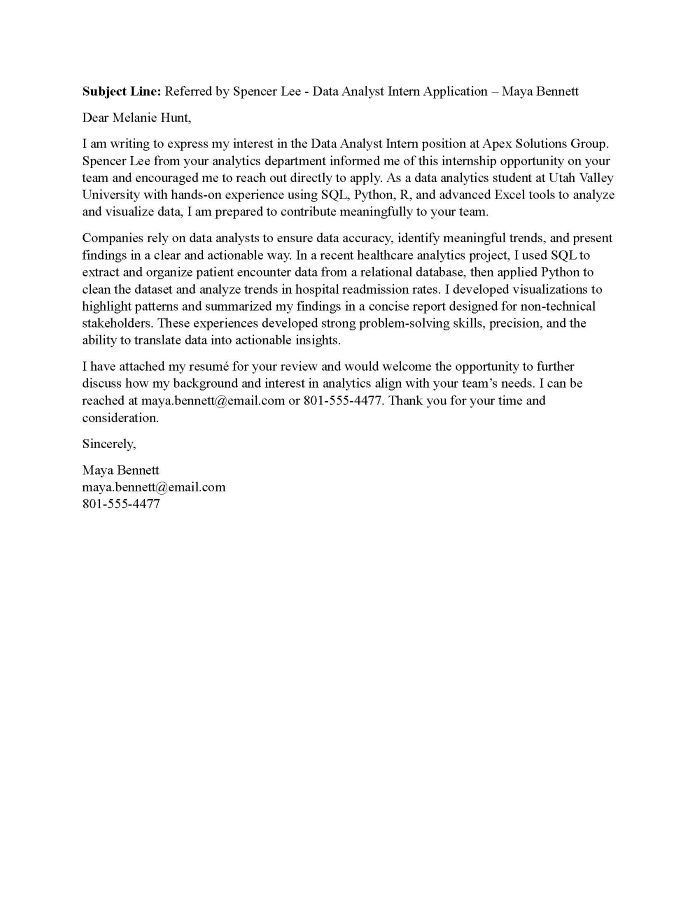
If you're submitting your application by email, you can use the body of your email as your cover letter. Simply paste your letter into the message field and attach your resumé as a PDF.
You should still follow the same structure and tone as a traditional cover letter—just skip the mailing address and date—and start with the salutation. Use a clear, professional subject line and include your contact information in your signature.
Your subject line should be clear, specific, and professional so the recipient immediately understands why you're reaching out.
Recommended formats:
Avoid vague or unprofessional subject lines like:
Clear subject lines help your application get noticed and routed to the right person.