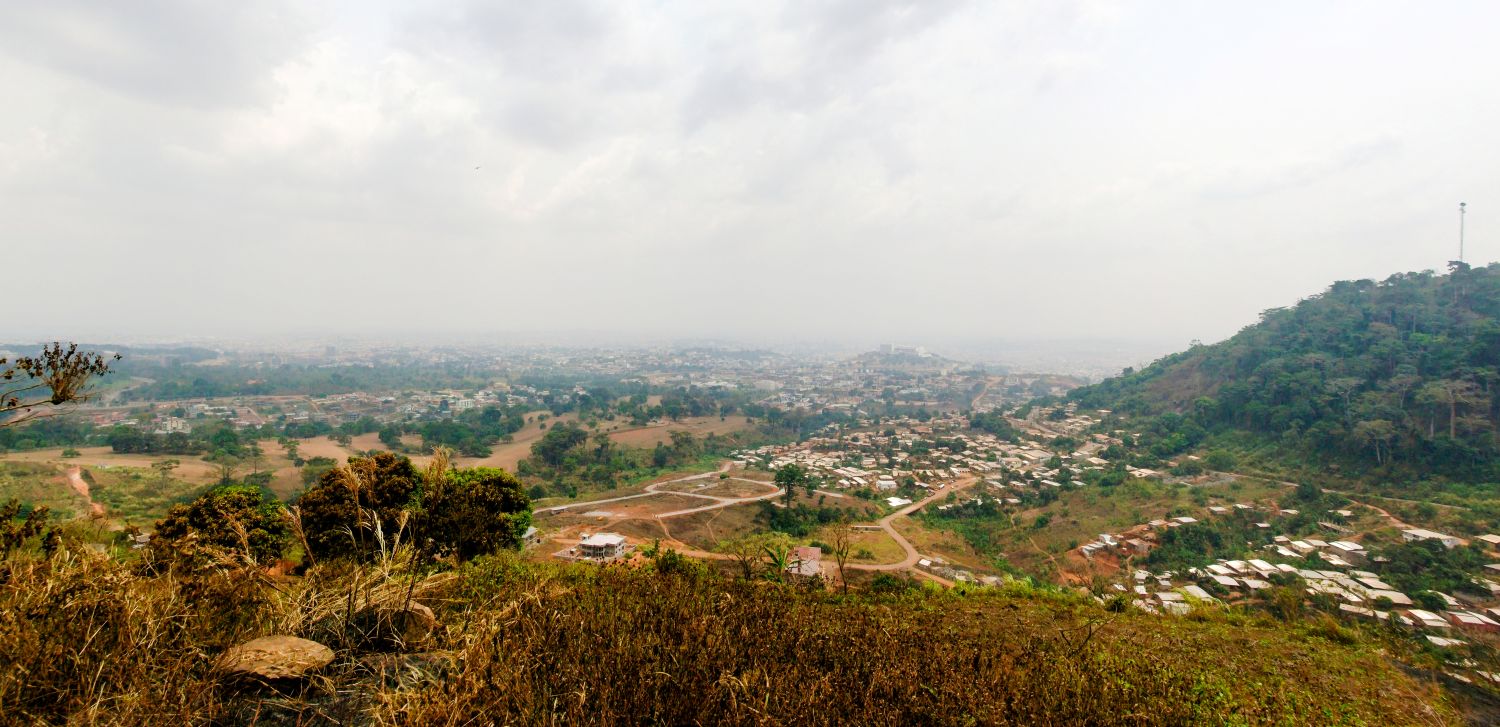
This project examines how climate change and rapid urbanization are shaping vulnerability across Cameroon’s diverse ecological zones. The study begins with a comparative analysis of the humid Southwest Region and the Sahelian Far North Region, followed by expansion to a national-scale assessment.
Methods include multi-temporal remote sensing and GIS analysis of Normalized Difference Vegetation Index (NDVI) to assess vegetation health and land degradation; Land Surface Temperature (LST) to quantify urban heat island intensity; satellite-derived precipitation datasets to evaluate rainfall variability and drought patterns; and land use/land cover change (LULC) classification to measure urban expansion and ecosystem transformation. These environmental indicators are integrated with population density, infrastructure access, and socio-economic data to construct a spatially explicit Climate Vulnerability Index using weighted overlay and hotspot analysis techniques.
Objectives are to (1) quantify spatial patterns of climate exposure, sensitivity, and adaptive capacity; (2) identify climate vulnerability and urban heat hotspots; (3) evaluate how urban sprawl contributes to increased environmental risk; and (4) produce actionable, policy-relevant maps to inform targeted climate adaptation, resilient urban planning, and sustainable development strategies across Cameroon
 Weihong Wang
 Hilary Hungerford