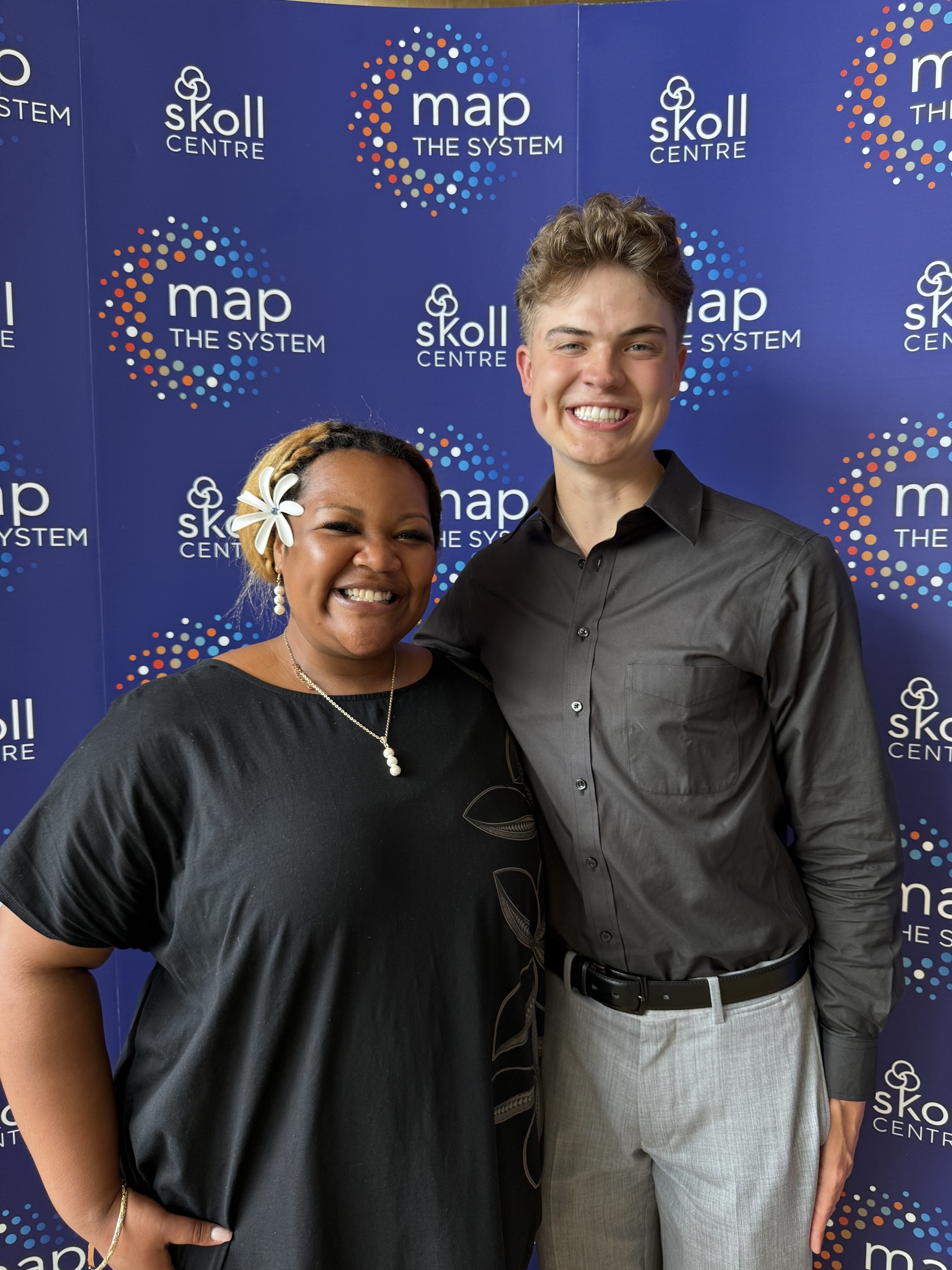
Janessa- Michelle Purcell UIMF President and McKay Jones Vice President, first day in Oxford, England July 2025.
On July 3 to July 6, 2025, Utah International Mountain Forum club leaders participated
in the Global Final of the Map The System Competition in Oxford, England. The Oxford
Map the System competition is an international competition that focuses on research
to a social justice issue within a specific demography. 45 teams across the globe
come together to compete in this research competition using the systems thinking methodology.
The Student-Engaged Learning model, which encourages students to take a more hands-on
approach to solving real life issues under the guidance of a faculty member as a mentor,
was displayed as McKay Jones and I chose the high rates of air pollution in West Salt
Lake as our topic to conduct our extensive research about. Our goal of participating
in this research competition was to prepare research on a mountainous community to
present at the 69th Session of the United Nations Commission on the Status of Women.
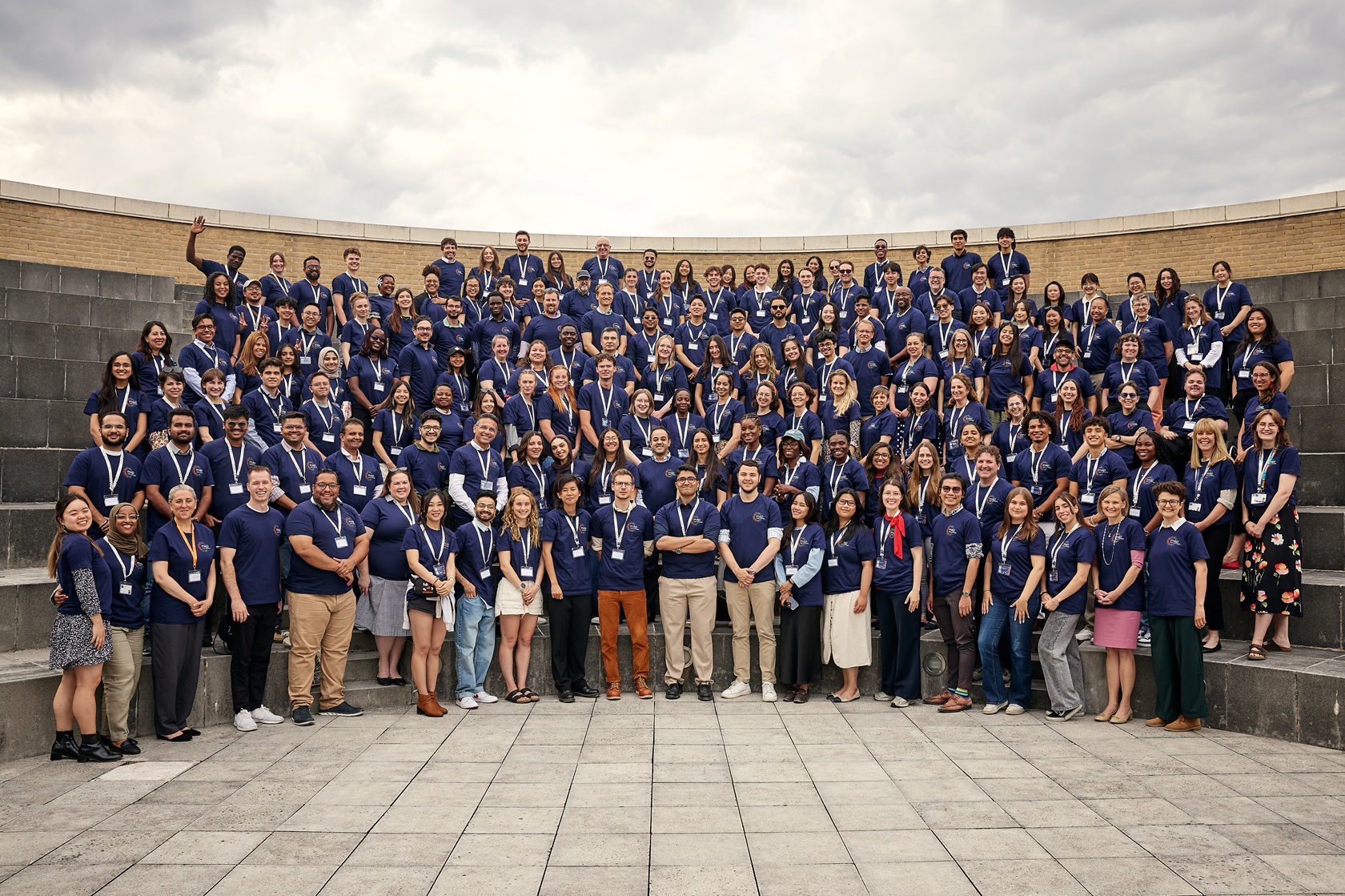
Group picture of the 2025 Oxford Map The System Global Finalist and educators.
McKay and I had two different perspectives in pursuing this research project that
helped us hone in on what we wanted to highlight and how we could accomplish this.
McKay had the idea to bring awareness to the health conditions that are caused by
air pollution. I had the idea that due to Utah’s mountainous topography contributing
to air pollution and the fact that Utah has one of the worst air quality rates in
the world, we would be able to have great resources to assist us in this research.
The majority of our research we completed during November 2024 as we prepared for
UVU’s campus wide Map The System competition. During this month-long process, McKay
and I conduct more than 8 interviews to help us piece together our research. We had
the chance to interview UVU professors from the Science Department, House Representatives
from the area of those most impacted by air pollution, and we were also able to make
a connection with another research project about air pollution in the country of Nepal.
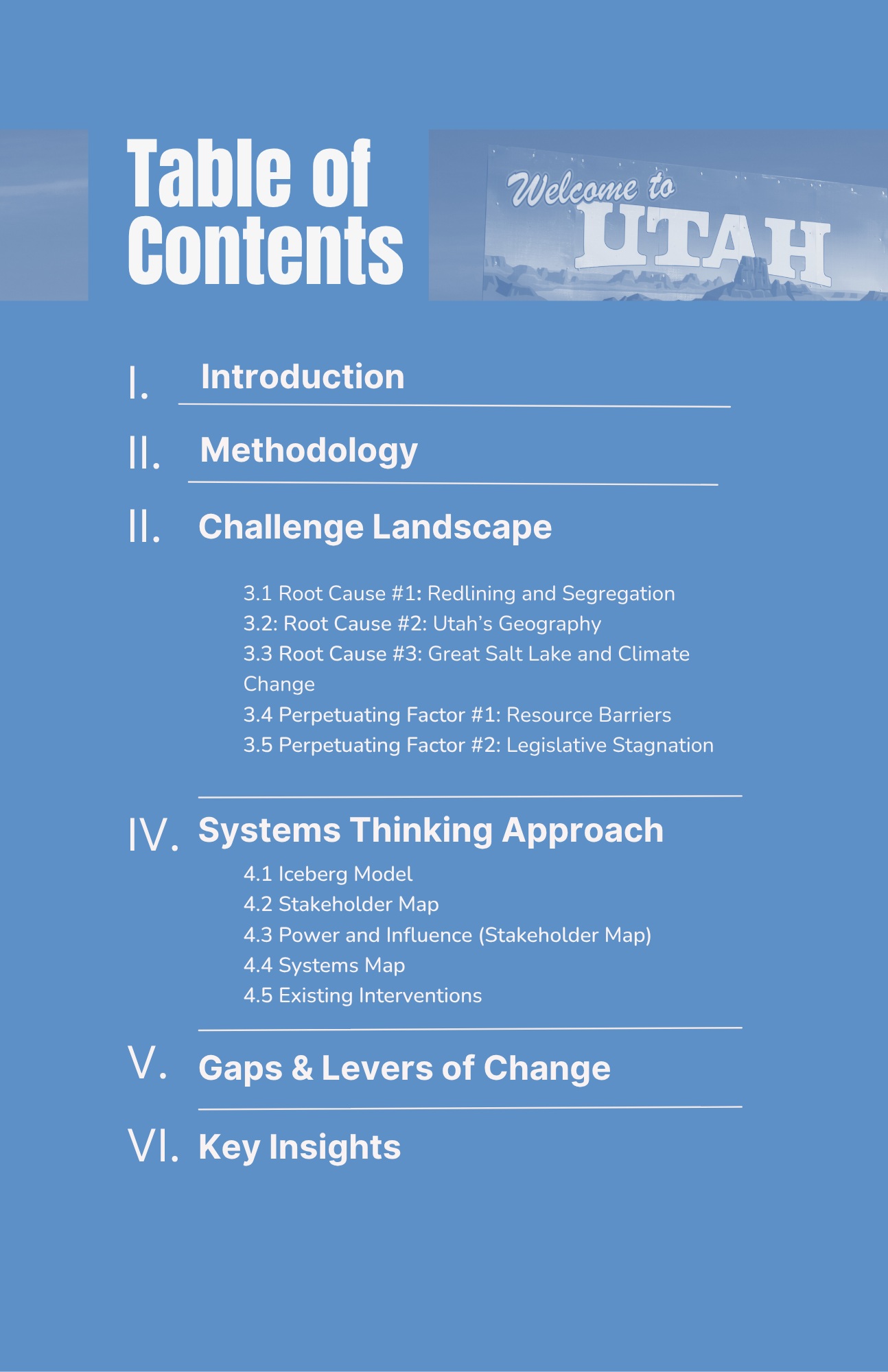
Table on contents of our written report submission.
After winning our campus research competition we used the month and half of summer
to restructure our research to tighten our points in preparation for the global competition
in Oxford. During the months of May and June, McKay and I combed through our system’s
map to really prioritize what was more impactful to our research. With the help of
Abbie Fisher, we were able to rework our presentation for a more professional and
centric look. We also spent a lot of our time creating our written report that we
needed to submit prior to attending the competition. In our written report we emphasized
the three root causes of the air pollution problem in West Salt Lake such as: Redlining
and Segregation, Utah’s Geography, as well as The Great Salt Lake and the impact of
climate change. Our perpetuating factors included resource barriers that prevent residents
access to critical resources. Our second perpetuating factor highlights the legislative
stagnation that prevents progressive policies that address air pollution in Utah.
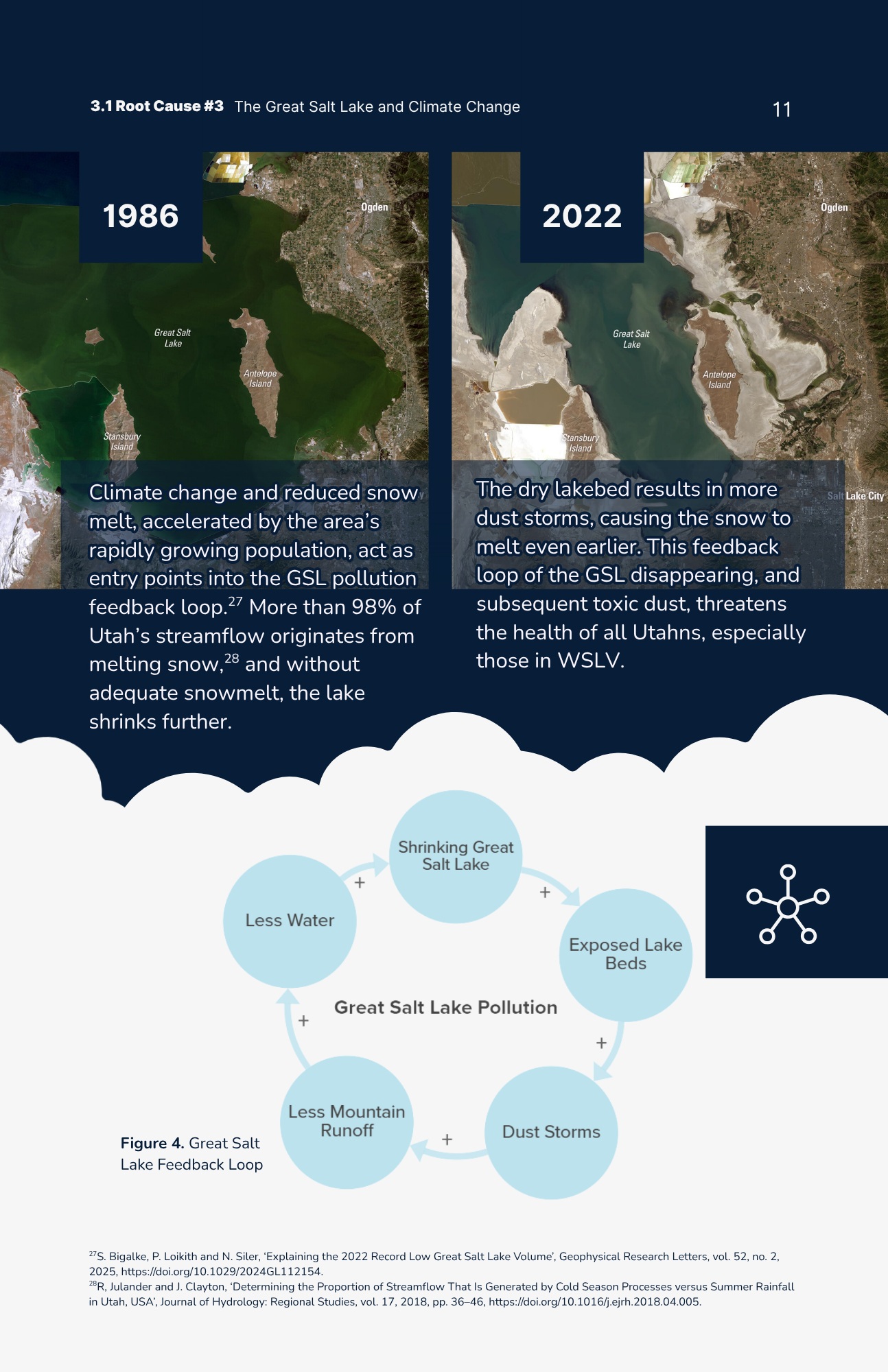
Visual aid depicting the Great Salt Lake impact on air pollution.
Within our presentation and our written reports we displayed visual aids that walked
our audience through our research. We began with the Iceberg model that breaks down
the patterns of air pollution that are seen and how they have shaped Utah. Our stakeholder
map depicts the power structure and dynamics of investors, legislation, and organizations
such as the Environmental Protection Agency, the Utah Supreme Court and Environmental
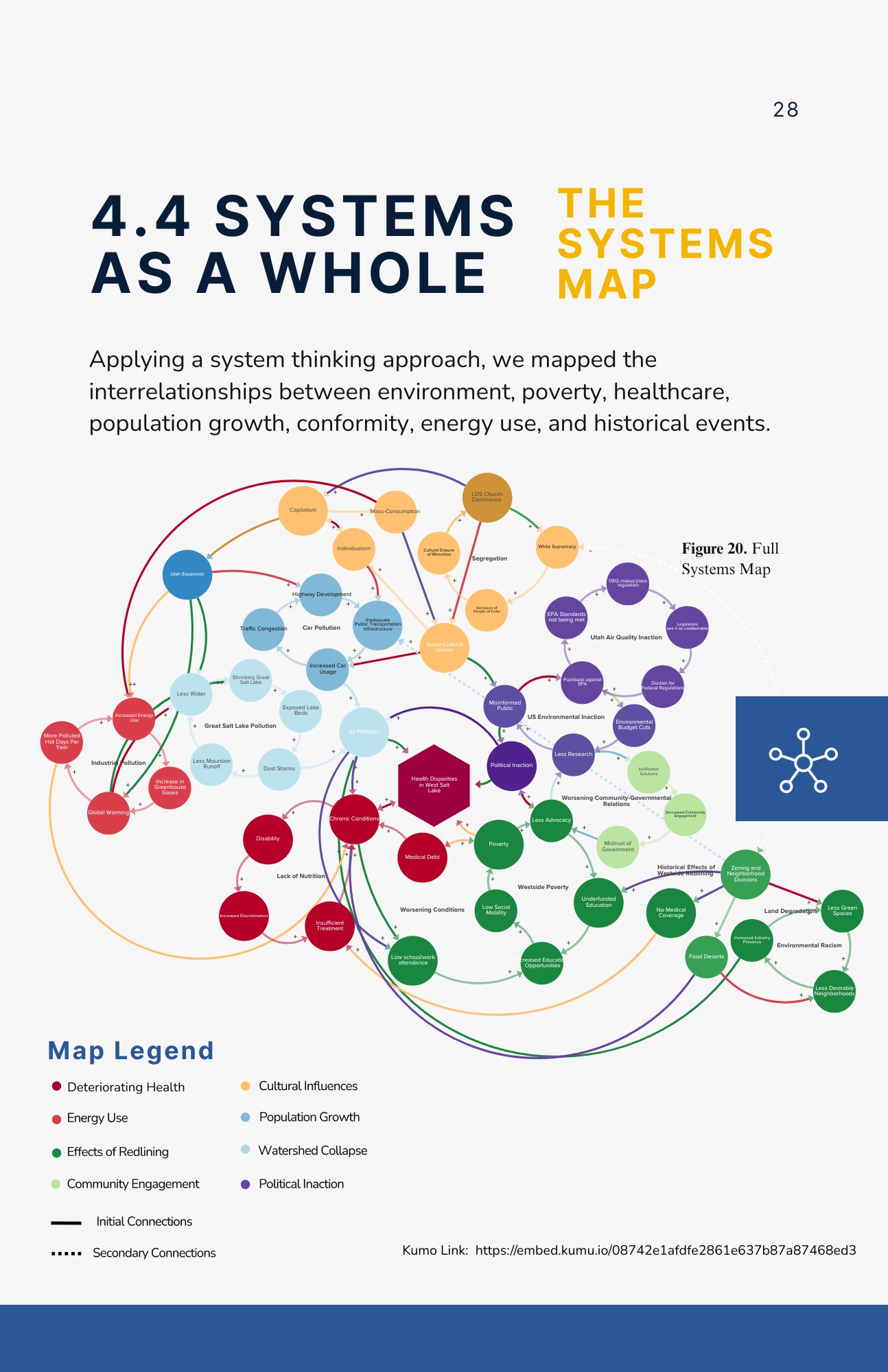
NGOs. To share the depths of the interaction between residents and air pollution we
created an extensive system’s map that displays the reinforcing loop of repercussions
due to lax EPA regulations that can contribute to severe health conditions.
As part of our methodology we also included existing interventions that attempt to
address air pollution and describe their power of influence and impact. Through these
visual aids of what air pollution looks like, who is affected and who has the power
to make changes, we were able to identify gaps within the system such as lack of accessibility
to resources for many west side residents and levers of change which include involving
west side resident voices to be a part of the solution to the problem they are dealing
with daily. To wrap up our presentation and written report, we shared some key insights
that we have learned throughout this research journey that comes down to this issue
calling for the collective collaboration of voices to make progressive change to the
minority groups and the west side residents who are continually affected.
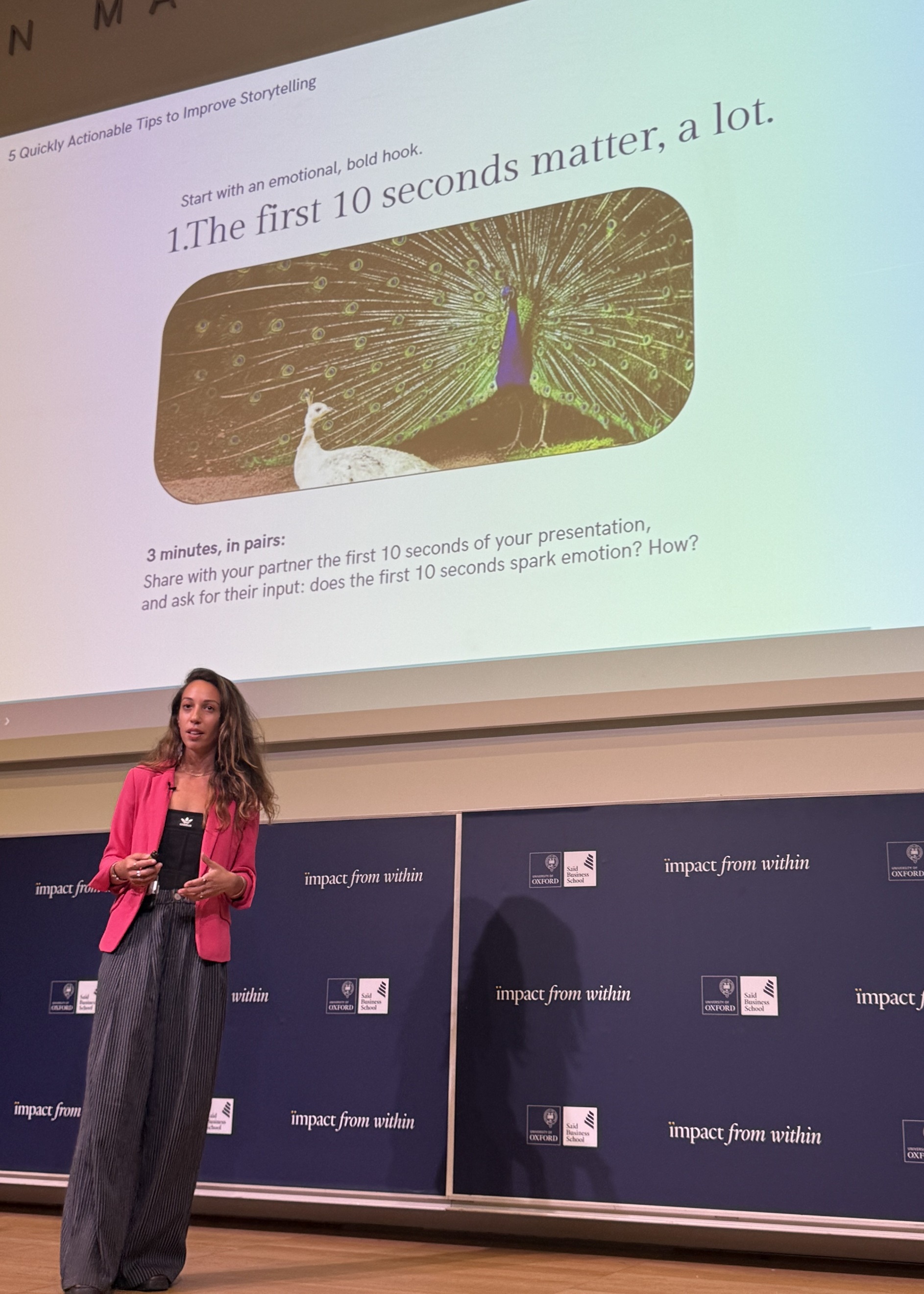
With the bulk of our research having been completed and submitted before the 4 day
conference, on Thursday, we were able to listen to a guest lecture on the importance
of storytelling and how we can best present the narrative of our social issue. During
our break time we were able to get to know students from Lebanon, Spain, the Netherlands
and Cairo, Egypt. These international connections have helped us network academically
and professionally, but also gave us the opportunity to make more friends. On Friday,
we had a panel of previous MTS winners and how they are continually using system’s
thinking in their careers taking these tools and resources beyond research in an academic
setting. We had designated rehearsal time to run through our presentation and make
last minute adjustments that gave us the confidence that we had prepared as best as
we could.
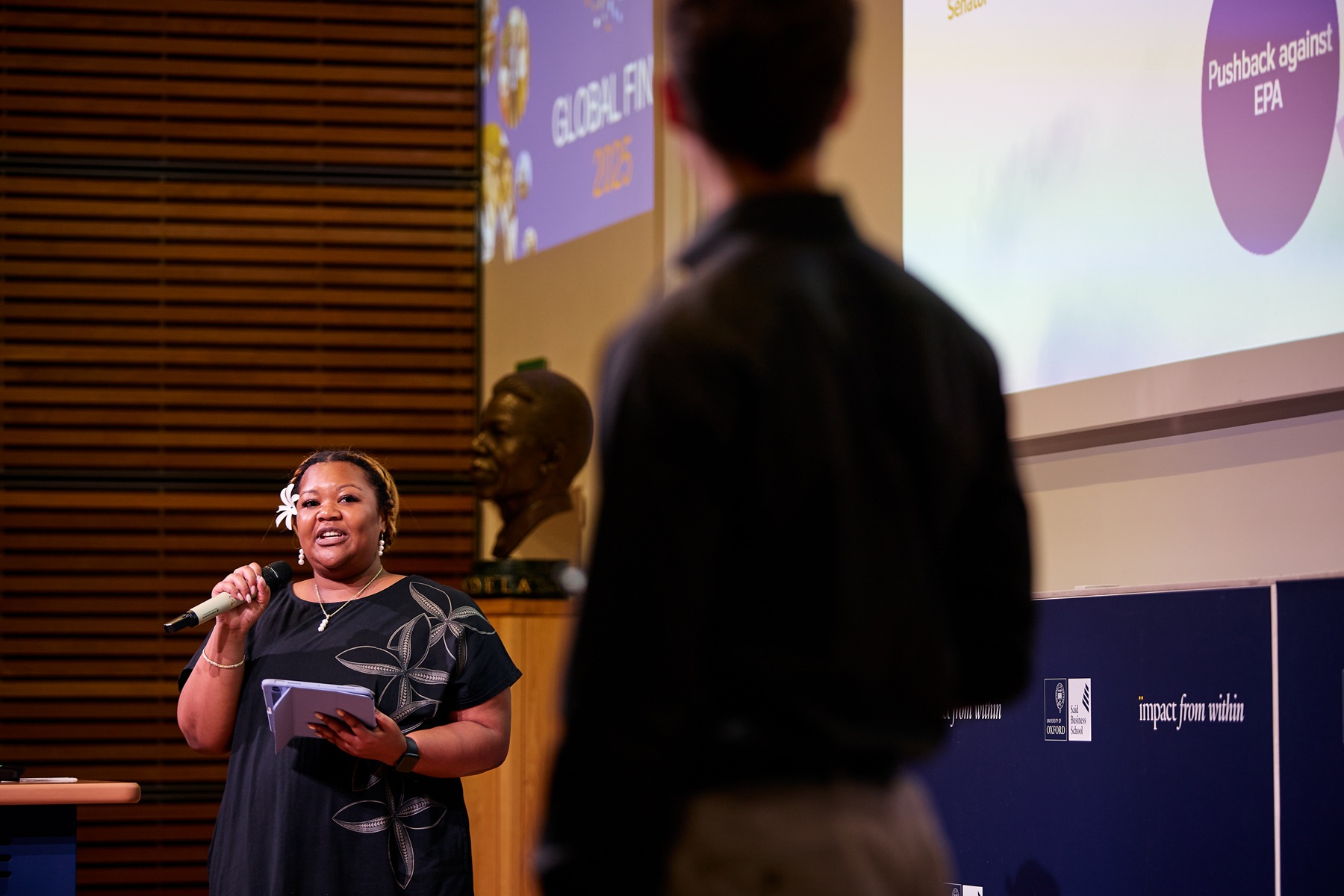
McKay Jones and Janessa- Michelle Purcell during our Air Pollution Research Project
in Oxford, England.
Saturday morning, after breakfast we began the competition presentations with 5 rooms
hosting 8 teams. I was absolutely terrified I was going to pass out because public
speaking is not one of my strongest skills, I wanted to make sure I presented our
research as best as I could, as we were also representing UVU on an international
stage. I stumbled through the last few minutes of our presentation but otherwise I
am pretty proud of how we were able to conduct ourselves. Our presentation highlighted
the need for communities and community champions to have the space to talk about these
issues and feel heard by policymakers. While we unfortunately did not make finals
of the competition we were grateful for the opportunity to research and share a social
justice we were passionate about.
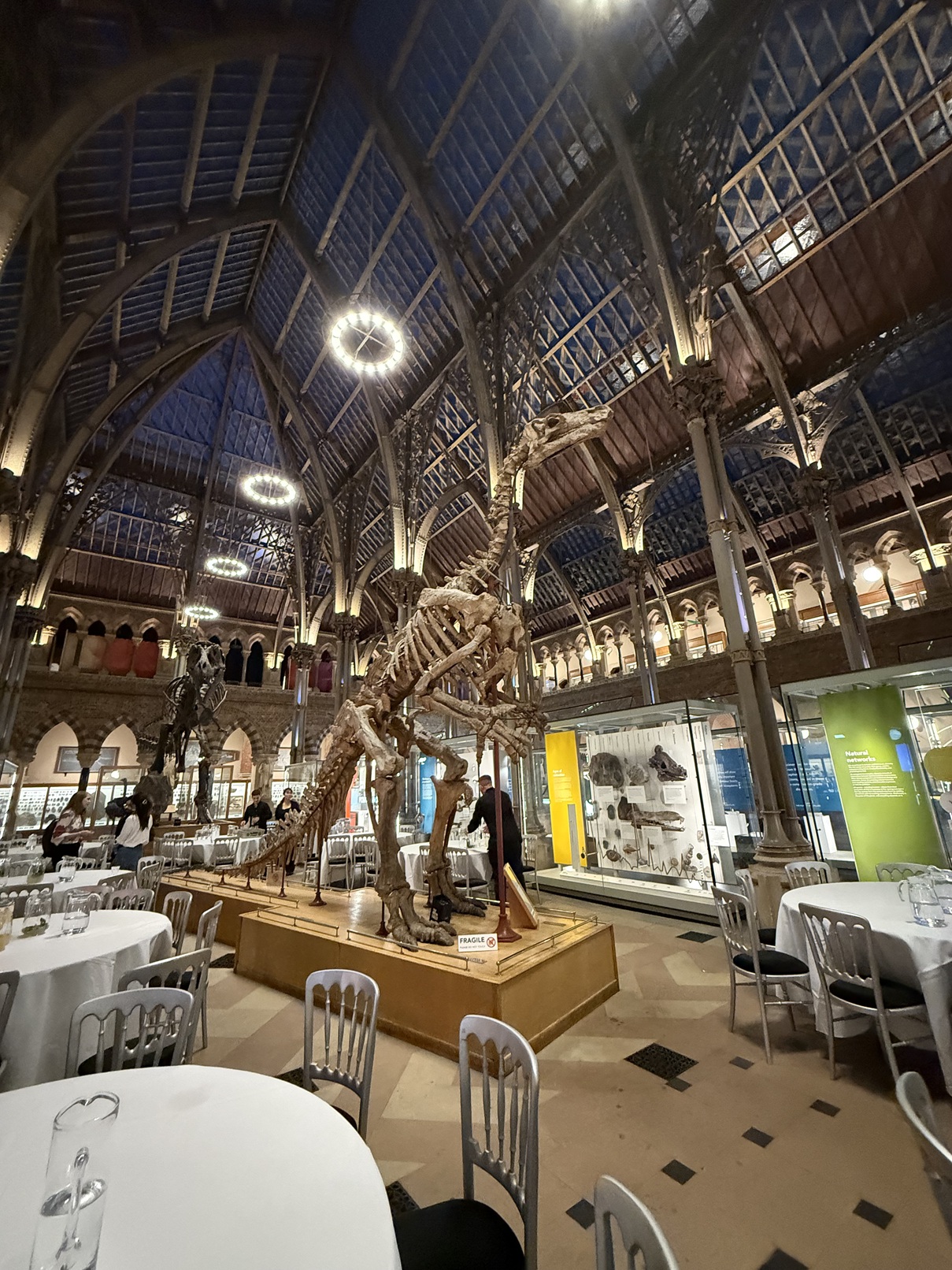
Last dinner at the Oxford University Museum of Natural History.
Saturday night we enjoyed dinner at the Natural History Museum in Oxford, where we
were able to once again mingle and take the time to get to know other university teams.
The diverse group of students and educators is a testament to the reach of the system's
thinking and the empathy that lives in each participant. After returning to our accommodations
and St Catherine’s College, I prepared my luggage to depart from Oxford back to London
after the finalist presentations were given. Sunday morning we listened to the presentations
of the 5 groups that were selected for the final round of the competition. The range
of social justice issues were broad across the spectrum with the topics of drought
in Central Asia, the sinking of Indonesia and youth participation in politics in Lebanon.
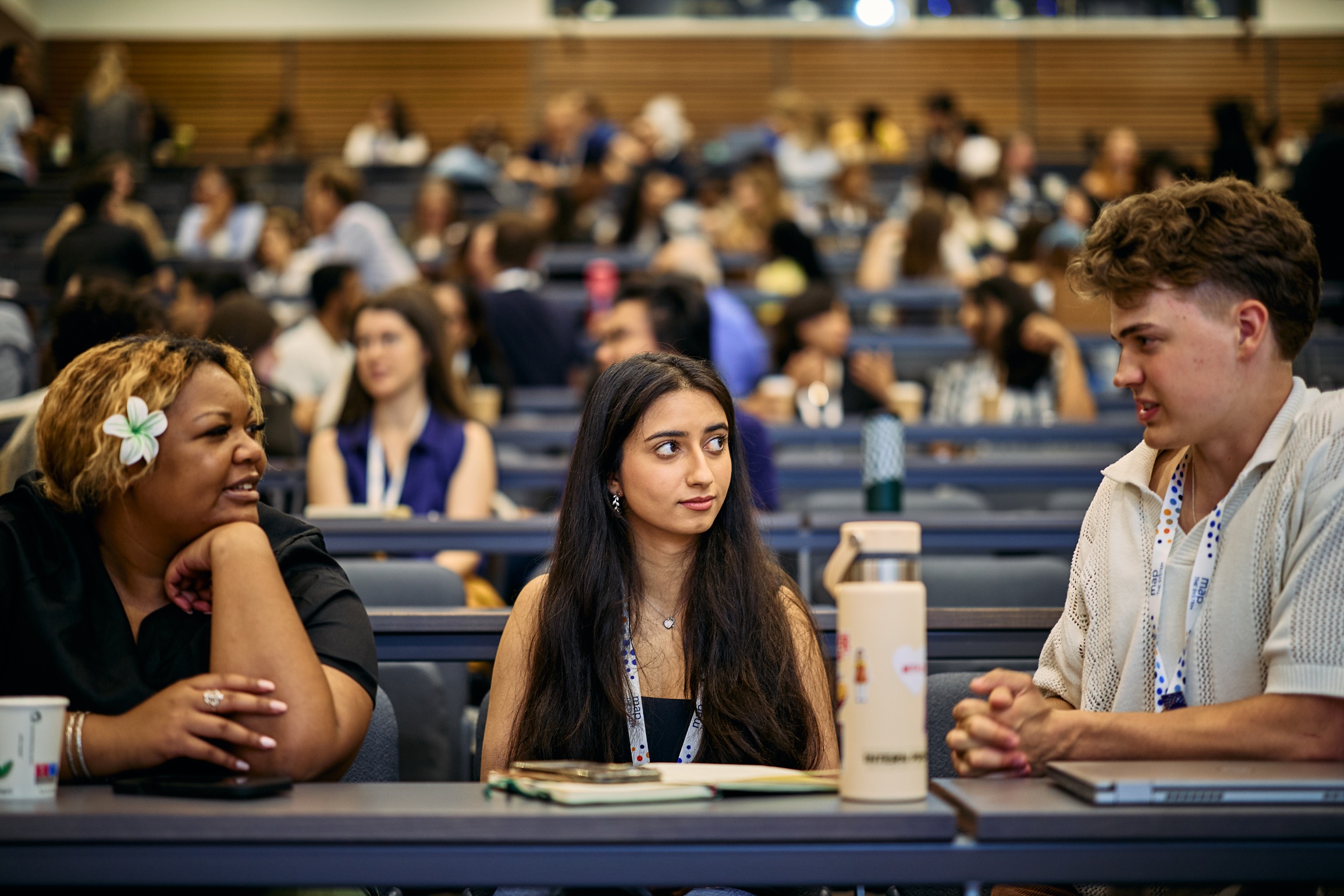
Janessa- Michelle Purcell, Nayla Punjabi and McKay Jones during a workshop.
From these presentations McKay and I came away with some ideas of how we can continue
to improve our research and how we can continue to share it wherever we can. I personally
am so grateful to have had this opportunity to travel to Oxford to present research
when we really only participate in the competition to prepare for our presentations
at the United Nations. While we were hopeful we would win the UVU competition, we
mainly wanted to use the system’s thinking methodology to create a comprehensive but
detailed project that was centric and relatable to mountain regions. Through the student-engaged
learning model McKay and I had the opportunity to share our research on two international
stages and gave us the sense of purpose to continue incorporating our research in
as many capacities as we can.
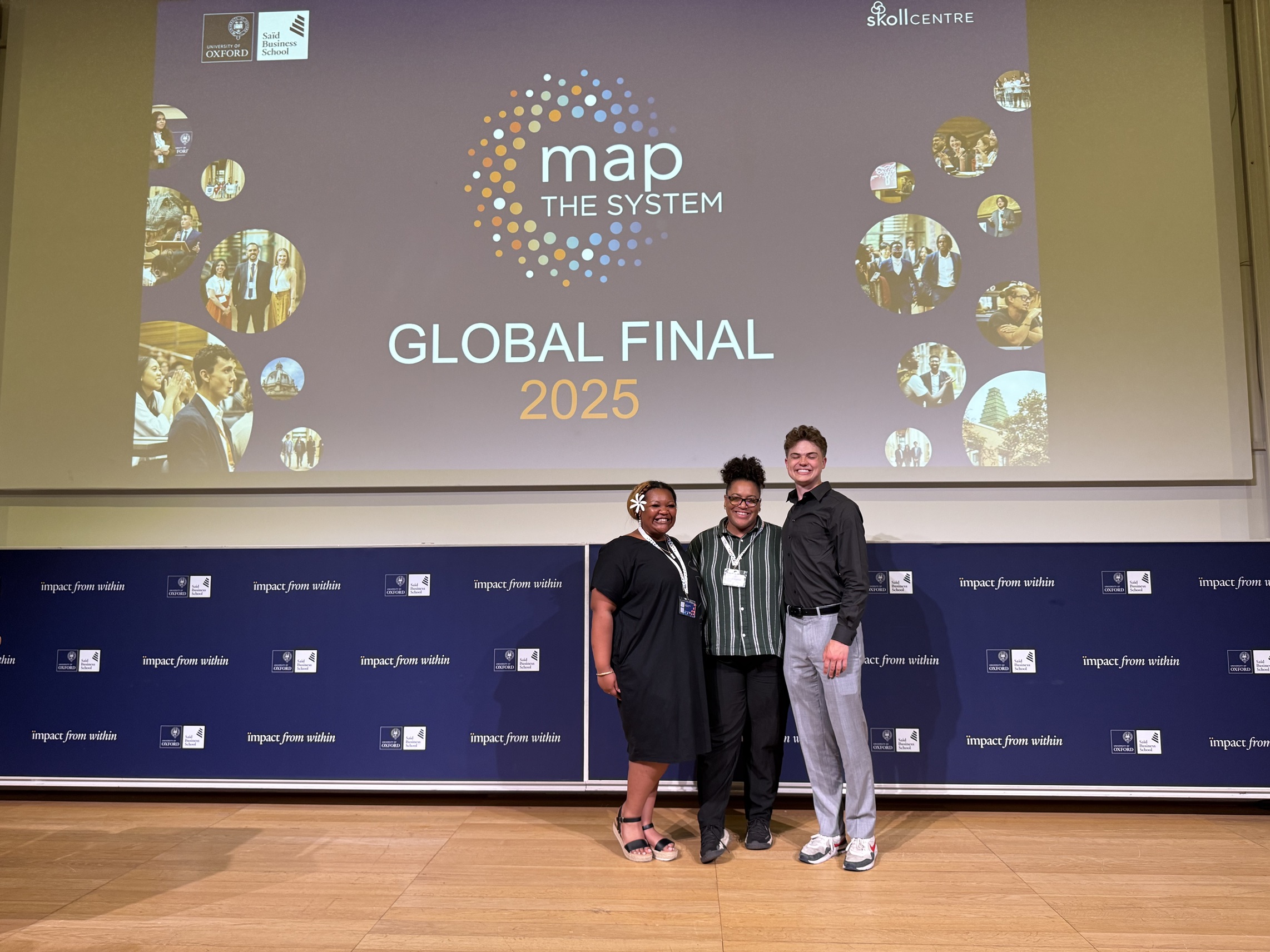
Janessa- Michelle Purcell, Cassie Bingham director of the Center for Social Impact
at UVU, and McKay Jones after presentations were complete.
As research is my area of improvement of my professional and academic skills, this
experience has taught me that if I am committed to the hard work paired with my passion
for creating impactful change in the world, I can accomplish anything. For your viewing,
here is our written report link as well as our presentation slide deck.
- Janessa- Michelle Purcell, UIMF President

