On July 11, 2026, students representing the Utah International Mountain Forum, a coalition
of student clubs at Utah Valley University, traveled from Geneva to Chillon Castle
for a cultural excursion during their United Nations study abroad.
Following several days of diplomatic meetings and international advocacy, the excursion
gave students an opportunity to rest, strengthen relationships within the delegation,
and learn more about Switzerland’s history, culture, transportation, and approach
to sustainable development.
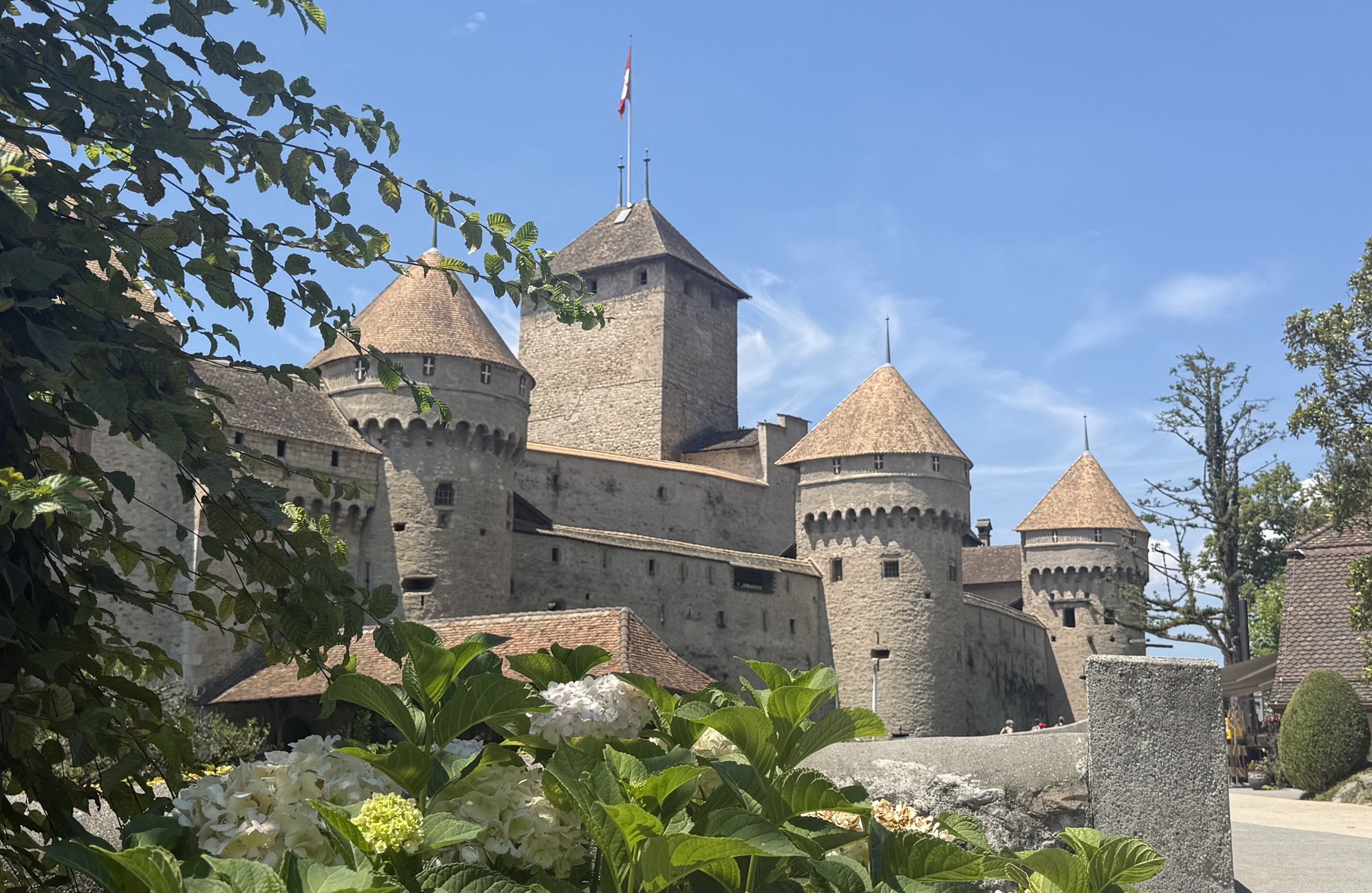
Photo of Chillon Castle
The delegation began the day with an approximately two-hour train journey from Geneva
toward Chillon Castle. Along the way, students observed Lake Geneva, the Alps, agricultural
areas, vineyards, small villages, and communities located outside the major urban
centers.
Some students rested during the journey, while others visited with their classmates
and shared their excitement about seeing the castle. The train ride also gave the
delegation an opportunity to compare Geneva’s urban environment with the farmland
and smaller communities surrounding the lake.
Students observed how Switzerland connects cities, villages, agricultural areas, and
cultural sites through an extensive public transportation system. They also discussed
how compact communities and preserved farmland can support local agriculture while
limiting unnecessary urban expansion. These observations encouraged students to consider
how transportation, land use, food production, tourism, and environmental protection
can work together as part of sustainable development.
The journey also helped students recognize connections between Switzerland and their
own cultural backgrounds. Familiar stores, products, architecture, and agricultural
practices demonstrated how local identities can remain visible within an interconnected
global society.
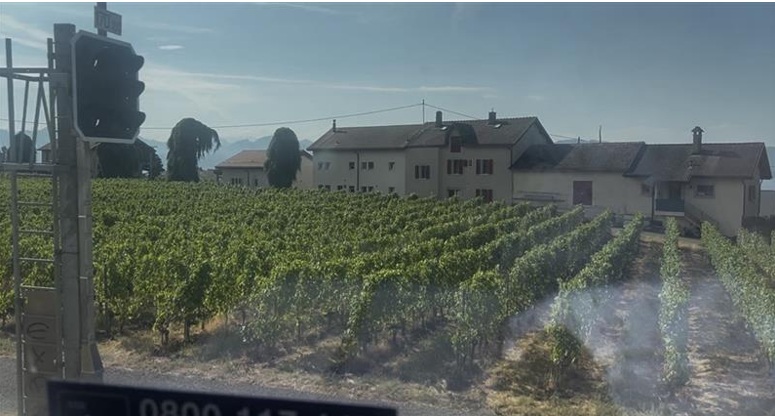
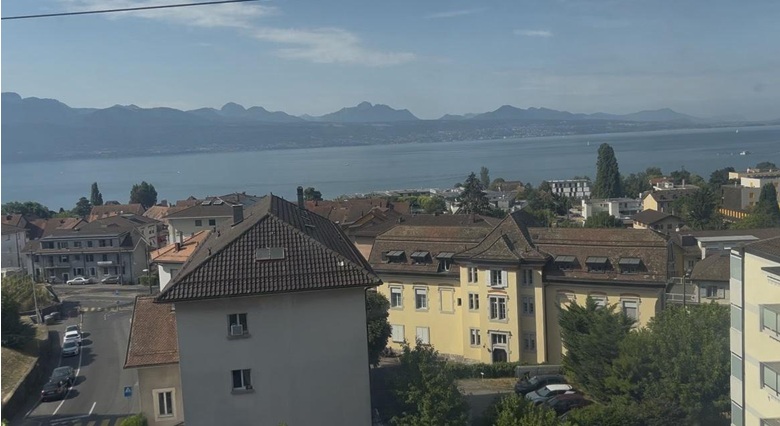
Students observe Lake Geneva, villages, farms, and the Swiss Alps during the train
journey from Geneva.
After leaving the train, the delegation followed a scenic path along Lake Geneva toward
the castle. The route passed through areas of trees and vegetation before transitioning
to stone and cobblestone pathways. As the students approached, Chillon Castle appeared
beside the clear water with the Alps rising in the distance.
Several students took photographs along the lakeshore, while others briefly entered
the water near the castle. The setting created a memorable opportunity to experience
Switzerland’s natural landscape alongside one of its best-known cultural monuments.
Chillon Castle stands on a rocky island near Montreux and has approximately 1,000
years of recorded history. Its development is generally divided into three major periods:
rule by the House of Savoy, administration by the Bernese bailiffs, and ownership
by the Canton of Vaud. For nearly four centuries, the castle served the Counts of
Savoy as both a residence and a strategic customs station along important land and
lake transportation routes.
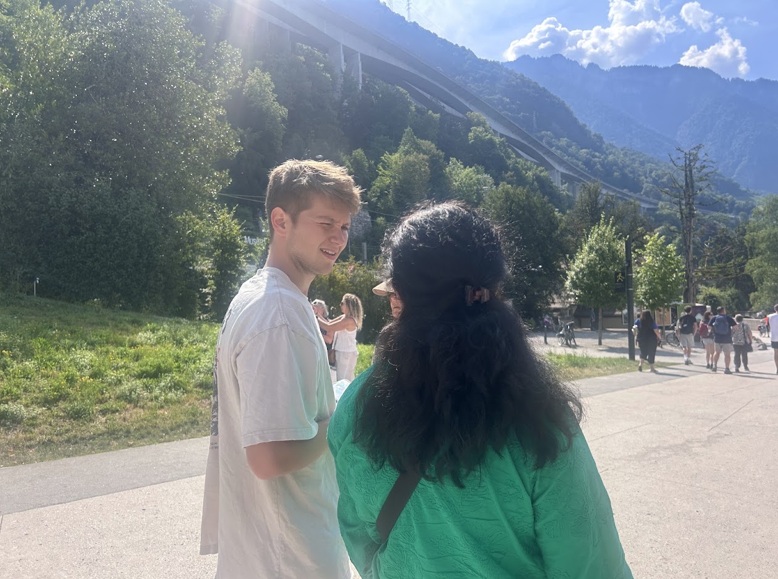
Domenic Callor and Cholpon Akmatalieva walking to the Castle
Students explored Chillon Castle independently and in small groups, allowing them
to move through the rooms at their own pace. The delegation viewed courtyards, defensive
structures, weapons and armor displays, living quarters, great halls, the chapel,
the Coat of Arms Hall, and underground prison chambers. The castle contains three
weapons rooms, while the ceiling of the Coat of Arms Hall dates to renovations commissioned
by Duke Amadeus VIII of Savoy in 1436.
One of the most memorable parts of the visit was learning about François Bonivard,
the prior of Saint-Victor in Geneva. Bonivard opposed attempts by the Duke of Savoy
to control Geneva and was imprisoned at Chillon from 1530 until 1536. Although he
was held at the castle for six years, historical accounts indicate that he spent approximately
four years chained to a pillar in the underground prison. He was eventually freed
when Bernese forces captured the castle in 1536.
British poet Lord Byron visited Chillon in 1816 and was deeply moved by Bonivard’s
story. He later made Bonivard the central figure in his famous poem, The Prisoner
of Chillon, which helped bring the castle international recognition. Byron’s name
can still be seen among the inscriptions on one of the prison columns, connecting
the castle’s political history with its later influence on literature and art.
The chapel also illustrated the religious and political changes associated with the
Protestant Reformation. Originally reserved for the Counts and Dukes of Savoy, it
later fell out of religious use and served as a granary and powder house during the
Bernese period.
The underground rooms gave the visit a more serious and emotional dimension. They
reminded students that Chillon was not only a royal residence and defensive structure
but also a place shaped by imprisonment, political conflict, religious change, and
struggles for freedom and political power. The preservation of the rooms made it possible
for students to stand in the same spaces and better understand the people and events
they were learning about.
The castle’s exhibits and preserved rooms also allowed students to imagine how previous
generations lived, governed, worshipped, defended the region, and interacted with
the surrounding lake. The delegation also appreciated small details throughout the
site, including fountains, family crests, historical furnishings, stone passageways,
and views through the castle windows.
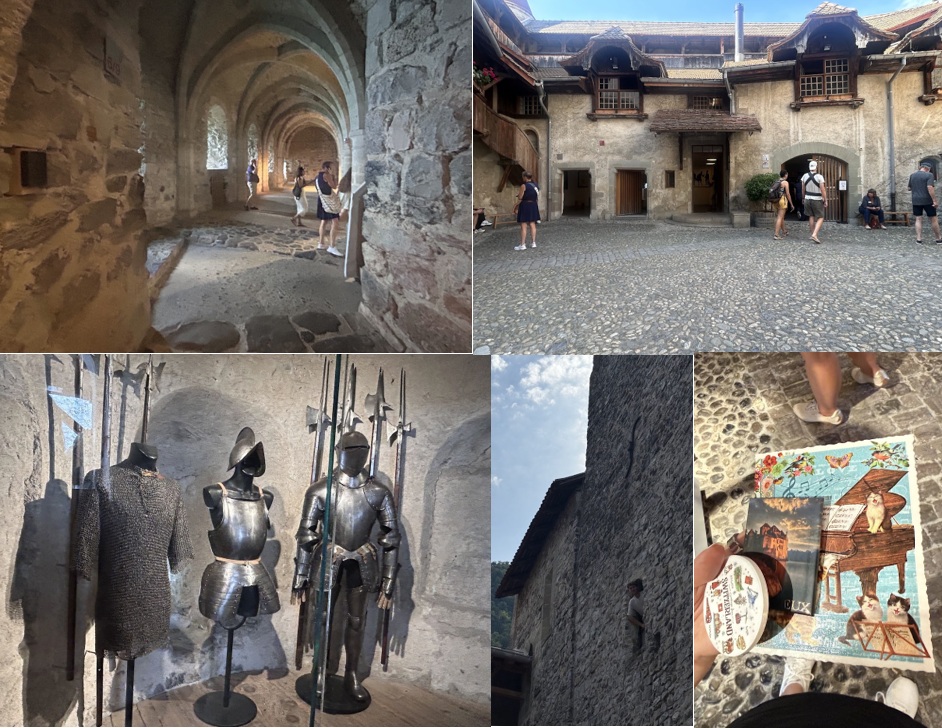
Students explore the historic halls, courtyards, and underground chambers of Chillon
Castle.
For several members of the delegation, the study abroad was their first experience
traveling outside the United States or visiting Europe. Seeing Chillon Castle provided
an opportunity to encounter centuries of history in person rather than only through
books, photographs, or classroom discussions.
Many students were accustomed to the comparatively newer historic buildings commonly
seen in Utah. Walking through a preserved medieval castle offered a different understanding
of how communities can protect old structures while continuing to use them for education,
tourism, and cultural exchange. This comparison did not diminish Utah’s much older
Indigenous history; instead, it highlighted a different form of preservation through
an intact building that has carried evidence of many generations.
Students were able to see original stone passageways, family crests, chapels, defensive
structures, living areas, and prison chambers within the same historic site. The experience
demonstrated how carefully preserving physical places allows future generations to
understand both the achievements and the difficult chapters of the past.
The excursion also demonstrated the international importance of cultural heritage.
Throughout the visit, students encountered visitors speaking Spanish, German, French,
English, Arabic, and other languages. Some members of the delegation spoke with visitors
from other countries and helped take photographs for traveling families and groups.
These brief interactions showed how a historic location can bring together people
from many nationalities and cultures. Although visitors arrived with different languages
and backgrounds, they shared an interest in understanding and preserving the same
historic place.
The visit encouraged students to think about how Utah and other communities might
preserve historic places while making them accessible and meaningful to the public.
Chillon Castle demonstrated that preservation does not require history to remain frozen;
it can support education, local employment, sustainable tourism, and intercultural
understanding.
Across from the castle, students also observed the Fort de Chillon, a military installation
constructed within the mountain and used as part of Switzerland’s WW2 defense system.
The underground fortress is located opposite Chillon Castle between Lake Geneva and
the Vaud Alps, creating a visible connection between Switzerland’s medieval and modern
military history.
For the delegation, the castle was therefore more than a recreational excursion. It
offered a firsthand lesson in history, cultural preservation, sustainable tourism,
and the value of seeing the world beyond one’s familiar surroundings.
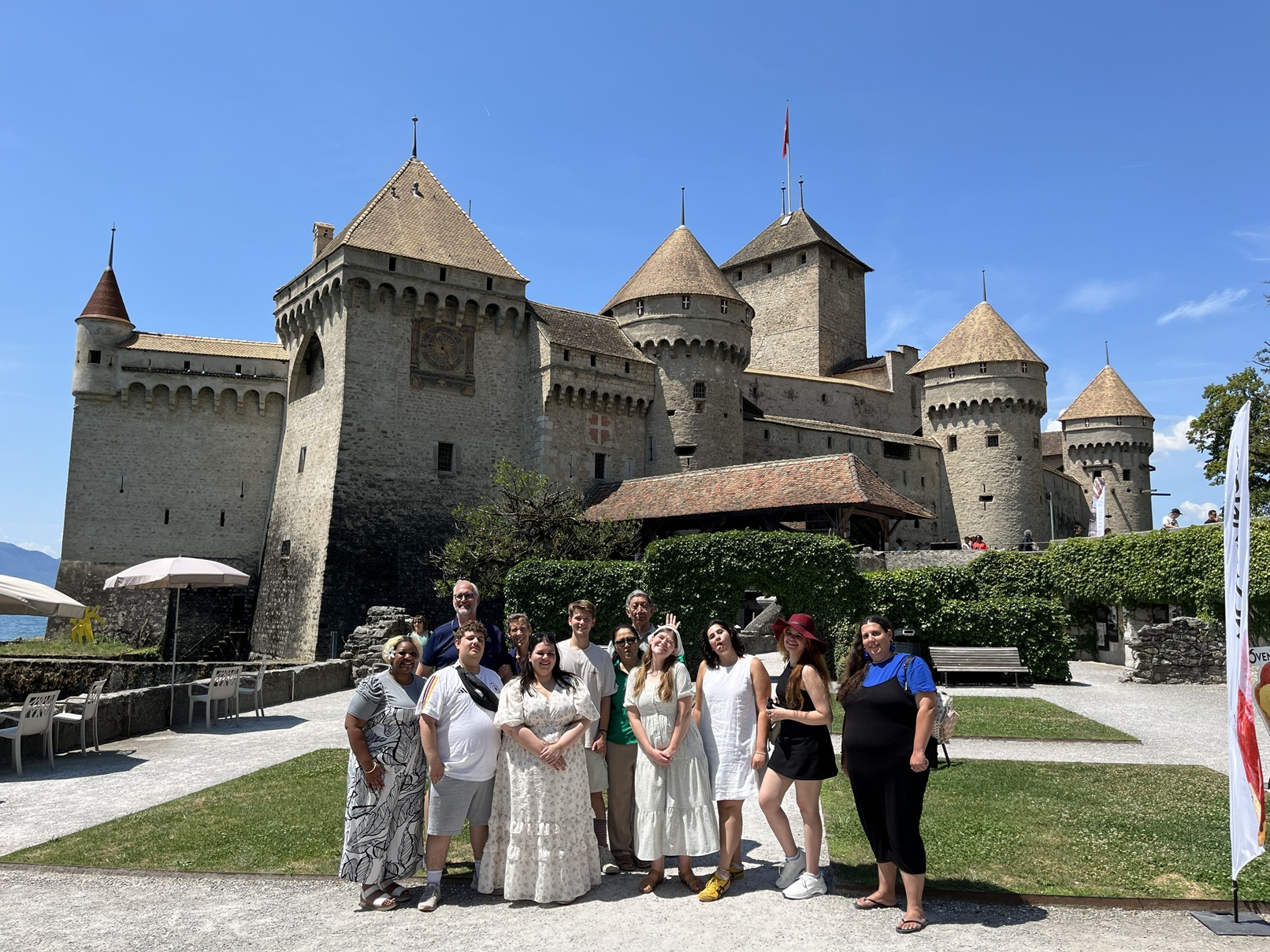
Members of the delegation gather near Chillon Castle with Lake Geneva
The excursion allowed students to examine how cultural heritage, environmental protection,
public transportation, tourism, and local economic activity can support one another.
The castle receives visitors from around the world, yet its historic structures and
surrounding natural environment remain carefully preserved. Visitors can reach the
site by train, bus, boat, bicycle, or on foot, reducing the need to depend entirely
on private vehicles. The regional train station is also located within a short walk
of the castle.
Students observed clear lake water, accessible public spaces, maintained walking routes,
nearby communities, and efficient transportation connections. The visit demonstrated
that economic development and international tourism do not necessarily require removing
the history, agriculture, or natural character of a region.
This experience encouraged the delegation to consider how similar principles could
support mountain communities elsewhere. Sustainable development involves more than
economic growth; it also requires protecting water, agricultural land, cultural heritage,
community identity, and access to public spaces for future generations.
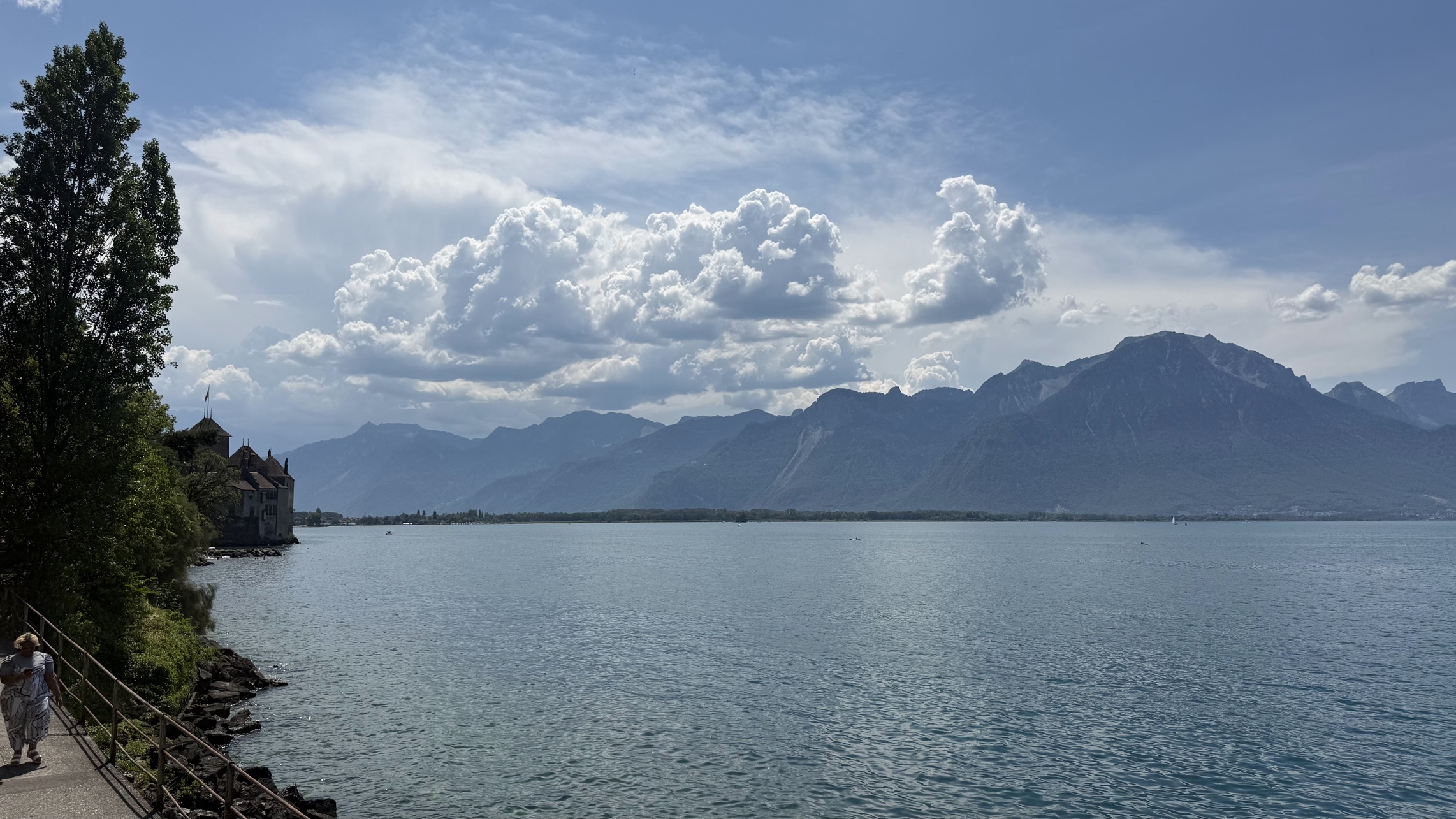
Students experience the natural and cultural landscape surrounding Chillon Castle
and Lake Geneva.
The visit to Chillon Castle offered a meaningful change of pace after an intensive
week of diplomatic and academic activities. Students had time to rest, explore, laugh
together, swim, take photographs, learn about history, and appreciate the landscape
surrounding Lake Geneva.
The castle’s fairy-tale appearance made the excursion exciting, while its history
presented more complex lessons about political power, religious conflict, imprisonment,
cultural preservation, and freedom. Students left with a greater appreciation for
the importance of presenting history honestly, including both its beauty and its more
difficult chapters.
The experience also strengthened relationships within the delegation. Exploring a
new place together allowed students to learn more about one another outside formal
meetings and presentations. These cultural experiences were an important part of the
study abroad because diplomacy requires not only institutional knowledge but also
curiosity, cultural understanding, observation, and respect for the history of the
communities being visited.
The delegation expresses appreciation to its faculty mentors and Utah Valley University
for making the cultural excursion possible. The students are also grateful to the
employees of Chillon Castle, transportation workers, and local community members who
helped make the visit educational and welcoming.
The excursion expanded the students’ understanding of Swiss history and provided a
practical example of how cultural preservation, sustainable tourism, public transportation,
agriculture, and environmental stewardship can coexist.
For the UIMF delegation, the day at Chillon Castle was more than a recreational excursion.
It was an opportunity to understand Switzerland beyond its international institutions
and to experience how history, culture, nature, and sustainable development are connected.
Written by Natalia Figueroa, President, Utah International Mountain Forum, Political Science Student at Utah Valley
University,
On behalf of the UIMF student delegation

