On Monday July 6, 2026, our official first day on Utah Valley University’s United
Nations Study Abroad program in Geneva and New York City would have begun. Unfortunately,
due to weather storms in Chicago, the majority of our group was grounded the night
before and would not make it to Geneva on time for our scheduled day. Abbie Fisher
and I were working under limited information from the group so in true Student Engaged
Learning model fashion, we pivoted. The Student Engaged Learning model functions as
encouragement for students to have hands-on experience solving real world problems.
Our engagements for the day included registering as members of the Non-Government
Organizations (NGO) from Utah, accredited under the United Nations Economic and Social
Council. When we were able to register as members of the group, we received special
badges allowing access to the territory of the Palace of the United Nations in Geneva.
This access provided us with an opportunity to contribute to ongoing discussion concerning
various topics at the United Nations forums primarily focusing on Sustainable Development.
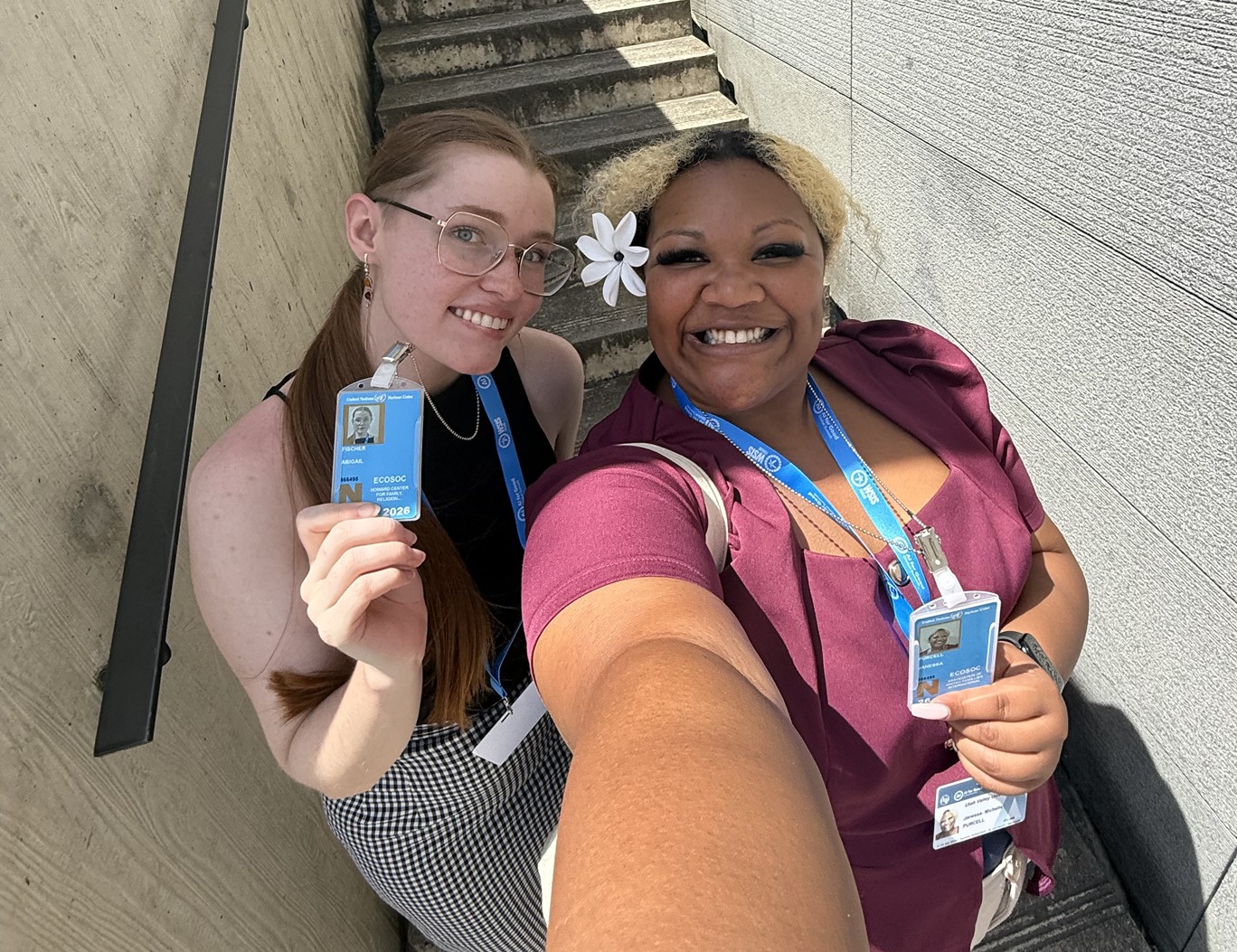
Abbie Fisher and I after receiving our UN badges.
Unfortunately for us, with the adjustments to our Monday plans, we were
unable to attend our scheduled visit to the Palace of the United Nations in Geneva
to familiarize ourselves and get acquainted with not just the structure of the UN
but its functions and the system in Geneva. Mr. Jean Luc Perrin, a member of the Geneve
Internationale Rotary Club was scheduled to greet us at the beginning of our tour
to share the history and roles of the United Nations and the Rotarians contributions
to the UN. The four Rotary groups in Geneva contribute to the goals and initiatives
of the UN. We had also scheduled a 10:30am tour of the UN in addition to visiting
the Human Rights Council as well as the Red Cross Museum. The Red Cross holds an important
place in history as the first non-governmental organization in multilateral diplomacy
and the promotion of peace around the world.
With the changes of flights in Chicago for the majority of the group, our original
plans for the day were canceled, as we waited for the rest of our group to arrive,
we decided to take in the beauty of Geneva and explore. Our explorations took us to
a local swimming spot on Lake Geneva.
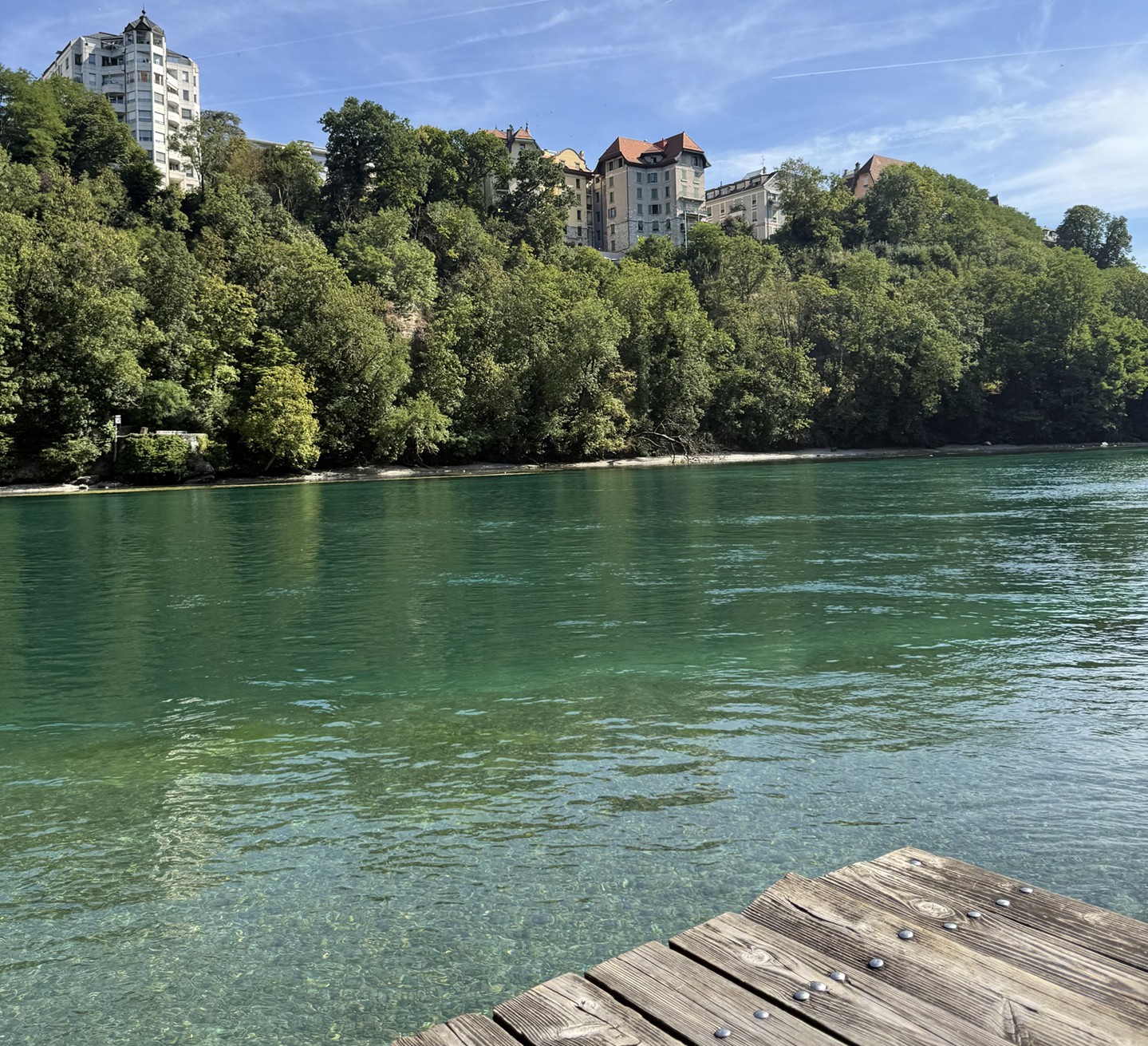
Local swimming spot in Geneva.
With the lack of communication or sense of direction, Abbie and I took this
chance to mentally prepare ourselves for the week. As we reconnected with nature,
it helped us put into perspective why our work here in Geneva was so important. As
we took in the sights around us, as we observed the locals dipping in and out of the
water, we were able to identify imperative points on the meaning of a sustainable
lifestyle where basic means of life are accessible and available for all. The inspiration
of the convenience of public transportation in Geneva highlighted an aspect of improvement
for our state of Utah. Public transportation in Utah is centered on Salt Lake City
which means commuting for everyone else. Commuting means more cars on the road, more
greenhouse emissions, and construction. All contributors to poor air quality that
has been statistically proven to impact the health and quality of life for Utahns.
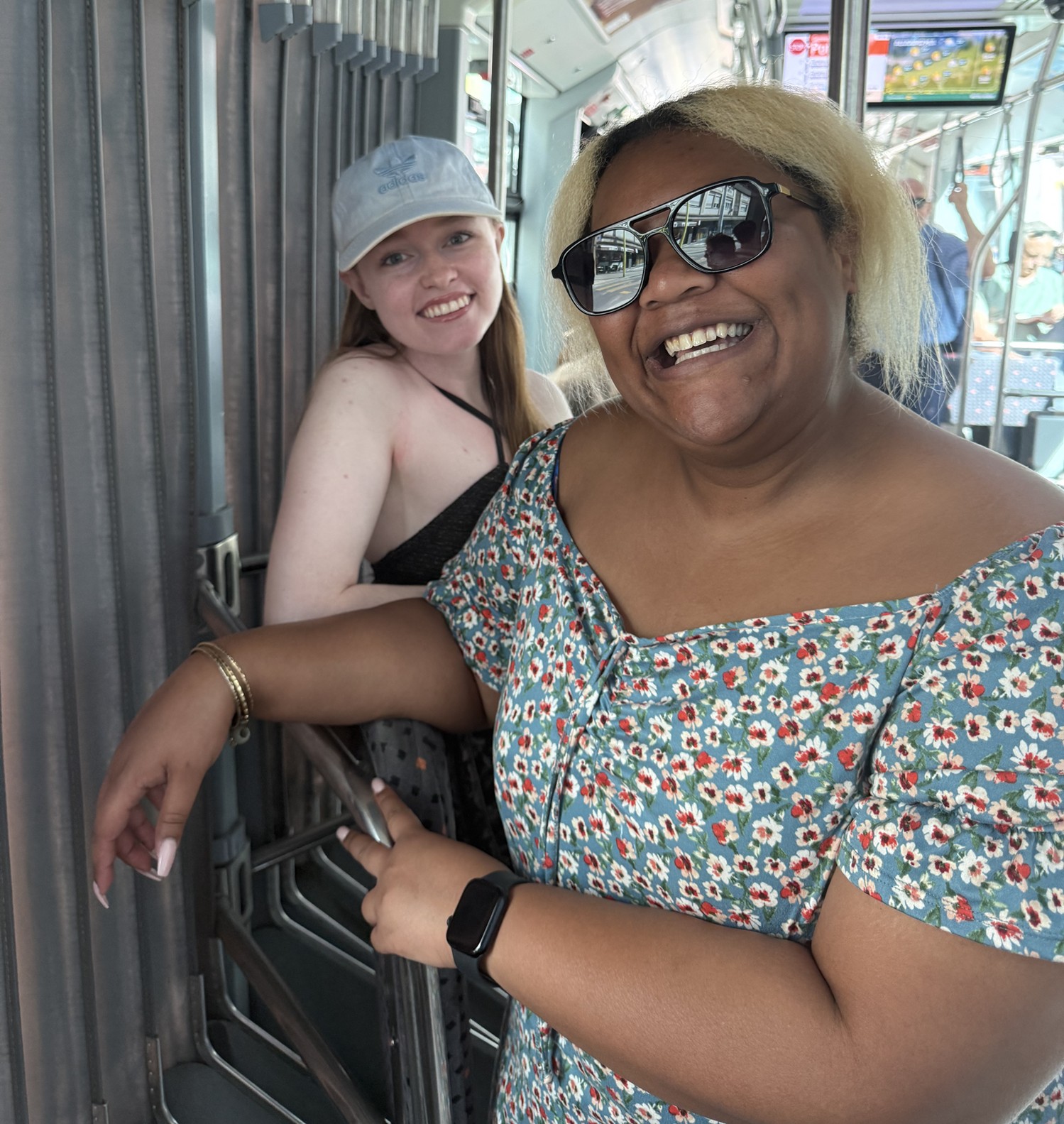
Abbie and I on the bus headed to the swimming spot.
As we swam in Lake Geneva, we noticed the work life balance many locals
experience. The locals would come to the lake access points on their lunch breaks
from work, have lunch with friends, take a swim and then pack up to leave and continue
on with their day. I personally was inspired by the relaxed life displayed before
me, and wondered how we could incorporate this work life balance into the fast paced
life of America. How imperative this change could be on the mental health and emotional
wellbeing of many people across the continent. There are many aspects to achieving
sustainability and Geneva seemed to be a good example of this. The accessibility to
a walking city was a major factor in navigating the city of Geneva that emphasized
the need for reformed infrastructure and improvements. In Utah, where I live, I need
to use a car to get to the Walmart three minutes away but traffic makes that drive
longer. In Geneva, there are pharmacies and grocery stores within walking distance
eliminating the need for the reliance on cars.
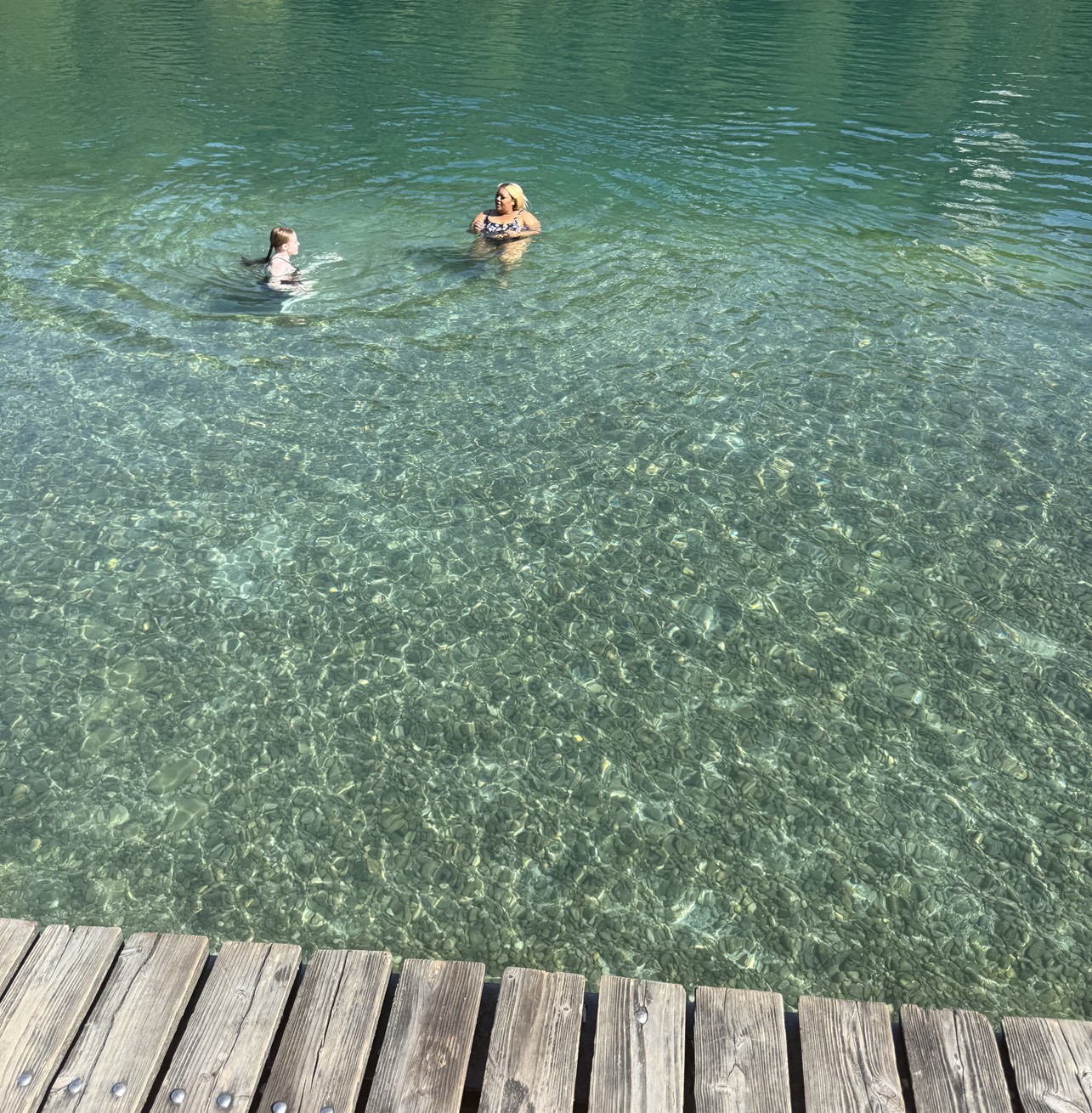
Abbie and I enjoying the cool water of Lake Geneva.
In our day of adjustments and pivoting we were able to analyze the city
of Geneva around us and take in the example of solutions to problems we have identified
in Utah, but also in a lot of other mountainous communities. We were able to refocus
on our purpose for this trip, promoting sustainable mountain development at the United
Nations to better the quality of life for all. With the SEL model, not only were we
able to have a relaxing day, but it better helped us understand how we could tackle
the rest of our itinerary for our very busy trip, finishing the week off in Geneva,
before tackling New York the following week. I was planning to use my trip to continue
my advocacy work in support of the mountain communities in the State of Utah, and
worldwide and in particular in my native Hawaii and get more ties and communications
with similar minded officials, scholars and civil society organizations in both Geneva
and New York City.
This delay may have caused many logistics issues to deal with, but it provided us
an opportunity to pivot in a situation we are not familiar with. That’s the beauty
of the student engaged learning model.
- Janessa- Michelle Purcell

