On July 15, 2026, our peers from Utah International Mountain Forum (UIMF), a coalition
of student clubs at Utah Valley University (UVU) and two of us began the day at the
United Nations by observing the High-Level Political Forum (HLPF) plenary session
held in the UN Trusteeship Council Chamber. Although the Trusteeship Council completed
its original mandate after the independence of Palau in 1994, its chamber now serves
as a venue for important United Nations meetings. The day's discussions focused on
the HLPF 2026 theme, "Transformative, equitable, innovative and coordinated actions
for the 2030 Agenda for Sustainable Development and its Sustainable Development Goals
for a sustainable future for all." Representatives from governments, civil society,
independent journalists, people of African descent, and persons with disabilities
shared their perspectives on the United Nations Economic and Social Council (ECOSOC)
Ministerial Declaration, emphasizing the urgent need for coordinated action to address
poverty, climate change, inequality, and geopolitical challenges. It was important
for us to visit this Chamber as a reminder about Damon Ashcraft, Samuel Elzinga and
Andrew Jensen, three UVU students’ oral presentation in support of mountain communities
during the HLPF on July 19, 2018. They were able to achieve this thanks to the Student-Engaged-Learning
(SEL) model, like we did this time.
SEL encourages students to work as a group to resolve practical issues related to
mountain communities with mentorship of their teacher. We worked out all stages of
our visit to the UN, starting from planning its since the Fall semester 2025, to raising
funds, managing logistics, agenda, preparing statements among other issues. During
our spring class United Nations Sustainable Development Goals we also studied theories
of Sustainable Development and in particular how HLPF functions as a UN top body to
review the implementation of sustainable development goals by the UN member-states.
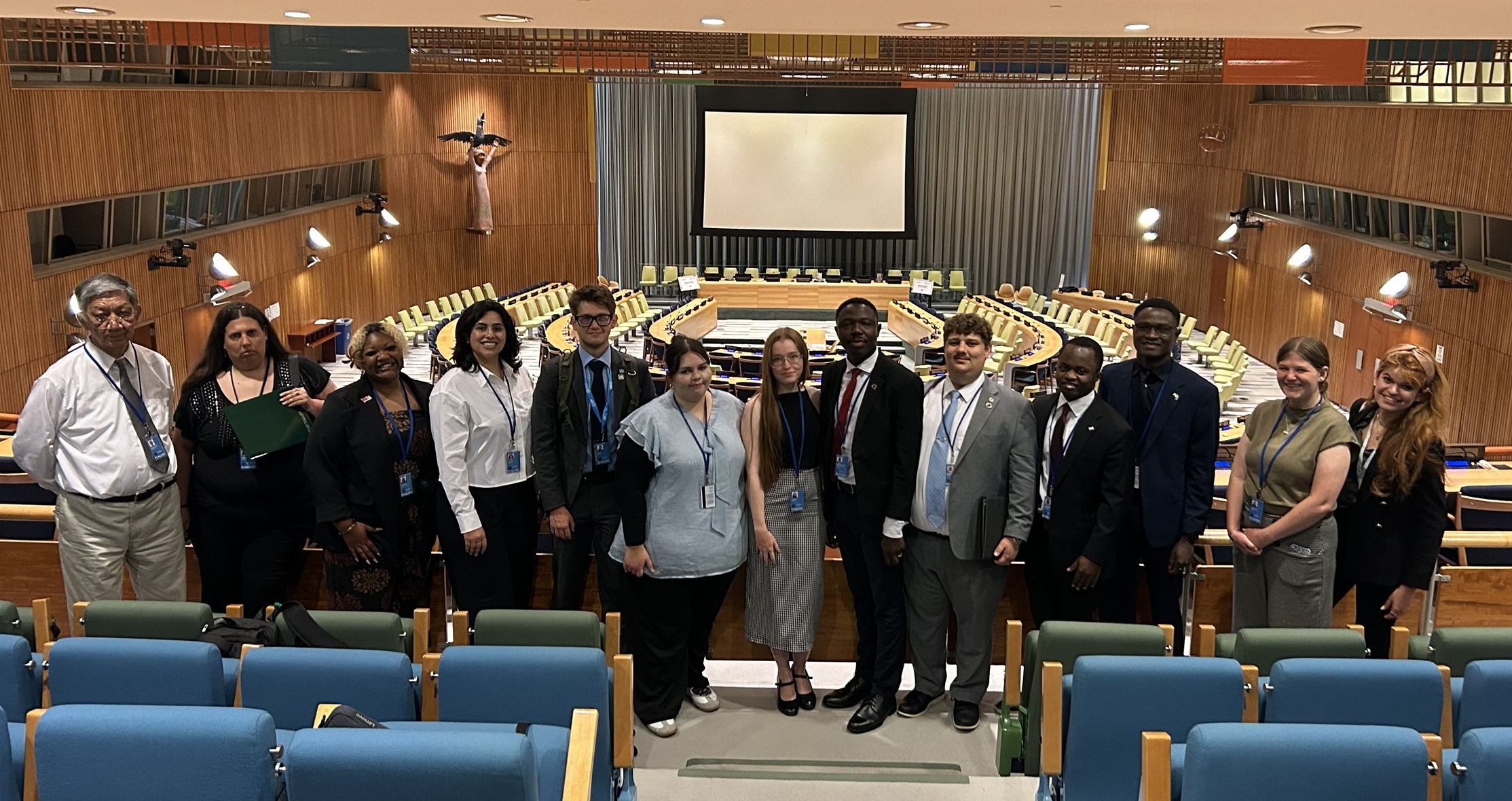
Utah Valley University Delegation at the UN Trusteeship Council Chamber
Following the plenary session, Dominic Callor, Aemish Brock, and two of us attended
a side event organized in collaboration with the United Nations Education, Science
and Cultural Organization (UNESCO) entitled "From SDG 4 to Systemic Transformation:
Education in the Post-2030 Agenda." In comparison with plenary sessions, side events
are hosted by member-states or UN bodies to highlight their specific projects or initiatives
contributing to the main theme of the HLPF. This particular side event was both inspiring
and thought-provoking, bringing together education experts, policymakers, and advocates
to discuss the future of quality education beyond the current Sustainable Development
Goals. Many participants expressed concern that, despite education being the foundation
of sustainable development, it often receives insufficient attention in national policies
and Voluntary National Reviews (VNRs).
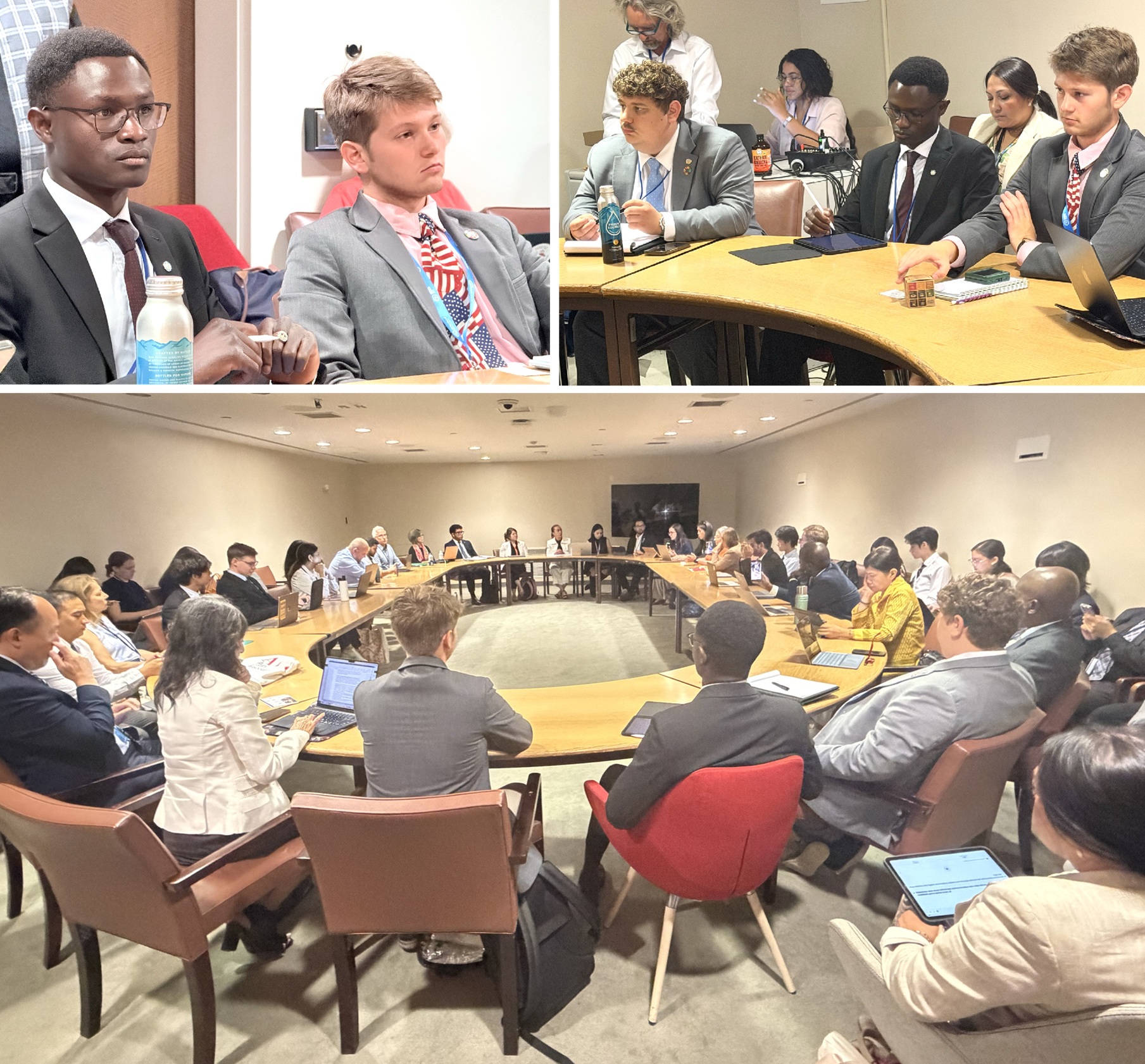
Aemish Brock, Dominic Callor, and Antoine Mwamba attended the UNESCO side event, "From
SDG 4 to Systemic Transformation: Education in the Post-2030 Agenda," during the United
Nations High-Level Political Forum (HLPF) on July 15, 2026.
The discussions resonated with our own observations from attending numerous VNR presentations
throughout the HLPF and in particular with our focus on the situation with the social
dimension of sustainable development including education among mountain communities
in the Democratic Republic of Congo (DRC). This HLPF allowed our delegation and us
to focus on this issue because of the inclusion for review by the session of the
implementation of member-states of Target 6.6 which focuses on protection and restoration
of water-related ecosystems, including mountains, forests, wetlands, rivers, aquifers
and lakes. While many countries highlighted progress in economic growth, infrastructure
development, governance reforms, and healthcare, relatively few devoted significant
attention to improving education systems. Speakers also cited recent UNESCO findings
showing that in many countries, public spending on debt servicing exceeds investment
in education. This highlighted a fundamental challenge: although governments strive
to build a better world, sustainable development cannot succeed without investing
in the people who will ultimately shape that future.
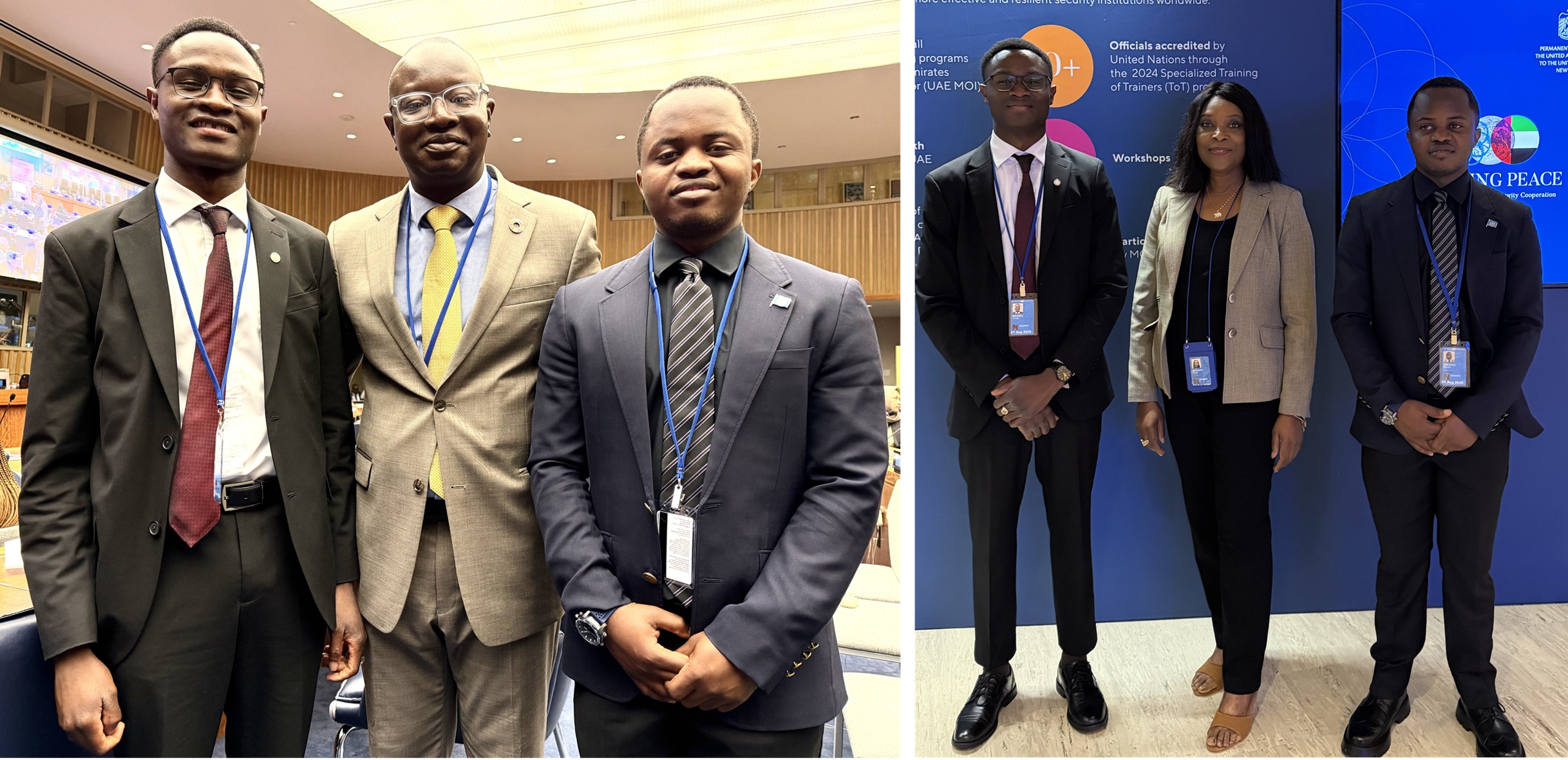
Antoine Mwamba and Roland Kabongo with Mrs Clotilde Monguya a member of Congolese
civil society and Mr Ali Bamba an official representative of the Government of Côte
d'Ivoire following the presentation of the 2026 Voluntary National Reviews (VNRs)
by Egypt and Rwanda during the United Nations High-Level Political Forum (HLPF) on
July 15, 2026.
During the interactive discussion, participants were asked what recommendations they
would offer to world leaders to ensure everyone has access to quality education. We
had the opportunity to share our perspective, emphasizing that many countries must
first modernize their education systems. We explained that today's challenges cannot
be solved with educational models designed more than a century ago. Education systems
must evolve to equip students with the skills, critical thinking, innovation, and
adaptability needed for the rapidly changing world. We highlighted our Student-Engaged
Learning model as an example of how students could develop such skills based on hands-on-activities
and working as a group on resolving problems affecting local communities with teachers
mentorship. We stressed that human development should remain at the center of sustainable
development because educated people are the driving force behind lasting social and
economic progress.
Later in the afternoon, Christian Louyoko Nianza, Roland Kabongo, and Antoine Mwamba
attended the HLPF plenary session during which Egypt and Rwanda presented their 2026
Voluntary National Reviews (VNRs). Egypt highlighted its commitment to evidence-based
policymaking, social protection, healthcare expansion, educational access, women's
empowerment, economic transformation, environmental sustainability, and institutional
governance. The delegation emphasized that people remain at the center of their national
development strategy while strengthening partnerships and financing mechanisms to
accelerate progress toward the Sustainable Development Goals.
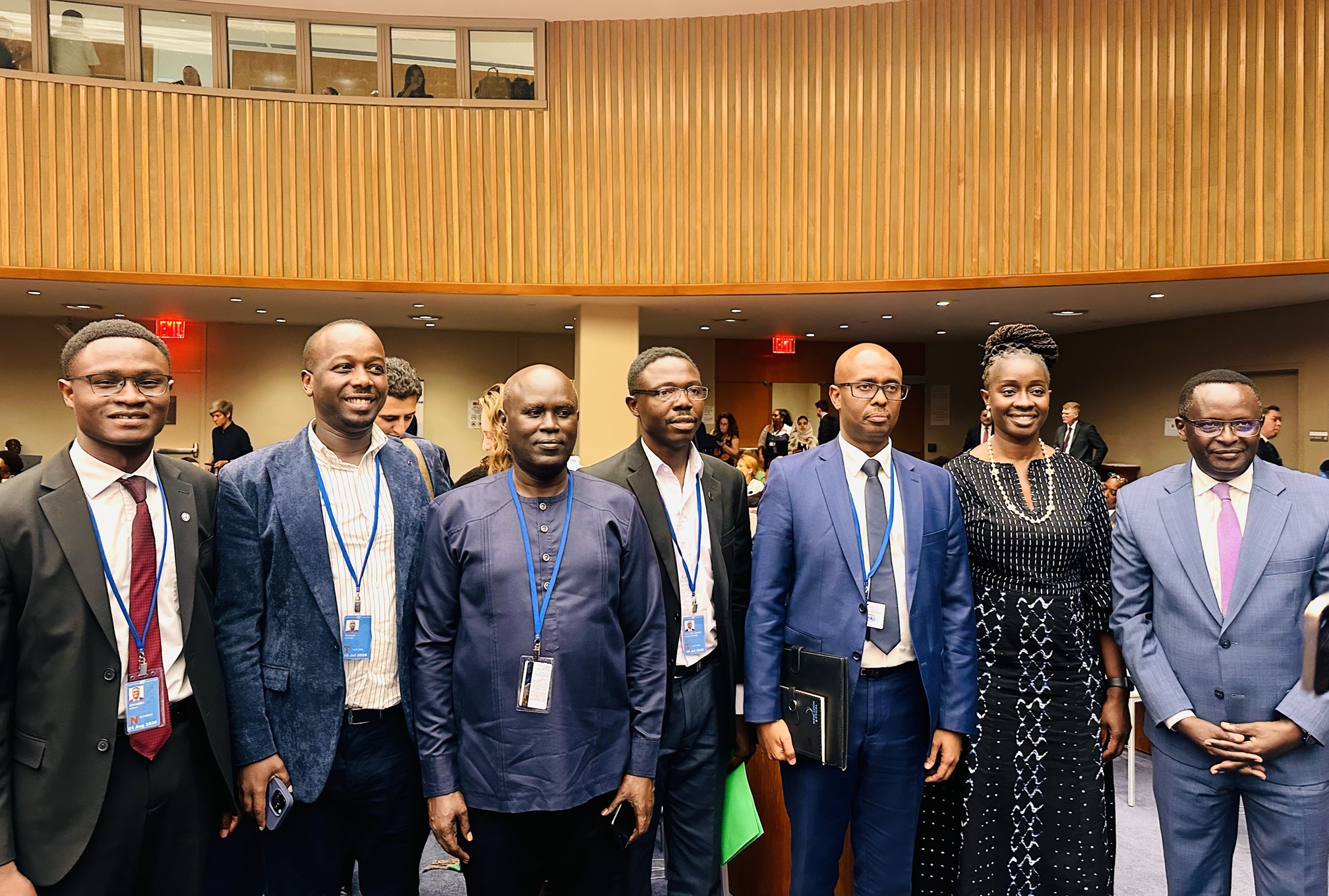
Louyoko Nianza and Antoine Mwamba with the Minister of Economy Yusuf Murangwa and Ambassador Martin Ngoga representative of the Government of Rwanda following the
presentation of the 2026 Voluntary National Reviews (VNRs) by Egypt and Rwanda during
the United Nations High-Level Political Forum (HLPF).
Rwanda's presentation focused on the country's continued implementation of its National
Strategy for Transformation, highlighting achievements in poverty reduction, digital
government services, youth employment initiatives, refugee inclusion, infrastructure
development, and social protection. At the same time, Rwanda acknowledged persistent
challenges, including climate change, financing gaps, urbanization, and youth unemployment.
Listening to both countries present not only their accomplishments but also the obstacles
they continue to face reinforced the importance of transparent reporting, strong governance,
and international cooperation.
July 15 was another valuable learning experience that deepened our understanding of
global policymaking and strengthened our commitment to promoting inclusive, people-centered
sustainable development. We appreciate the opportunity that Utah Valley University
UVU and the Student-Engaged Learning model provided me to participate at the UN. Through
this experience, we strengthened our leadership, communication, diplomacy, networking,
public speaking, and, most importantly, critical thinking skills. Working alongside
diplomats, government officials, civil society representatives, and fellow students
gave us firsthand insight into how international organizations collaborate to address
global challenges and advance the Sustainable Development Goals (SDGs) and Sustainable
Mountain Development and State of Utah as one of the model of it.
We express my sincere gratitude to UVU College of Humanities and Social Sciences,
Ethics Center, History and Political Science Department, Utah 5420 District Rotarians
and Orem-Lindon Rotary Club for providing the financial support and educational opportunities
that made our participation through the Utah International Mountain Forum, in the
2026 High-Level Political Forum on Sustainable Development possible. Their investment
in a student-engaged learning model has allowed us to gain invaluable professional
experience while representing both our university and the DRC in an international
setting. They have always provided strong support in our efforts to advocate for sustainable development of mountain
communities in the State of Utah, globally, including in our native DRC and at the
United Nations.
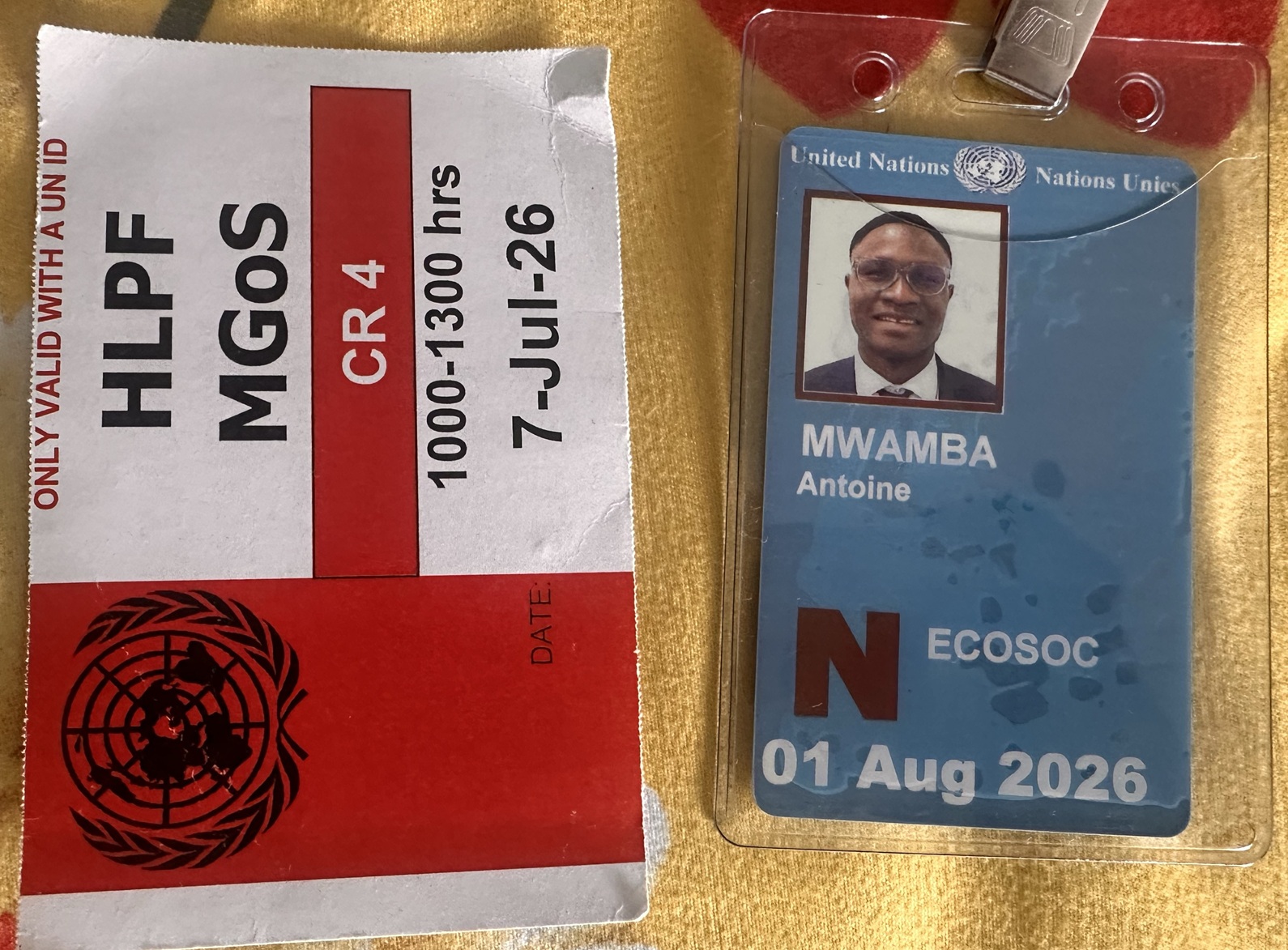
Ground Pass for the HLPF Participation Provided for Antoine Mwamba
We also thank Mrs Marcia Barlow, President of the non-governmental organization Association
of United Families for providing a great opportunity for our team and us to learn
how through nongovernmental organizations in consultative status under ECOSOC we,
students can contribute to the implementation of the sustainable development goals
in particular among our mountain communities and serve as watchdogs by promoting transparency, accountability, and meaningful engagement between civil
society and the United Nations
By Antoine Mwamba, President, UVU Rotaract Club, Member, Utah International
Mountain Forum (UIMF) and Roland Kabongo, Member, UIMF
***
STUDENT REFLECTIVE ESSAYS
***
26-07-14-Roland-Kabongo-From Sustainable Development to Global Security Reflections
from the High-Level Political Forum and Security Council
***
26-07-15-Roland Kabongo-Artificial Intelligence for Sustainable Development Global
Leaders Call for Inclusive, HumanCentered AI at the HLPF 2026
***


