The United Nations (UN) convened international stakeholders for its 14th annual session
of the High Level Political Forum on Sustainable Development (HLPF) between July 7th
to 15th, 2026. This forum, held at the UN Headquarters in New York City, New York,
was a markedly lively one, attended by global and local leaders alike. Amid the hodgepodge
of personnel were students from Utah Valley University (UVU). These local leaders,
visiting as representatives of the Utah International Mountain Forum (UIMF), a coalition
of clubs at UVU, did something that few undergraduate students have the opportunity
to do—they led the charge to join critical global conversations on sustainable development,
advocating for mountain communities and mountain specific challenges.
The UVU group consisted of student leaders Natalia Figueroa, Aemish Brock, Sophie
Jackson, Cristina Alves, Erynn Lammi, Domenic Callor, Megan Ashcraft, Janessa-Michelle
Purcell, Louyoko Nianza, Antoine Mwamba, Roland Kabongo, and Abbie Fisher, alongside
faculty mentor Dr. Baktybek Abdrisaev, and UVU Political Science Chair Dr. Jay DeSart.
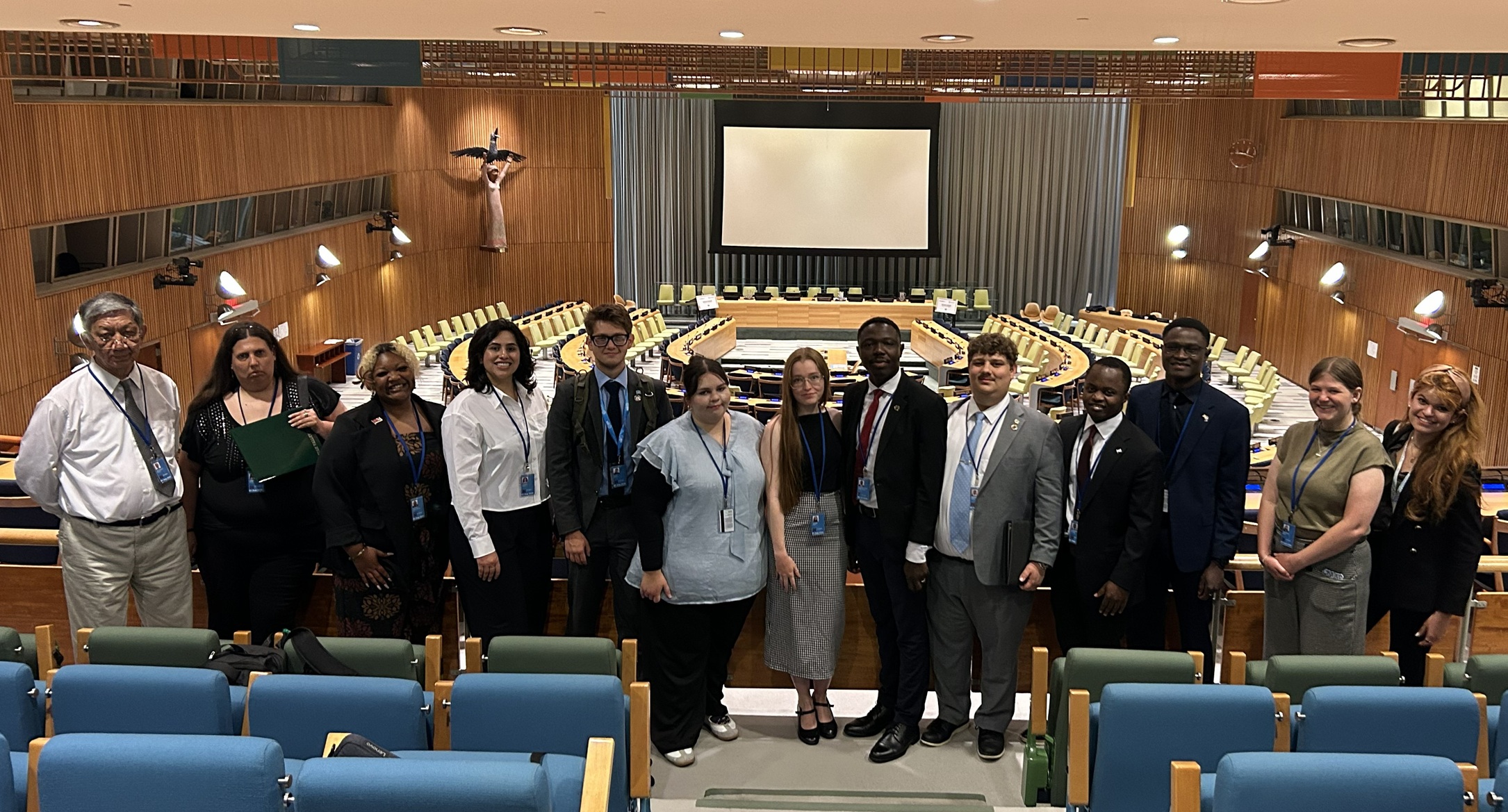
Utah Valley University Student Attendees Pose alongside Faculty Mentor Dr. Baktybek
Abdrisaev for a Picture in the UN Trusteeship Council Chamber, July 14th, 2026.
Student members of the UIMF attended the HLPF as part of a university sanctioned study
abroad trip to UN Headquarters in Geneva, Switzerland, and New York City, U.S. During
their attendance in Geneva, UVU students hosted a side event alongside students and
representatives from the Kyrgyz Republic. Held at the World Trade Organization (WTO)
on July 8th, the event featured student presentations that drew on comparative analyses
of various mountain countries to investigate mountain sustainable development challenges
and their relationship to global trade mechanisms. Per this recent presentation experience
at the WTO, students were well positioned to further develop both their academic and
personal understanding of their research topics, the SDGs (including mountain-specific
targets such as SDG 6.6), and the broader policy and governance processes that shape
mountain sustainable development. The opportunity for this development was provided
through the attendance at the 2026 HLPF.
The HLPF is the UN’s central platform for the follow-up and review of the 2030 Agenda for Sustainable Development and its 17 Sustainable Development Goals (SDGs). The 2026 session conducted in-depth reviews of member state’s SDG implementation,
with a strong focus on select SDGs—SDG 7. ‘Ensure access to affordable, reliable, sustainable and modern energy for all’; SDG 9. ‘Build resilient infrastructure, promote inclusive and sustainable industrialization
and foster innovation’; SDG 11. ‘Make cities and human settlements inclusive, safe, resilient and sustainable’; SDG 17. ‘Strengthen the means of implementation and revitalize the Global Partnership for Sustainable
Development;’ and SDG 6. ‘Ensure availability and sustainable management of water and sanitation for all.’ SDG 6 additionally includes Target 6.6 which “...aims to protect and restore water-related
ecosystems, including …mountains, to ensure their sustainability and resilience.”
The relevance of mountain perspectives in SDG assessment and implementation was evidenced
in the attendance of mountain countries and member states to the HLPF. Among the 36
countries presenting Voluntary National Reviews (VNRs) at the 2026 session that reported
on the implementation of all SDG 6 targets, 22 were designated as mountain countries.
This convergence made the forum a particularly timely and relevant venue for the mountain-focused
UIMF to engage with policymakers, practitioners, and other stakeholders advancing
sustainable mountain development.
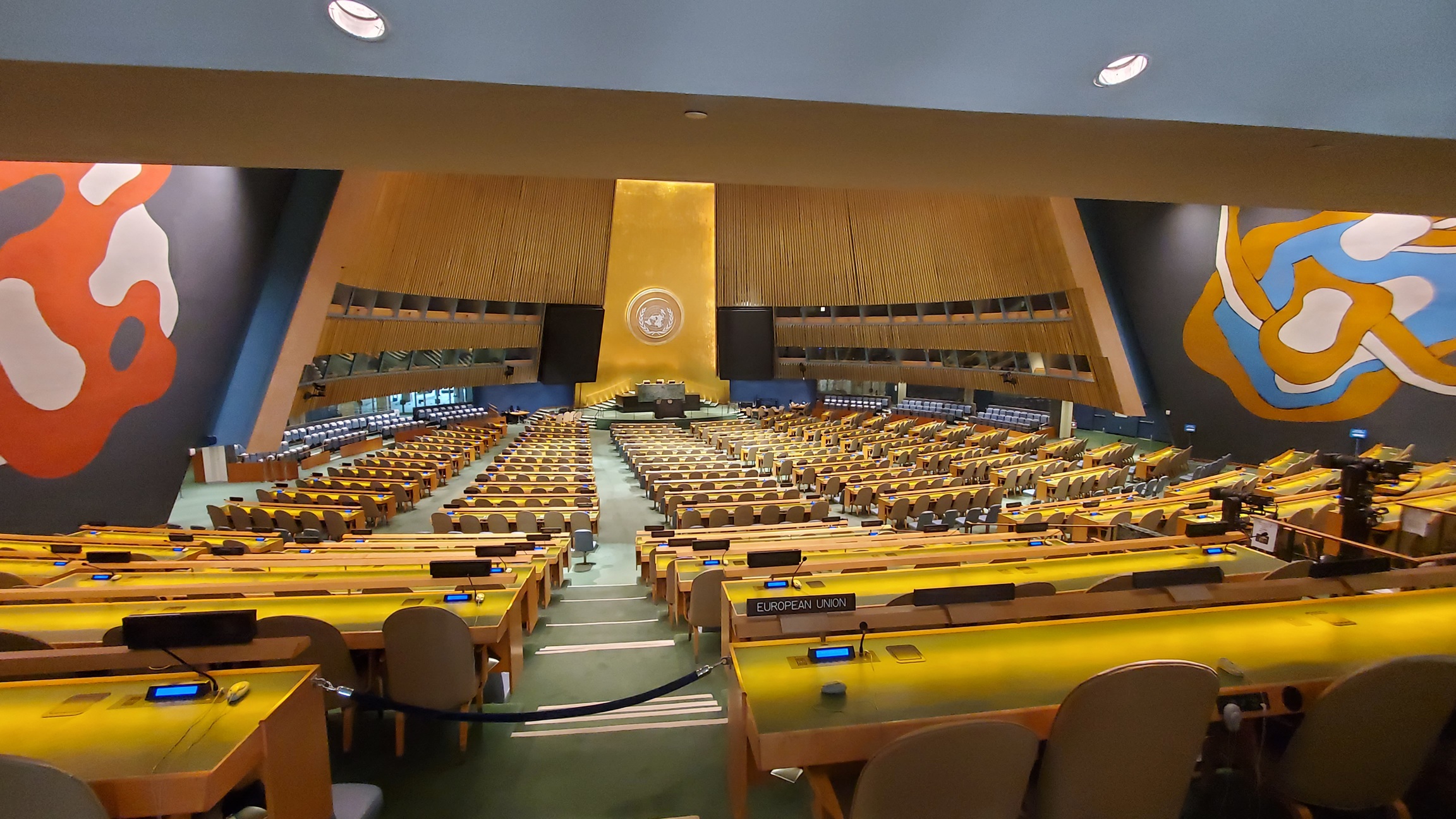
The General Assembly Hall at the UN Headquarters in New York City
Participation in the HLPF for the UVU student group meant attendance at various side
events—subject-specific sessions hosted by member states—selected for their relevance
to both the UIMF’s border purpose and student’s individual research interests and
disciplines. These side events provided opportunities for students to interact with
identified relevant mountain stakeholders and allowed them to pose questions to speakers,
share their research and evidences of their work through the Student Engaged Learning
(SEL) model, and provide gifts to distinguished panel members.
Examples of side events attended by students include ‘Building equitable pathways to 2030 and beyond: advancing climate-resilience through
the lens of the right to a clean, healthy and sustainable environment’ hosted by the Permanent Mission of Denmark to the United Nations, and ‘From SDG 4 to systemic transformation: Education in the Post-2030 agenda’ hosted by the Education & Academia Stakeholder Group.
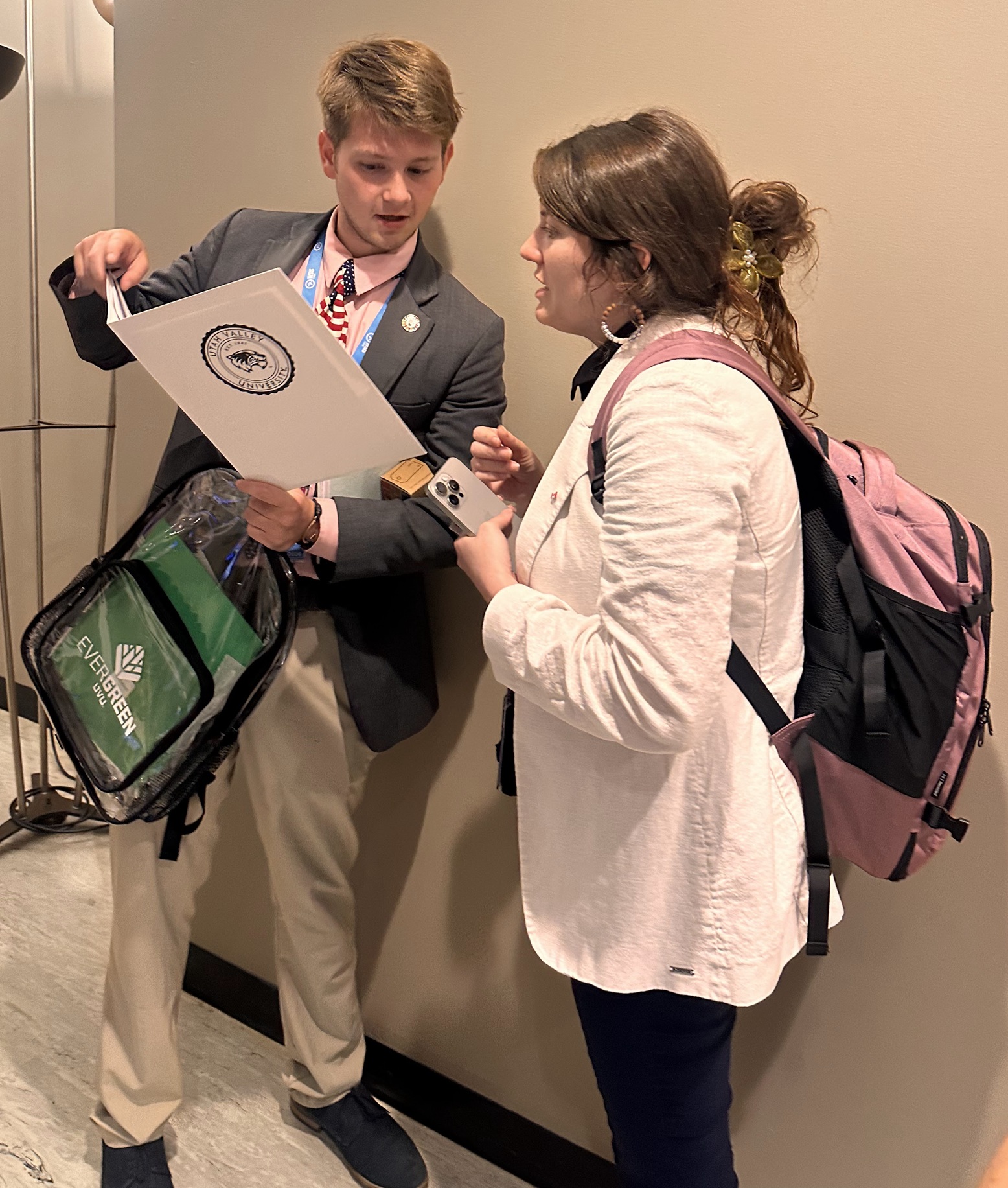
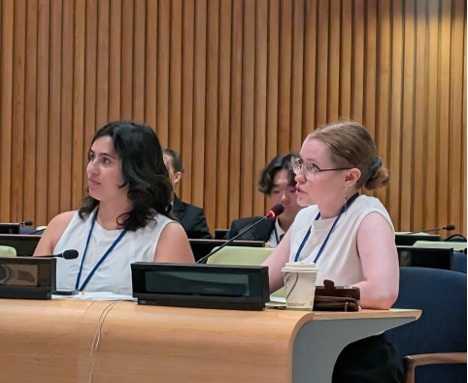
Domenic Callor Presents Gifts to a Side Event Speaker ( L). Abbie Fisher Asks a Question
at the side event ‘Strengthening SDG Acceleration and Multilateral Action: Civil
Society on the Road to the 2027 SDG Summit,’ hosted by various NGOs and attended by
Navid Hanif , Assistant Secretary-General for Economic Development (R)
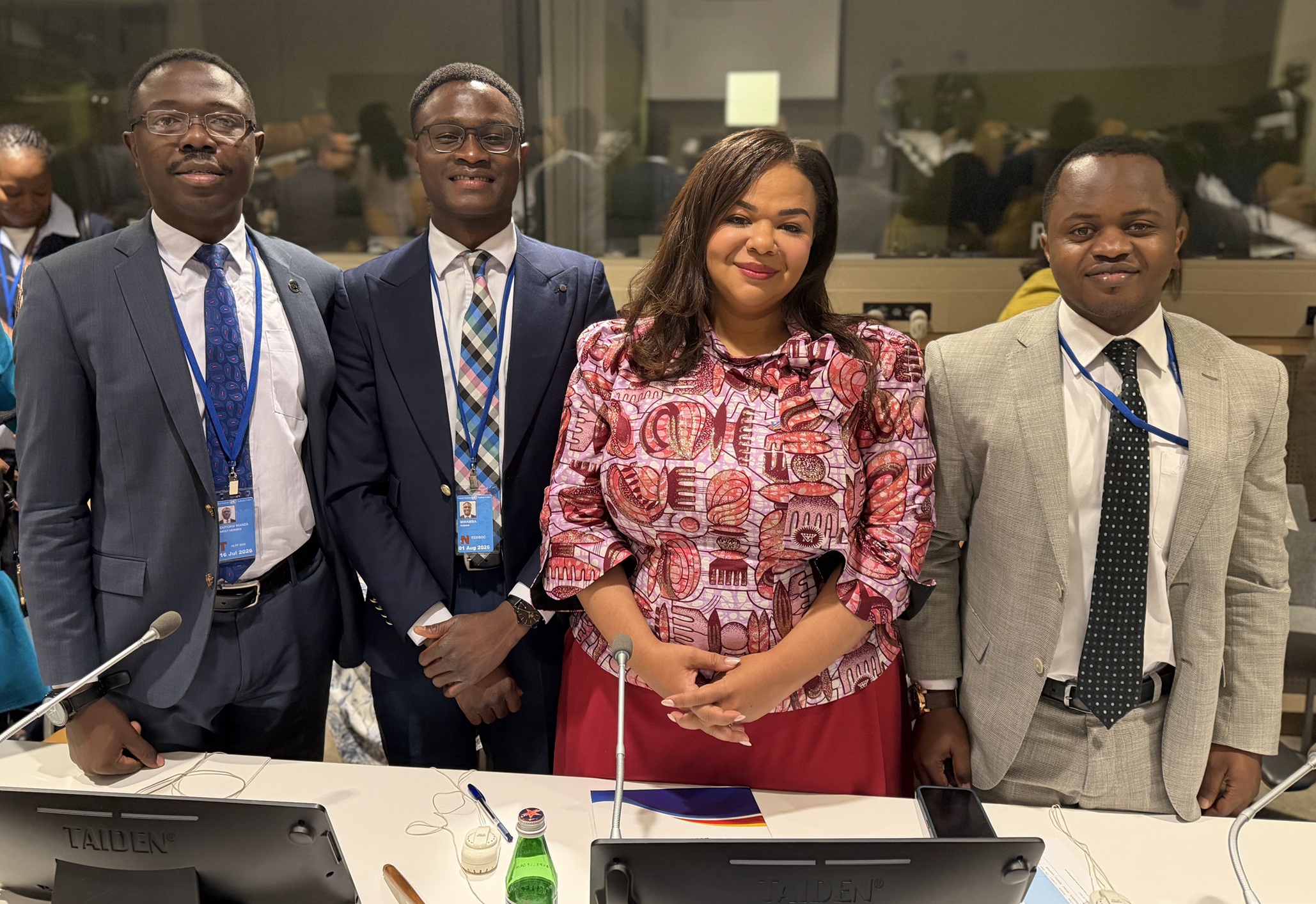
Antoine Mwamba, Roland Kabongo, and Louyoko Nyanza, members of the UIMF, with Her
Excellency Thérèse Kayikwamba Wagner, Minister of State, Minister of Foreign Affairs,
International Cooperation, Francophonie, and Congolese Diaspora of the Democratic
Republic of the Congo, at the
conclusion of the DRC side event during the HLPF at the United Nations in New York.
On July 14th, I had the privilege of attending one such side event with my colleague
Sophie Jackson, titled ‘Bridging Science, Policy, and Practice to Address the Triple Planetary Crisis: Strengthening
Synergies for the SDGs and a Sustainable Post-2030 Future.’ This event was hosted by the Ministry of the Environment of Japan, alongside co-organizers:
Republic of Panama, UNDESA, UNEP, UNESCAP, ADB, and IGES.
Living up to its namesake, the session addressed technical, practical, and pedagogical
approaches to leveraging co-dependent systems to more holistically drive sustainable
development efforts. Given my background in systems thinking design the content sparked
a deep sense of familiarity, and showcased a breadth of insights gleaned from a report
titled ‘Asia-Pacific synergies report: advancing synergistic solutions to the triple planetary
crisis and the SDGs.’ Utilizing case studies and practical examples, the report aptly framed the growing
climate crisis within a model of best practices and action-based pathways for SDG
implementation. The final message of the session, similar to themes across other HLPF
side events, emphasized the necessity for action, not over, but alongside research.
From the Japanese State Minister of Environment, Tsuji Kiyoto, to an invited speaker
from Oxford, the event panelists spoke to the growing importance of increasing implementation
efforts. As a researcher and community advocate myself, I resonate strongly with the
struggle to balance enough information with enough action. While theory is prolific,
the practice of it is less so, creating a gap which can be most meaningfully addressed
by coordinated action across sectors and stakeholders—intersecting efforts from local
communities to government actors.
It is this intersection that connected my colleague Sophie Jackson and I with Miki
Fukuda, Chief Policy Researcher at the Institute for Global Environmental Strategies
(IGES) and representative and coordinator for the noted event. What started as a simple
exchange of gratitude and information soon took root in a conversation about Student
Engaged Learning (SEL). As an educator at IGES, Ms. Fukuda expressed a strong interest
and excitement in the UIMF’s work on sustainable mountain development advocacy and
the program’s use of the student engaged learning model.
After our continued conversation, she presented the opportunity for Ms. Jackson and
I to share our experiences in attending the HLPF as student representatives with her
students at IGES. Honored by the invitation, Ms. Jackson and I met with Ms. Fukuda
the following day in the Delegates Lounge for a recorded virtual peer-to-peer exchange.
During our recorded communication, we shared our experiences with the UIMF, discussed
our personal backgrounds and research, and reflected on key insights and takeaways
from our participation in the HLPF. This exchange created an opportunity for us to
engage with other students through an approach grounded in shared experiences and
perspectives.
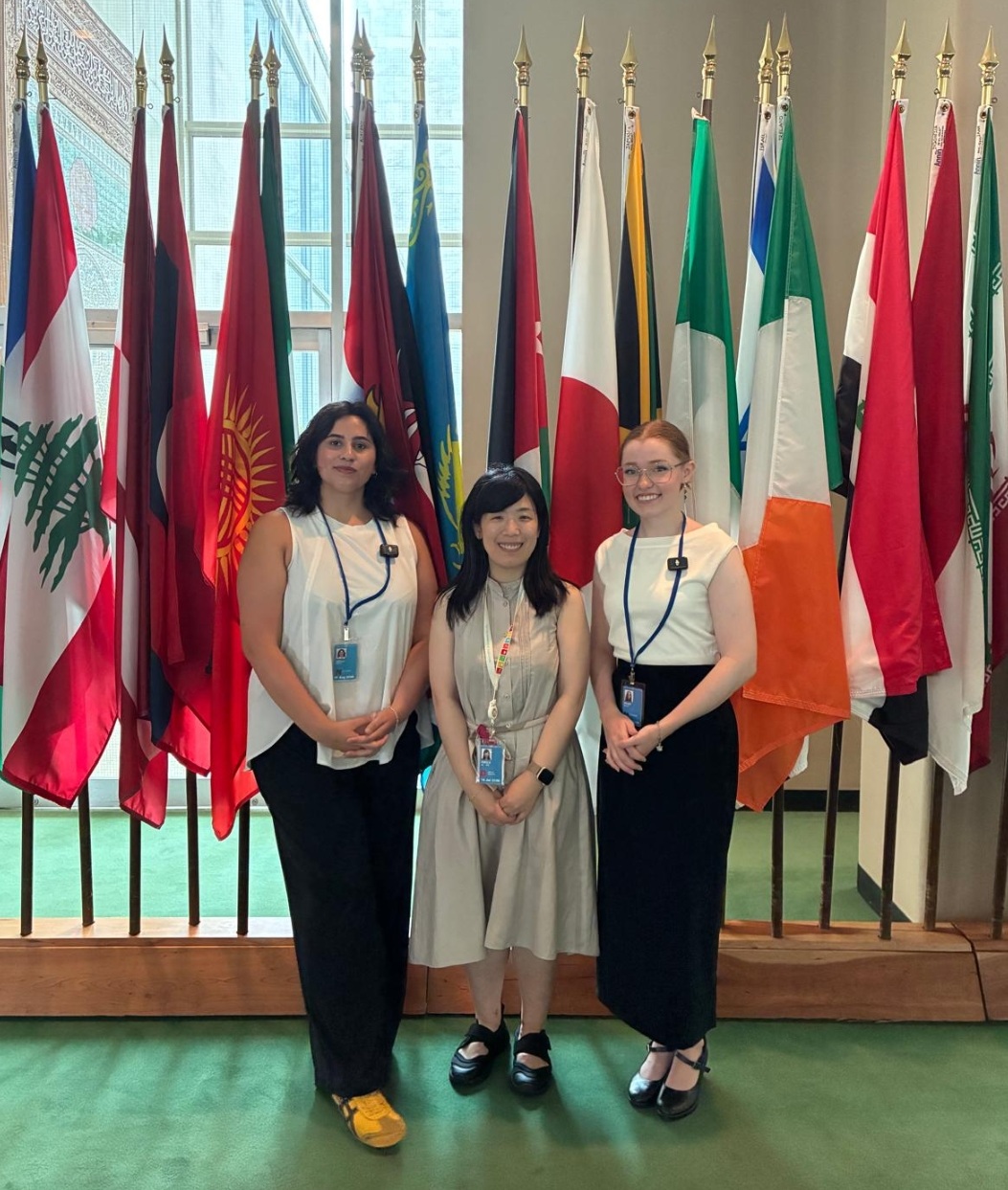
Sophie Jackson (Left), Chief Policy Researcher Miki Fukuda, (middle), and Abbie Fisher
(Right),
Pose for a Picture After Recording a Message for IGES Students.
This peer-to-peer interaction reflects one of the foundational principles of SEL,
in which students collaborate in group-based settings to achieve shared goals with
the mentorship of faculty. The exchange of skills and knowledge in practice, reflect
the real world ebbs and flows of change-making, and underscore the vital relational
element of SEL which relies on intersecting networks of peers, faculty, community
members, industry, and external stakeholders.
In utilization, SEL is an experiential learning approach which requires student stewardship
of learning outcomes through hands-on-engagement. From logistical planning, fundraising,
and research, to the graphic design of assets and assessment of outcomes SEL allows
students to develop real skills in real stakes environments. The UIMF has long employed
SEL as a mechanism of academic and professional advancement for students, and also
as a civic engagement tool through which local communities benefit from localized
research, service, and advocacy.
As a recent graduate, my contributions during the study abroad trip and group participation
at the HLPF lay most centrally in my mentorship role. In some cases, this was embodied
through supporting the development of technological failure protocol for presentations,
in others, connecting students to newly identified networks, consulting on research
topics, grant writing, and helping to clarify program parameters. In the planning
and post-visit phase, my contributions expanded the current use case of the SEL model
to more explicitly integrate systems theory as a complement to the elements of both
sustainable development and student leadership. Programmatically, this contribution
provides a working visual draft of how the SEL model can be employed and communicated
to external stakeholders, positioning it for future use at gatherings like the HLPF.
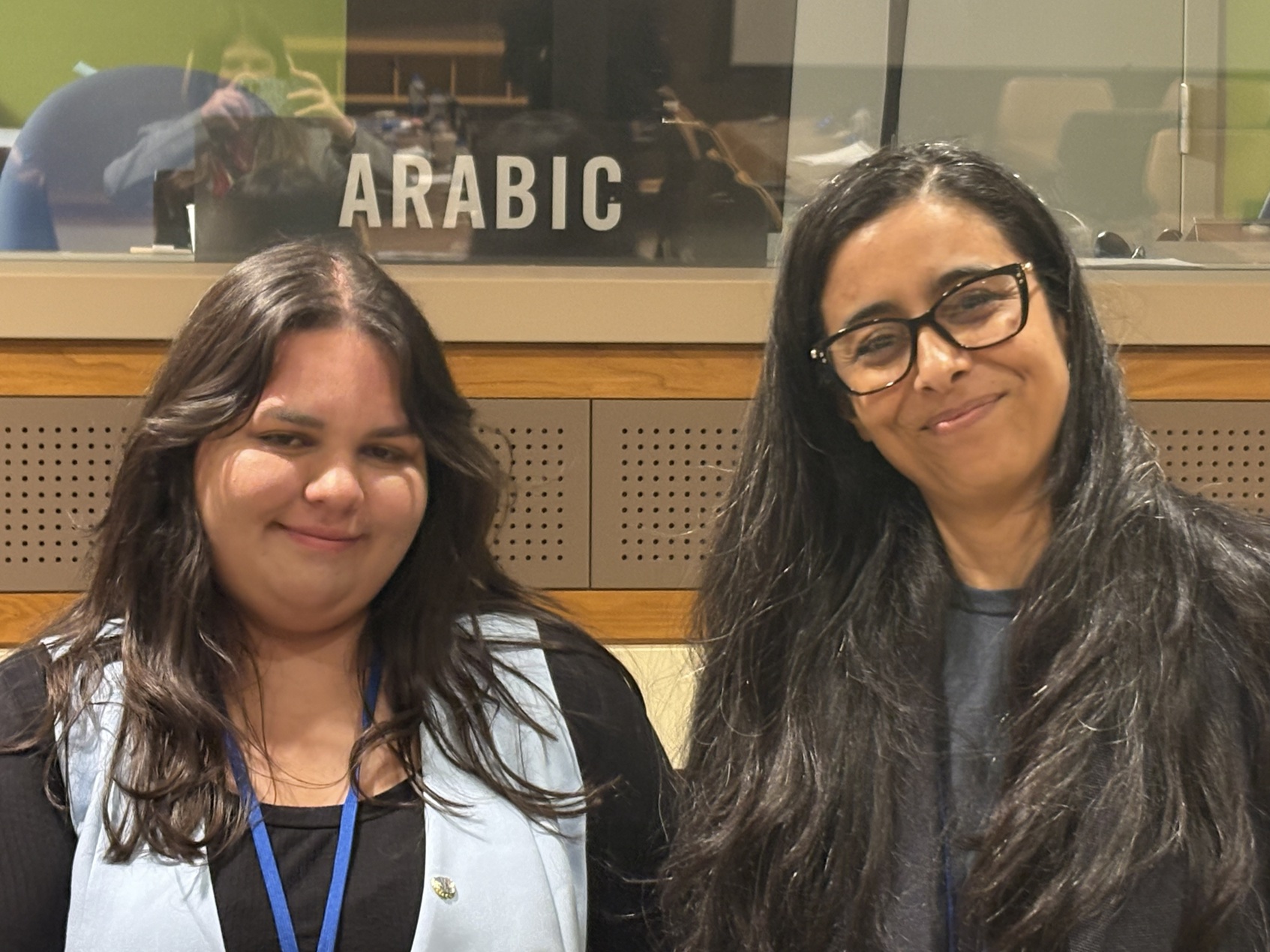
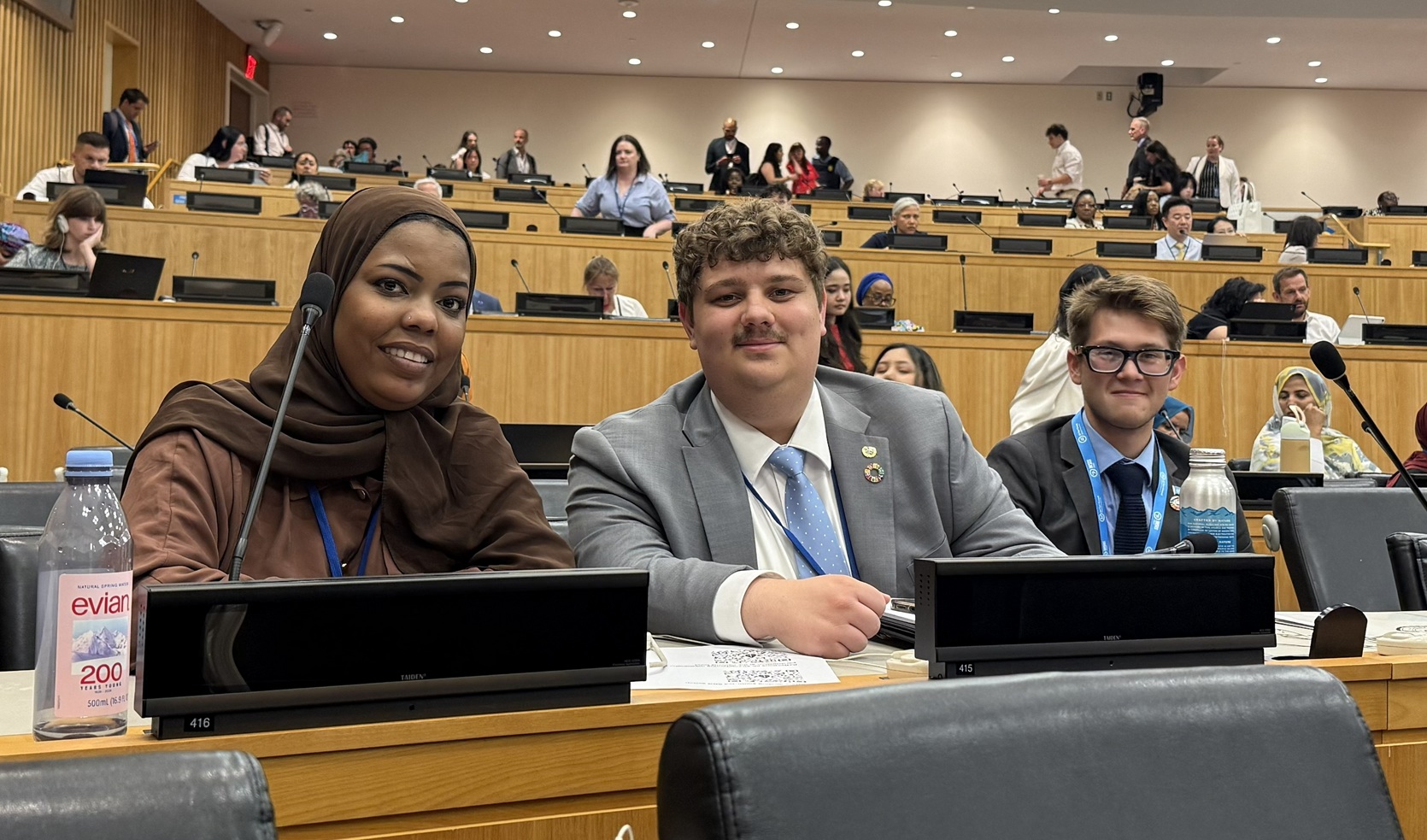
Student Natalia Figueroa Poses with Side Event Speaker at the HLPF [Left]; Students
Aemish Brock and Domenic Callor Post with a new friend from the HLPF [Right]
Activities of the UIMF, such as those demonstrated by the study abroad and noted experiences,
are microcosms of a much broader shift befalling higher education, one that recognizes
the value of learning as a dynamic process of engagement rather than a passive transmission
of knowledge.
SEL is best understood not by what it produces, but by what it cultivates within students
themselves. Its true potential lies in its capacity to strengthen students' internal
systems of self through stewardship—entrusting them with meaningful responsibilities
tied to causes they genuinely care about. In doing so, SEL moves beyond research and
learning insulated by the traditional boundaries of higher education, creating experiential
opportunities that cannot be replicated in a classroom environment or standardized
for every individual. Learning, in this sense, is not merely an intellectual or diagnostic
exercise; it is sensuous—a full-bodied process through which students discover knowledge
by engaging with lived experiences, negotiating their positionality, and participating
in authentic dialogue across cultures and perspectives.
Having journeyed through this process as a student in the study abroad program, I
liken the experience to an educational pilgrimage. I have not only developed indispensable
skills in international advocacy, sustainable development pedagogy, civic engagement
leadership, and lived-experience-informed research, but I have also discovered like
minded communities of change-makers, finding peers and mentors who have reinforced
my sense of purpose and expanded my personal, academic, and professional horizons.

Sculpture ‘Sphere Within Sphere’ on the UN Headquarter Grounds in New York city
I extend my gratitude to the civil society organizations, member states, HLPF organizers,
and the many stakeholders who generously offered their time, expertise, and perspectives
to engage our group and share their knowledge. I also thank the Orem-Lindon Rotary,
the UVU History and Political Science Department, UVU College of Humanities and Social
Sciences, the Herbert Institute, and the United Nations Mountain Partnership, for
their support in facilitating our attendance and participation in the program.
Ultimately, my experiences participating in the HLPF reveal what I believe to be the
profound potential of SEL: to guide students beyond the boundaries of traditional
learning and allow them opportunity, and privilege, to be responsible for something
that they care about. For me, having the opportunity to step into the global community
of sustainable development has shaped how I view myself, the world, and the future
I hope to create and live in.
By Abbie Fisher, Utah Valley University Student:
Abbie Fisher’s background spans psychological and psychometric research, social impact
assessment, and systems thinking strategy, and community advocacy. A 2026 global Oxford
Map the System team winner and 2026 Student Champion honoree at UVU for student advocacy,
her work helps inform evidence-based measurement frameworks and workforce alignment
strategy. She hopes to continue advancing equitable policy and systems change through
involvement with local non-profits and research-based organizations.
***
STUDENT REFLECTIVE ESSAYS
***
26-07-14-Cristina Alves Morais Learning Diplomacy in Practice at the United Nations
***


