On July 10, 2026, members of the Utah International Mountain Forum (UIMF), a coalition
of student clubs at Utah Valley University visited the Geneva Office for The Church
of Jesus Christ of Latter-day Saints Charities organization as part of the Utah Valley
University Study Abroad program in Switzerland and New York United Nations. Alongside
our classmates, we attended a presentation led by Mr. Stefano Bosco, Director of Latter-day
Saint Charities in Geneva. This visit was in line with the previous meetings and cooperation
of the UIMF members with the LDS Charities since participation at the UN forums starting
in 2017.
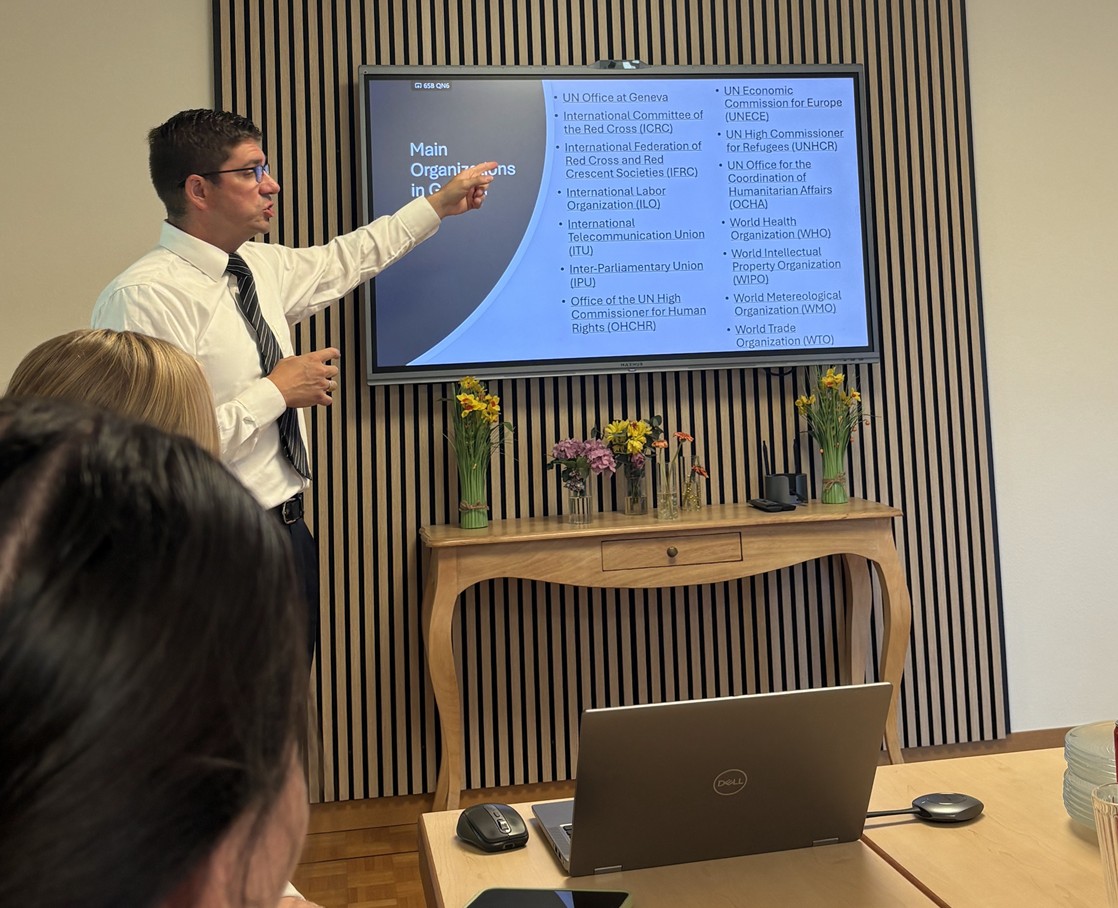
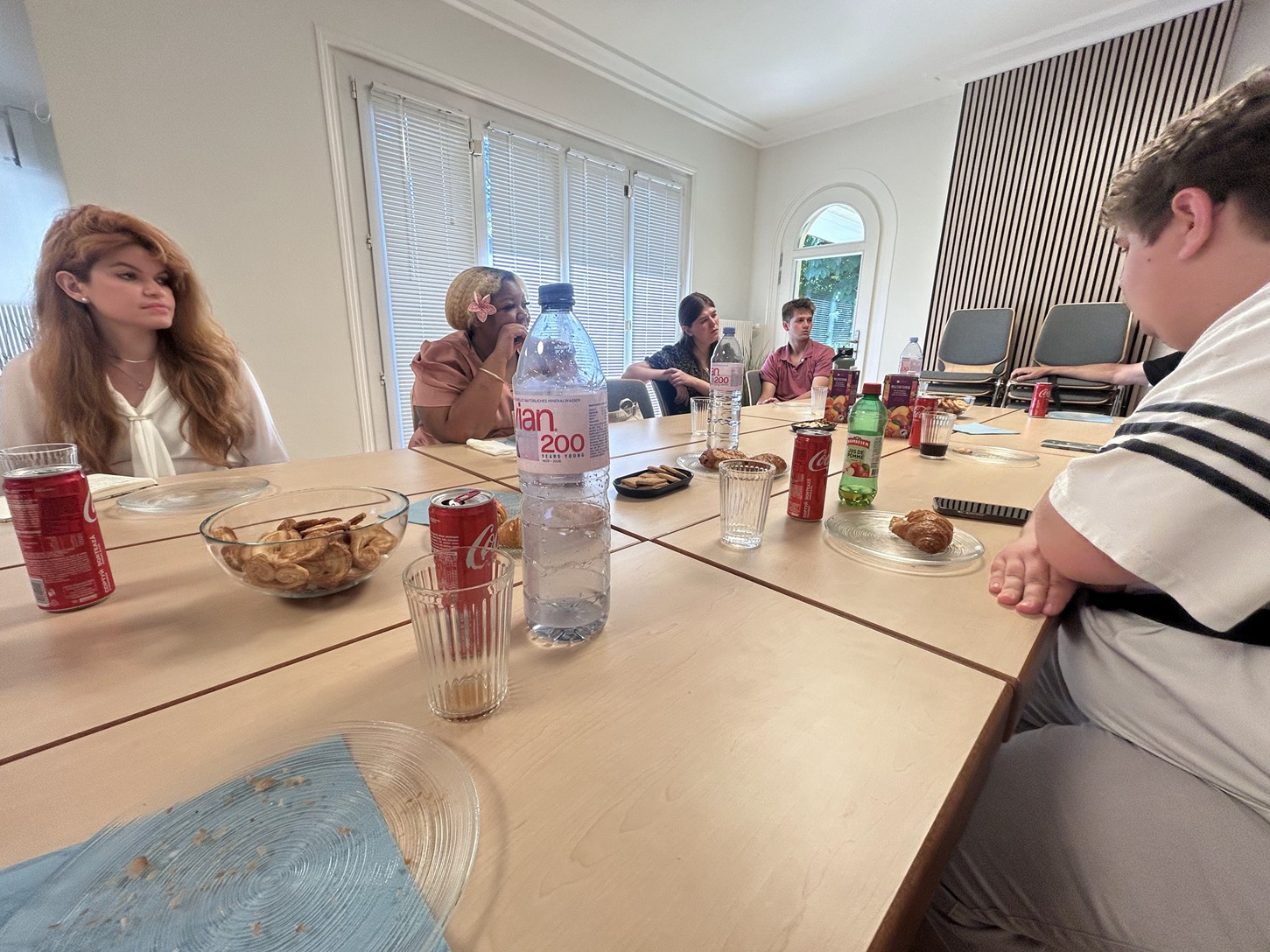
Stefano Bosco presenting the Church's humanitarian mission and the 2025 humanitarian
report (left). Students participating in discussion and reflection following the presentation
at the Geneva Office for The Church of Jesus Christ of Latter-day Saints (right).
Located in one of the world's leading centers for diplomacy and international cooperation,
the Geneva office serves as the Church's liaison to the United Nations and other international
organizations. Through Latter-day Saint Charities, the Church works with governments,
nonprofit organizations, and local partners to support humanitarian initiatives around
the world.
The presentation introduced students to the office's humanitarian efforts and its
relationships with governments, United Nations agencies, and nonprofit organizations.
Mr. Bosco also presented the organization's 2025 humanitarian report, which illustrated
the scale of its worldwide impact and demonstrated how partnerships expand the reach
and effectiveness of humanitarian work.
According to the report, The Church of Jesus Christ of Latter-day Saints provided
assistance in 196 countries and territories, invested approximately $1.58 billion
in humanitarian efforts, supported 3,514 humanitarian projects, and contributed more
than 7.5 million hours of volunteer service. These figures highlighted not only the
scale of the organization's global network but also the significant role of volunteer
engagement in addressing humanitarian challenges.
Guided by the principle of loving one's neighbor, the organization seeks to create
lasting impact by investing in projects that promote self-reliance, health, education,
food security, and community resilience. Much of this work is carried out through
partnerships with trusted humanitarian organizations and local institutions that understand
the specific needs of the communities they serve.
This approach is reflected in projects across different regions of the world, where
priorities are adapted to local needs while pursuing the shared goal of improving
quality of life. In Africa, initiatives focus on expanding access to health care,
education, clean water, sanitation, and food security. In the Caribbean, projects
support disaster recovery and rebuilding, while efforts throughout Central and South
America emphasize disaster relief, education, and health care. Across Europe, the
Middle East, Asia, the Pacific, and North America, initiatives similarly respond to
local needs while promoting sustainable development. Together, these examples demonstrated
that effective humanitarian assistance is tailored to the unique challenges of each
community rather than relying on a single approach
Beyond learning about the Church's humanitarian initiatives, the visit also demonstrated
how Student-Engaged Learning extends beyond the classroom. Interacting directly with
professionals working alongside the United Nations deepened our understanding of how
diplomacy, international partnerships, and humanitarian organizations collaborate
to address global challenges and advance the Sustainable Development Goals.
Several important lessons emerged from this experience.
- First, effective humanitarian work depends on collaboration across different organizations.
Governments, nonprofit organizations, religious organizations, and local communities
each contribute unique resources and expertise that become more effective when combined.
- Second, effective humanitarian assistance requires a conscious effort to understand
the unique needs, cultures, and circumstances of each community. Solutions that work
in one country may not be appropriate in another, making local knowledge and community
partnerships essential for lasting impact. Humanitarian efforts should also focus
on empowering local communities rather than creating dependency.
- Finally, successful humanitarian efforts require more than financial resources. They
also depend on communication, trust, long-term partnerships, and volunteer engagement.
This visit became one of the highlights for many of our delegation members during
the study abroad experience.
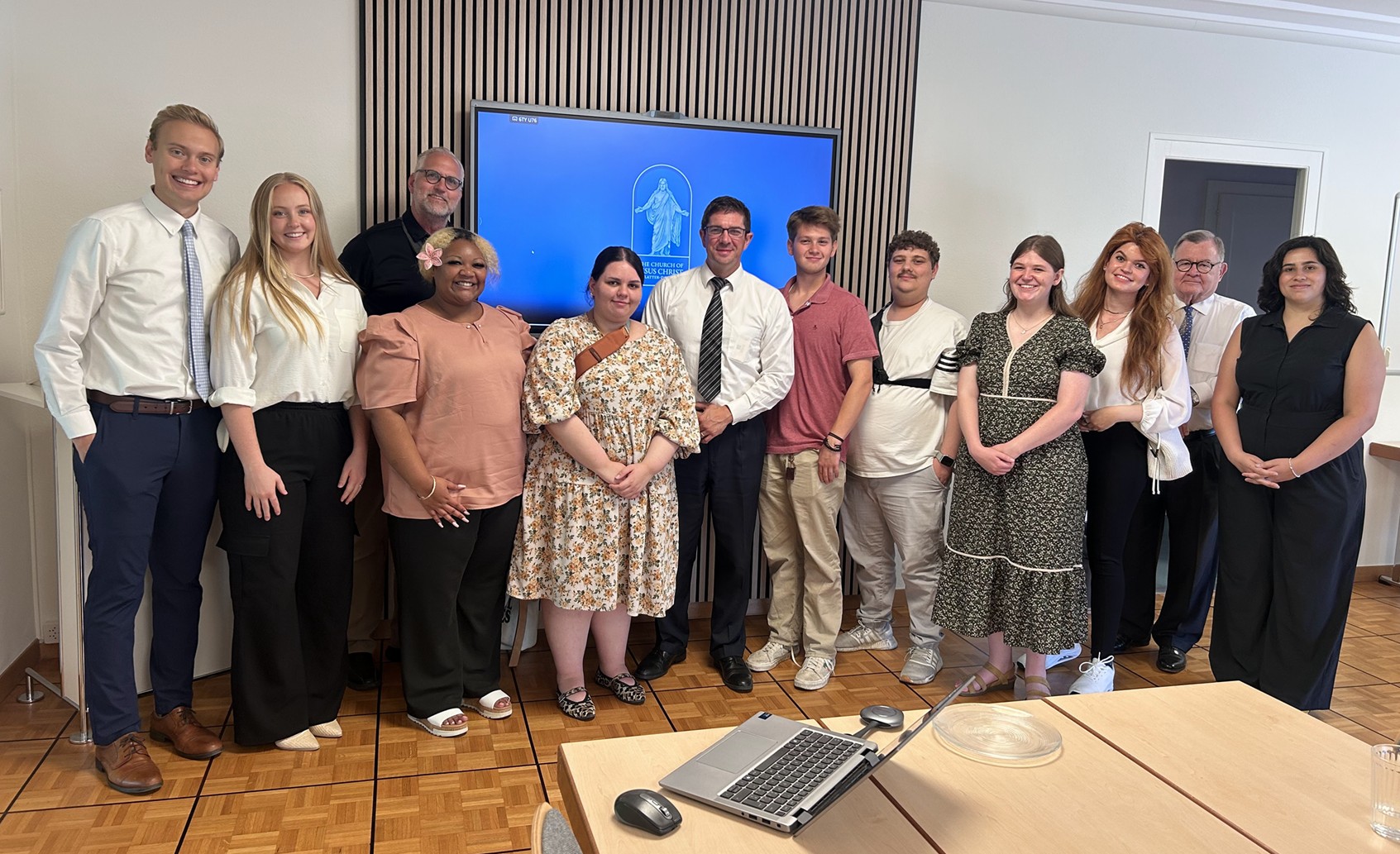
UVU students with Stefano Bosco and members of the Geneva Office team.
Members of UIMF are grateful to Utah Valley University for making this experience
possible and to the Geneva Office for The Church of Jesus Christ of Latter-day Saints
for introducing our group to its humanitarian mission and international partnerships.
This experience strengthened my understanding of how humanitarian work is advanced
through cooperation among governments, nonprofit organizations, and international
institutions.
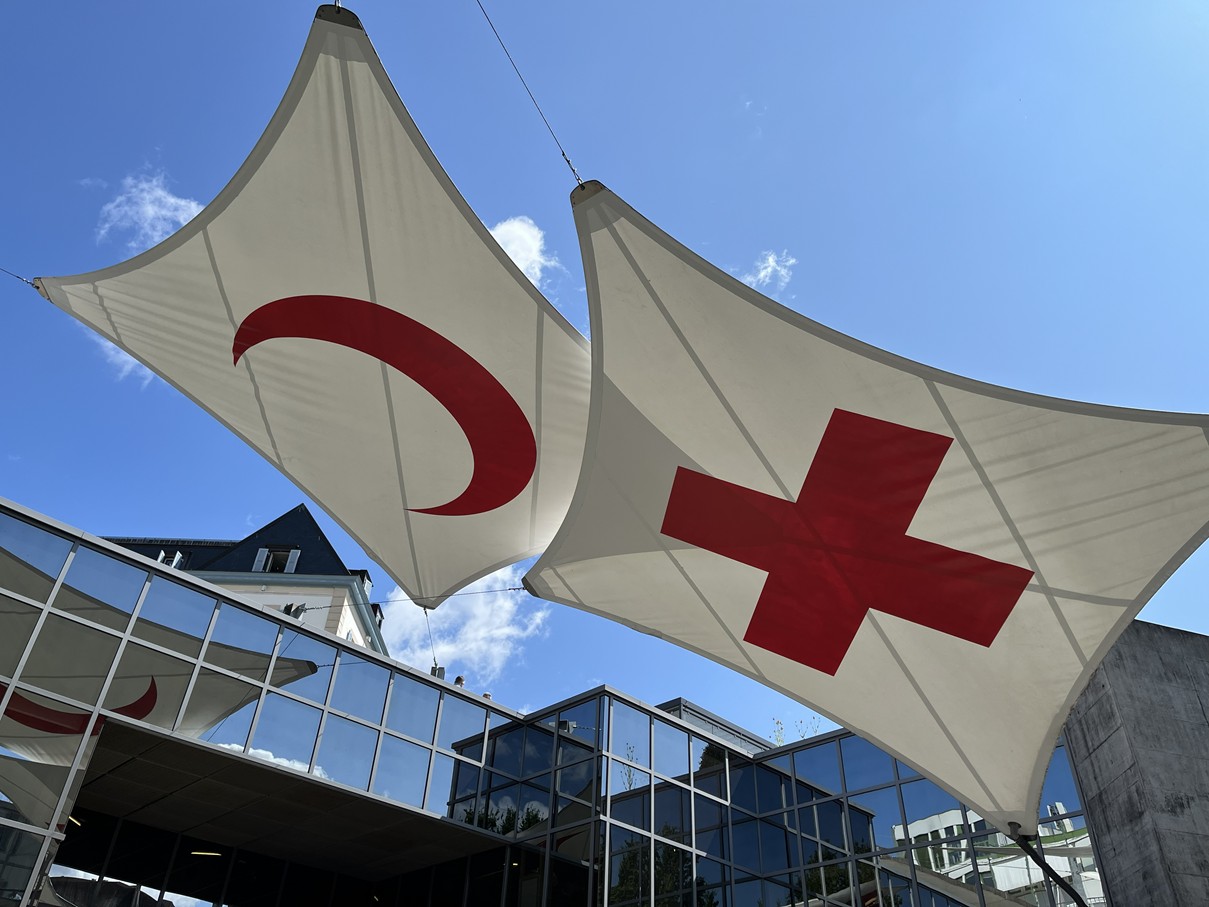
At the Entrance of the Red Cross Building and Museum
On the same day after our delightful meeting and presentation by LDS Charities, our
delegation went to the Red Cross museum in the afternoon. The visit to the Red Cross
Museum was planned by the Study Abroad Program a year ago already. It is affiliated
with one of the most prominent players and contributors to humanitarian work and multilateral
diplomacy globally. The Red Cross was established as the first non-governmental organization
in Switzerland and in the world in 1863 initially named the "International Committee
for Relief to the Wounded.” There are about 80 million people worldwide who serve
with the International Committee with the Red Cross. The International Federation
of Red Cross is the world’s largest humanitarian network, comprising 191 National
Red Cross and Red Crescent Societies working to save lives, build community resilience,
strengthen localization and promote dignity around the world. It also provides internships
worldwide. Our visit to the Red Cross museum was scheduled for the first day of our
visit, but we didn’t attend it because of the cancelling of our flight to Geneva caused
by the thunderstorm in Chicago.
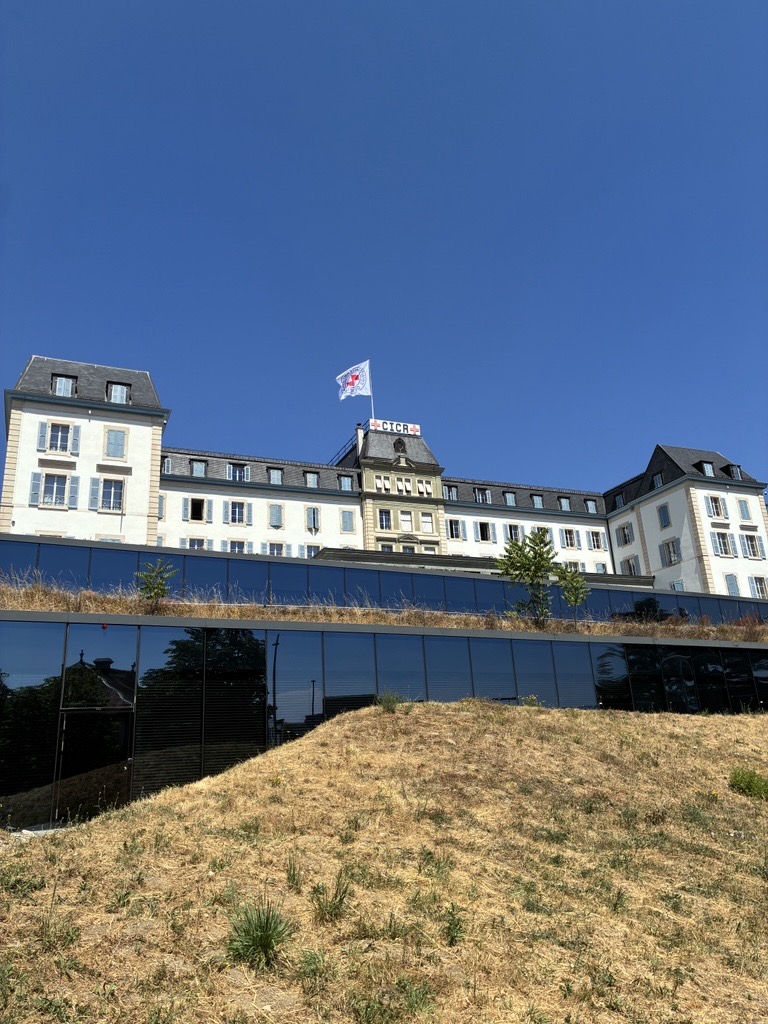
Outside of the Red Cross Building and Museum
I found the museum to be both insightful, thought-provoking, and heart-aching at the
same time. In one of the exhibitions, there was a tree-like structure with handwritten
notes encased inside plastic protection. These notes were from around the world; however,
they were on Red Cross stationery and sent to loved ones. Some were drawings from
children, and others were notes to loved ones saying they are with the Red Cross and
will be coming home very soon. For many of the members of our delegation. It was
very beautiful how heartbreaking and hopeful a letter can be. Another section in the
exhibit was a wall filled from top to bottom with pictures of displaced Rwandan children
who had lost their parents. After our time in the museum, we all had free time. Some
of the group went back to the hotel, others decided to visit the downtown area of
Geneva. With one of our faculty mentors, some of the members went to CERN to visit
the world's largest particle physics laboratory. Some of our members went to oldtown
Geneva to visit some chocolate stores and see the beautiful chapel And the majority
of the students on the study abroad ended the day with a dip in beautiful Lake Geneva!
Truly a perfect end to a perfect day in Switzerland!
Cristina Alves Morais and Sophia Jackson, Utah Valley University Students

