On Tuesday, July 7, 2026, students from Utah Valley University attended the AI for Good Global Summit in Geneva, Switzerland, as part of their study abroad program focused on diplomacy, sustainable development,
and engagement with international institutions in Geneva and New York City. The summit
provided students with an opportunity to move beyond classroom discussions of artificial
intelligence and explore firsthand how emerging technologies are being applied to
humanitarian assistance, education, sustainable development, energy efficiency, and
other global challenges.
The experience began early in the morning as the UVU delegation traveled by public
bus to the summit venue. The crowded bus offered an early indication of the scale
of the event, with many passengers appearing to be headed to the same destination.
Upon arrival, students joined participants from around the world in the registration
process, received their conference badges, took delegation photographs, passed through
security, and entered a large international gathering of researchers, technology professionals,
policymakers, humanitarian organizations, students, and innovators.
The size and diversity of the summit immediately stood out to the delegation. Throughout
the venue, participants could explore demonstrations of robotics, artificial intelligence
systems, drones, youth-led innovations, humanitarian technologies, and other emerging
applications. Rather than approaching the summit only as an exhibition, however, UVU
students prioritized opportunities to participate in workshops and side events where
they could engage directly with experts and connect the technologies being displayed
with the subjects they had been studying academically.
To make the most of the limited time available, student leaders Natalia Figueroa and
Aemish Brock divided members of the delegation into smaller groups and attended different
sessions. This allowed students to experience multiple aspects of the summit while
taking greater individual responsibility for deciding what they wanted to learn, asking
questions, networking with participants, and later sharing their observations with
one another.
Natalia's group attended the IEC and ISO workshop, “From Data Centres to Climate Goals: International Standards for a More Energy-Efficient
AI.” The session brought together professionals working in energy engineering, data-center
operations, international standards, and sustainable technological development. For
students who had already been examining the relationship between artificial intelligence,
education, sustainability, and public policy during the semester, the discussion demonstrated
that AI development involves far more than the software or digital tools that users
interact with directly.
The workshop explored the physical infrastructure required to support artificial intelligence,
particularly data centers and the energy systems necessary to operate them. It also
raised broader questions about how rapidly expanding AI infrastructure can be balanced
with climate commitments, environmental protection, and the needs of communities located
near major developments.
During the discussion, Natalia connected the international conversation directly to
Utah by asking panelists about the implications of large-scale data-center and energy
development for water resources, ecosystems, and rural communities. The question focused
on how governments, technology companies, and international standards organizations
can ensure that the expansion of AI infrastructure does not place additional pressure
on water-related ecosystems and local livelihoods.
The discussion also connected with Sustainable Development Goal 6, particularly Target 6.6 and its emphasis on protecting and restoring water-related
ecosystems, including mountains, forests, wetlands, rivers, aquifers, and lakes. For
the students, this provided an example of how the Sustainable Development Goals can
be used as a framework for examining emerging technologies rather than treating technological
advancement and sustainable development as separate issues.
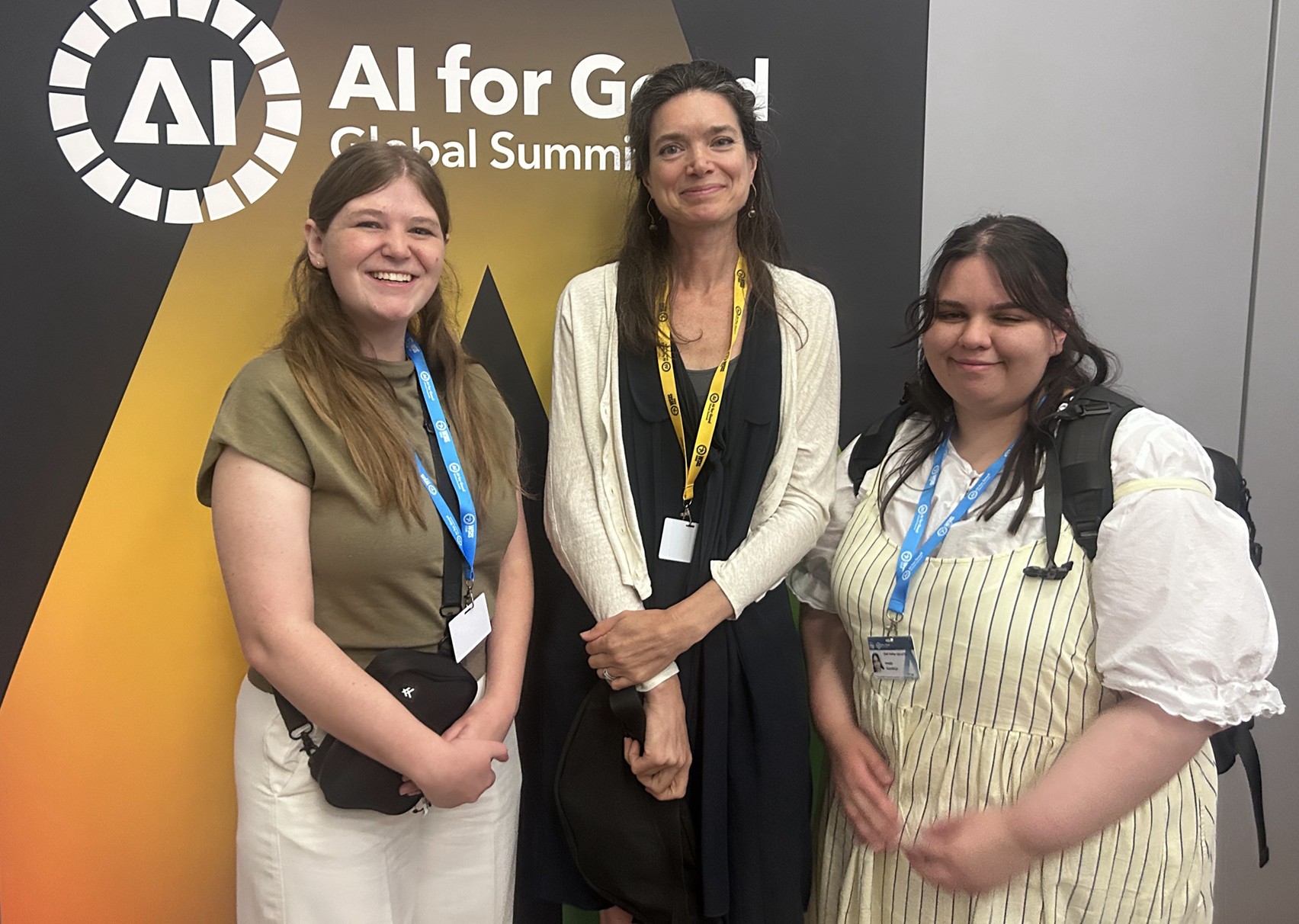
( L to R): Megan Ashcraft, Molly Webb, Founder and CEO of Energy Unlocked and Natalia
Figueroa,
During a break in the workshop, Figueroa and fellow UVU student Megan Ashcraft also spoke with Molly Webb, Founder and CEO of Energy Unlocked, about the growth of data centers in the United States and the evolving roles of
policy, international standards, regulation, and technological innovation. The conversation
gave students an opportunity to continue the session beyond the formal panel and engage
directly with a professional working in the field.
Beyond the workshops, students spent time exploring the main exhibition area of the
summit. The upper levels of the venue featured demonstrations showing how rapidly
artificial intelligence and robotics are moving from research environments into practical
applications. Students encountered humanoid and interactive robots, robotic companion
technologies, drones, and systems designed to address real-world humanitarian and
logistical challenges.
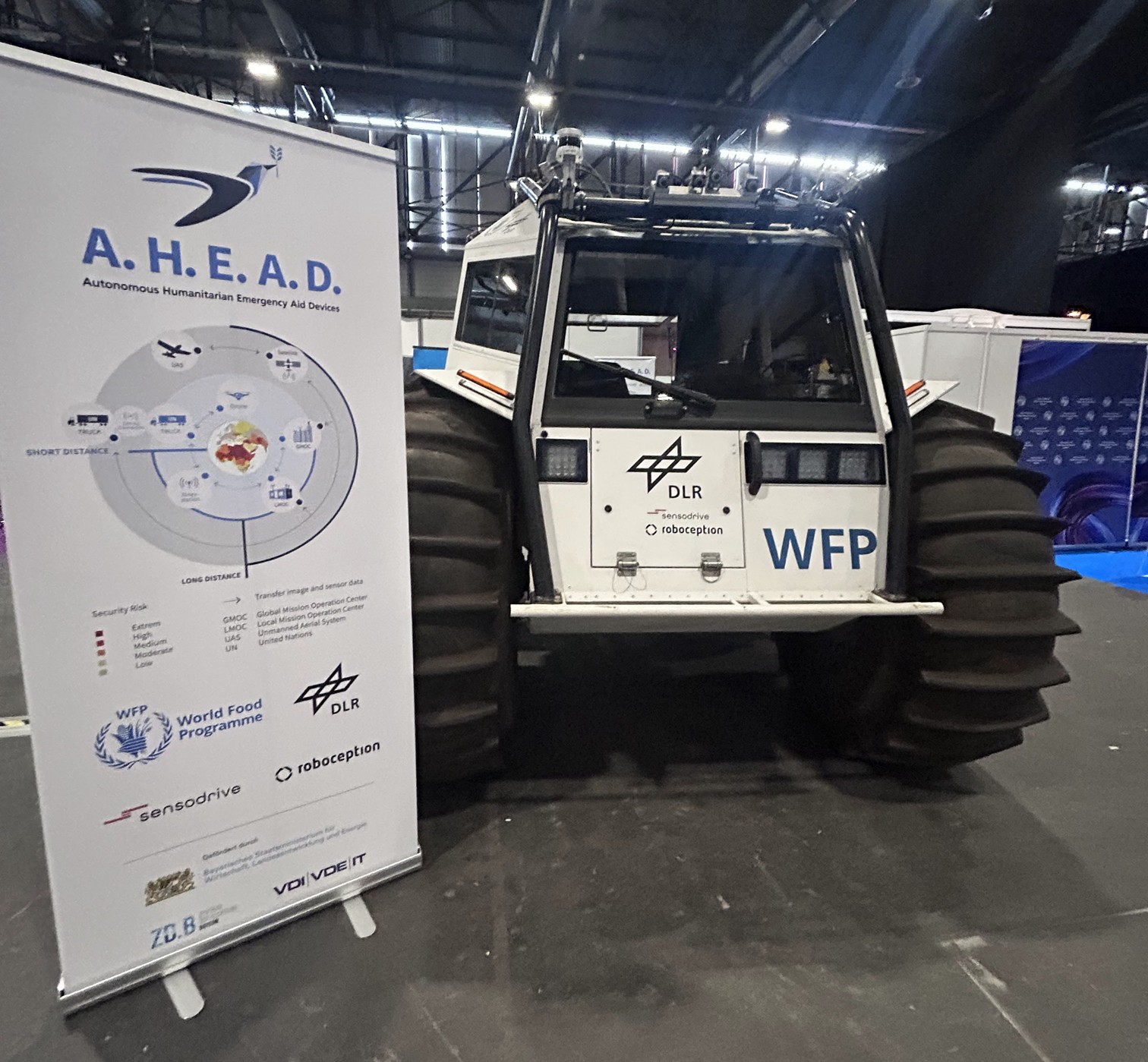
A.H.E.A.D truck with banner of information on left
One innovation that drew particular attention was AHEAD—Autonomous Humanitarian Emergency Aid Devices, developed through collaboration between the World Food Programme and the German
Aerospace Center. The autonomous system is designed to support humanitarian deliveries
in difficult or potentially dangerous terrain, reducing risks to personnel while helping
aid reach communities that may otherwise be difficult to access.
For a delegation studying sustainable mountain development, the technology raised
particularly interesting possibilities. Mountain and geographically isolated communities
frequently face transportation barriers, natural hazards, limited infrastructure,
and difficulties accessing essential goods and humanitarian assistance. Seeing technology
designed specifically to overcome difficult terrain allowed students to consider how
artificial intelligence and autonomous systems might contribute to humanitarian response
in vulnerable communities.
Students also explored smaller robotic technologies, including AI-enabled companion
and pet robots, while observing demonstrations and speaking with participants throughout
the exhibition area. The range of technologies made clear that artificial intelligence
is not developing within one industry or one country. Instead, researchers, companies,
governments, international organizations, and young innovators from around the world
are increasingly considering how AI can be applied to problems ranging from humanitarian
emergencies to education, transportation, health, sustainability, and everyday life.
The summit became an important example of student-engaged learning, an approach that places students in active roles in their own education. Rather
than learning exclusively through lectures or assigned readings, students navigated
an international conference, selected sessions relevant to their interests, divided
leadership responsibilities, interacted with experts, asked questions, examined new
technologies, and connected those experiences with subjects they had previously studied
at UVU as a group with faculty mentorship.
For Natalia and Aemish in particular, the summit also built upon academic work they
had undertaken during the previous semester examining artificial intelligence and
its broader implications. Encountering researchers, policymakers, international standards
specialists, and emerging technologies in person transformed concepts previously studied
in an academic setting into tangible international policy and development questions.
The experience demonstrated the value of combining classroom preparation with opportunities
for students to participate directly in international institutions and professional
environments. Students were not simply observing discussions about the future of artificial
intelligence; they were being encouraged to ask how that future should be shaped and
whose interests should be considered as new technologies continue to develop.
Because of the delegation's larger Geneva schedule, students were only able to spend
part of the day at the summit before continuing with other study abroad activities.
Many students left wishing that the itinerary had allowed additional time to return
and explore more sessions. The scale of the conference, number of workshops, and diversity
of organizations represented exceeded expectations and demonstrated how significant
the international conversation surrounding artificial intelligence has become.
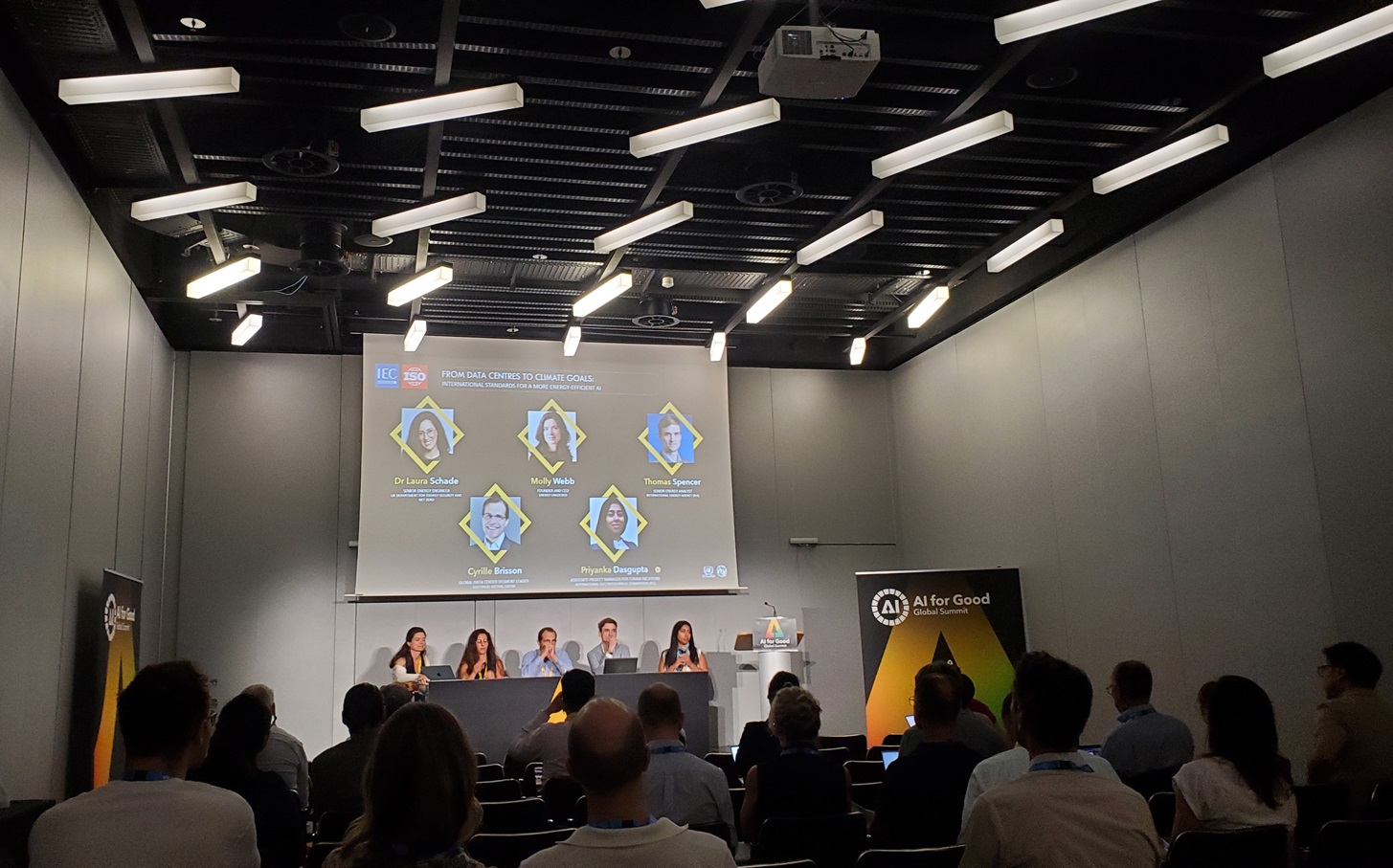
Photo of Panel “From Data Centres to Climate Goals: International Standards for a
More Energy-Efficient AI.
The AI for Good Global Summit ultimately encouraged UVU students to consider artificial
intelligence from a broader perspective. AI offers considerable possibilities for
improving education, humanitarian assistance, accessibility, sustainability, and international
development. At the same time, its growth raises important questions concerning energy
consumption, water, infrastructure, environmental stewardship, regulation, and the
effects technological development can have on local communities.
For the UVU delegation, attending the summit reinforced that innovation alone does
not determine whether technology contributes to sustainable development. Meaningful
progress also requires responsible leadership, international cooperation, transparency,
and attention to human dignity and the communities affected by technological change.
Through student-engaged learning opportunities such as the AI for Good Global Summit,
students were able to connect academic study with real-world international discussions
and better understand their potential roles within those conversations. The experience
in Geneva demonstrated that students do not have to wait until later in their careers
to participate in global discussions surrounding technology and sustainable development;
with preparation, mentorship, and opportunities for engagement, they can begin contributing
their perspectives now.
Natalia Figueroa, President, Utah International Mountain Forum and Aemish
Brock, President, Foreign Affairs Club at Utah Valley University
***
STUDENT REFLECTIVE ESSAYS
***
26-07-07-Abigail Fisher-Navigating Values Differences Through Student Engaged Learning
Attendance and Insights From the 2026 AI for Good Global Summit
***
26-07-09-Cristina Alves Morais - From Global Innovation to Local Impact Lessons from
the AI for Good Global Summit 2026
***