Nail the Interview. Land the Job.

A successful interview starts long before you walk into the room—or log into Zoom. The most impressive candidates don’t just show up—they prepare strategically, practice intentionally, and bring clarity, confidence, and professionalism to the table. Whether you're interviewing in person or virtually, this page is your go-to resource to help you prepare with purpose, practice with impact, and present your strongest, most compelling self.

Walk in ready to shine—and walk out one step closer to hearing, “You’re hired.”

Before the Interview

Research the Company

Show them you’ve done your homework.

  • Understand their mission, values, and culture
  • Learn about their size, structure, and services
  • Review their recent news, industry presence, projects, and achievements
  • Prepare 2–3 insightful questions to ask at the end

Textbook icon

Know Yourself and the Role

  • Study the job description carefully
  • Identify the skills, experience, and qualities the employer values
  • Be ready to explain what you bring to the table
  • Create a “Me in 30 Seconds” pitch to introduce yourself with confidence

Build Your “Me in 30 Seconds” Pitch (Elevator Pitch Guide)

Use this guide to build a strong intro for interviews, networking, and career fairs. While your “Me in 30 Seconds” pitch shouldn’t be memorized, you will want to practice it enough to sound fluid.

  1. Who are you?
    State your name, major, and current role.
    Example: “Hi, I’m Taylor, a senior at UVU majoring in Marketing.”
  2. What do you do well?
    Highlight 2–3 strengths or experiences.
    Example: “I’ve completed internships in social media strategy and improved engagement by 30%.”
  3. How does this role align with your goals?
    Briefly share how this position fits into your larger career plans.
    Example: “I’m excited about this role because it builds on my background in digital strategy and gives me room to grow in brand development and analytics.”
  4. What makes you unique?
    Add a personal strength, passion, or differentiator.
    Example: “I bring a creative mindset and love using analytics to drive decisions.”

"Me in 30 seconds" Full Example:

“Hi, I’m Taylor. I’m a senior at UVU majoring in marketing with a focus in digital strategy. I’ve completed two internships where I created targeted campaigns and increased social engagement by over 30%. What drew me to this role is how it aligns with both my passion for creative branding and my interest in using analytics to drive decision-making. I’m excited about the opportunity to apply what I’ve learned while continuing to grow in a fast-paced, collaborative environment. I bring a strong work ethic, a creative mindset, and a results-driven approach that helps brands stand out.”

Interview Practice

Mock Interviews

Book a one-on-one mock interview with a Career Counselor to gain personalized feedback on your:

  • Body language and posture
  • Tone, volume, and clarity
  • Overuse of filler words
  • Confidence and professionalism
  • Ability to stay concise and on point

Schedule a Mock Interview on Handshake

Interview Practice Platforms

Quinncia Interview

AI-powered video interview platform that evaluates your:

  • Video responses
  • Non-verbal cues
  • Use of filler words
  • Answer structure using the STAR method

Practice with Quincia

(Log in with your UVID and password)

InterviewAI

Practice realistic interview simulations with AI generated questions and feedback.

Practice with InterviewAI

Interview Day Essentials

Dress for Success

Dress to reflect professionalism, confidence, and awareness of company culture.

  • Research the dress code and company culture (business professional vs. business casual)
  • Dress one level above what you’d wear daily on the job
  • Avoid bold patterns, overly trendy styles, or anything too casual—even for virtual interviews
  • If remote, don’t skip the full outfit—dress top to bottom in case you need to stand up

Key Elements for Everyone

  • Practice good hygiene—shower, wear deodorant, brush teeth
  • Avoid gum or mints during the interview
  • Check that your clothes are clean, wrinkle-free, and lint-free
  • Wear clothes that fit properly to avoid discomfort or distraction so that your focus is on the interview and not on adjusting your outfit

Key Elements for Men

  • Long-sleeved button-up shirt (white, light blue, or neutral)
  • Tie and blazer for business professional roles
  • Pressed slacks or dress pants
  • Belt and polished dress shoes
  • Clean shave or neatly trimmed facial hair
  • Neat, conservative haircut
  • Clean, trimmed nails
  • No cologne or a very light scent

Key Elements for Women

  • Conservative blouse or button-up top (avoid low-cut or sheer materials)
  • Blazer or structured jacket for a polished look
  • Knee-length skirt or tailored pants
  • Closed-toe flats or heels (moderate height)
  • Simple, natural-looking makeup
  • Minimal jewelry
  • Neat, conservative hairstyle (avoid messy buns or wild styles)
  • Clean nails—neutral or light polish is best
  • Light or no perfume

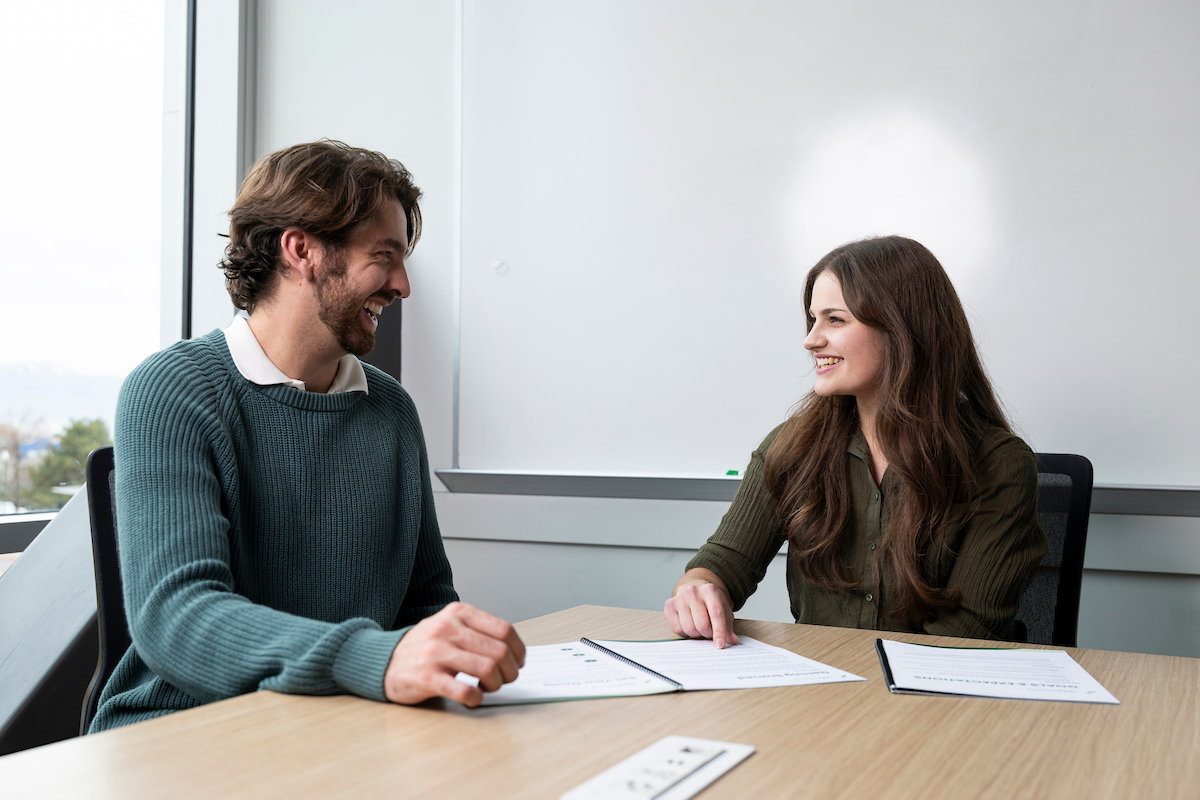
Interview between two people

What to Bring to an Interview

  • Several copies of your resume
  • A professional-looking notebook and pen
  • Your list of questions for the employer
  • Portfolio or samples, if applicable
  • Photo ID (some buildings require it)
  • Interviewer contact information and directions

Pro Tip: Prepare everything the night before and arrive 10 minutes early.

First Impressions Count

  • Arrive 10 minutes early (log in early for virtual interviews)---make sure you know where you are going, how long it should take to get there, and account for any possible traffic issues
  • Do not arrive with another person
  • Be professional and courteous with everyone you encounter
  • Greet your interviewer(s) with a firm (but not bone-crushing) handshake and a smile
  • Throw away chewing gum beforehand
  • Turn off and put away your phone before entering the building—don’t just silence it
  • Make eye contact and use their name as given during the introduction (don’t shorten names like “Michael” to “Mike”)

Communication, Body Language, and Etiquette

  • Listen actively—don’t interrupt
  • Speak clearly, at a moderate pace
  • Avoid filler words like "um," "like," and "you know"
  • Sit up straight with open, confident body language
  • Avoid distracting mannerisms (fidgeting, tapping, etc.)
  • Smile when appropriate—show enthusiasm
  • For virtual interviews, look into the camera, not your screen
  • Maintain direct eye contact with all members of the panel, not just the person asking the question

Ask Insightful Questions

  • Always have 2–3 thoughtful questions ready
  • Don’t ask about salary or time off in the first interview, but be prepared to discuss salary if the employer brings it up
  • Show genuine curiosity about the team, goals, or company culture

Stay Professional to the End

  • Thank the interviewers for their time
  • Shake hands (if in person) and leave with confidence
  • Reaffirm your interest in the position
  • Ask about next steps in the process
  • Exit or log off gracefully

Use the STAR Method for Behavioral Interviews

Behavioral interview questions are designed to assess how you’ve handled real situations in the past. The STAR method helps you structure your answers clearly and effectively:

S – Situation: Describe the context of the situation or challenge you faced.

T – Task: Explain what your responsibility or goal was in that situation.

A – Action: Detail the specific actions you took to address the situation or complete the task.

R – Result: Share the outcomes or results of your actions, highlighting any positive impact or lessons learned.

Pro Tip: Use this method for every behavioral question to keep your answers focused, impactful, and easy to follow.

Interview Questions + Tips

General Interview Questions
with response tips for each

  • Tell me about yourself
    Stick to professional highlights, not your life story.
  • What are your strengths?
    Pick 2–3 that align with the job and give examples.
  • What is your biggest weakness?
    Be honest—but show how you’re actively improving it.
  • Why do you want to work here?
    Tie their values or work to your passions and goals.
  • Why should we hire you?
    Emphasize fit, results, and energy you bring.
  • Where do you see yourself in 5 years?
    Show ambition and realistic professional growth.
  • What do you know about our company?
    Go beyond the homepage—show real insight.
  • What are your salary expectations?
    Research first. Provide a flexible range.
  • Do you have any questions for us?
    Always say yes—ask about success metrics, culture, or team dynamics.

Behavioral Interview Questions (Use STAR to Answer)

  • Tell me about a challenge you faced.
    Focus on how you overcame it and what you learned.
  • Describe a time you worked in a team.
    Highlight your collaboration, communication, and ability to resolve conflicts.
  • Give an example of meeting a tight deadline.
    Emphasize time management, organization, and delivering results under pressure.
  • How did you respond to critical feedback?
    Show openness to growth and your ability to apply feedback constructively.
  • Describe a time you had a conflict with a coworker.
    Focus on how you maintained professionalism and found a resolution.
  • Tell me about a time you demonstrated leadership.
    Share how you motivated others, delegated tasks, or made an impact.
  • Describe a mistake you made and what you learned.
    Be honest, take responsibility, and reflect on how you improved afterward.
  • How did you handle multiple priorities?
    Emphasize planning, prioritization, and keeping deadlines on track.
  • Give an example of going above and beyond.
    Showcase initiative, dedication, and a strong work ethic.

Inappropriate or Illegal Interview Questions

Some questions are not legally or ethically appropriate.

Examples:

  • “Are you married?”
  • “Do you plan to have children?”
  • “What’s your religion?”
  • “How old are you?”
  • “Do you have any medical conditions?”
  • “What country are you originally from?”

If asked: Stay calm. Politely redirect by saying:

“Could you help me understand how that question relates to the requirements of the position?”

This response is:

  • Professional and composed
  • A tactful way to put the interviewer on notice
  • A redirect that gives them the opportunity to reconsider and backtrack

Or a slightly firmer version:

“I’m happy to answer questions related to my ability to succeed in this role—could you clarify how this is relevant to the position?”

Both versions give you control, signal awareness of boundaries, and still maintain a respectful tone.

question mark icon

Common Interview Mistakes to Avoid

  • Talking too much or not answering the question (most responses should be between 30-90 seconds)
  • Being underprepared or too rehearsed
  • Not researching the company
  • Badmouthing past employers
  • Being too casual or overly stiff
  • Forgetting to ask questions at the end

Make a strong impression from start to finish. Confidence, professionalism, and etiquette matter just as much as your answers.
Interview Confidence Tips

  • Prepare—but don’t memorize
  • Use STAR to stay focused and grounded
  • Practice with someone you trust
  • Visualize a successful outcome
  • Focus on connection, not perfection
  • It's okay to pause and think before you speak

Smart Questions to Ask the Employer

  1. What does success look like in this role after 6 months or a year?
    Shows you're thinking about performance and long-term contribution.
  2. What are the team’s biggest priorities right now, and how does this role contribute to them?
    Connects your role to the organization’s goals.
  3. Can you describe the team dynamic and how this role fits into it?
    Gives insight into collaboration, leadership, and interpersonal expectations.
  4. What are some challenges someone in this position might face?
    Shows realism, initiative, and a desire to be prepared.
  5. What do you enjoy most about working here?
    Encourages authenticity and offers a peek into the culture from their perspective .
  6. How does the company support professional growth and development?
    Demonstrates that you’re invested in growing with the company.
  7. Is there anything about my background or experience that gives you pause or that you’d like me to clarify?
    Bold, but powerful—it shows confidence, openness to feedback, and invites resolution of concerns.
  8. What are the next steps in the hiring process?
    Wraps things up with clarity and shows you're organized and eager to move forward.

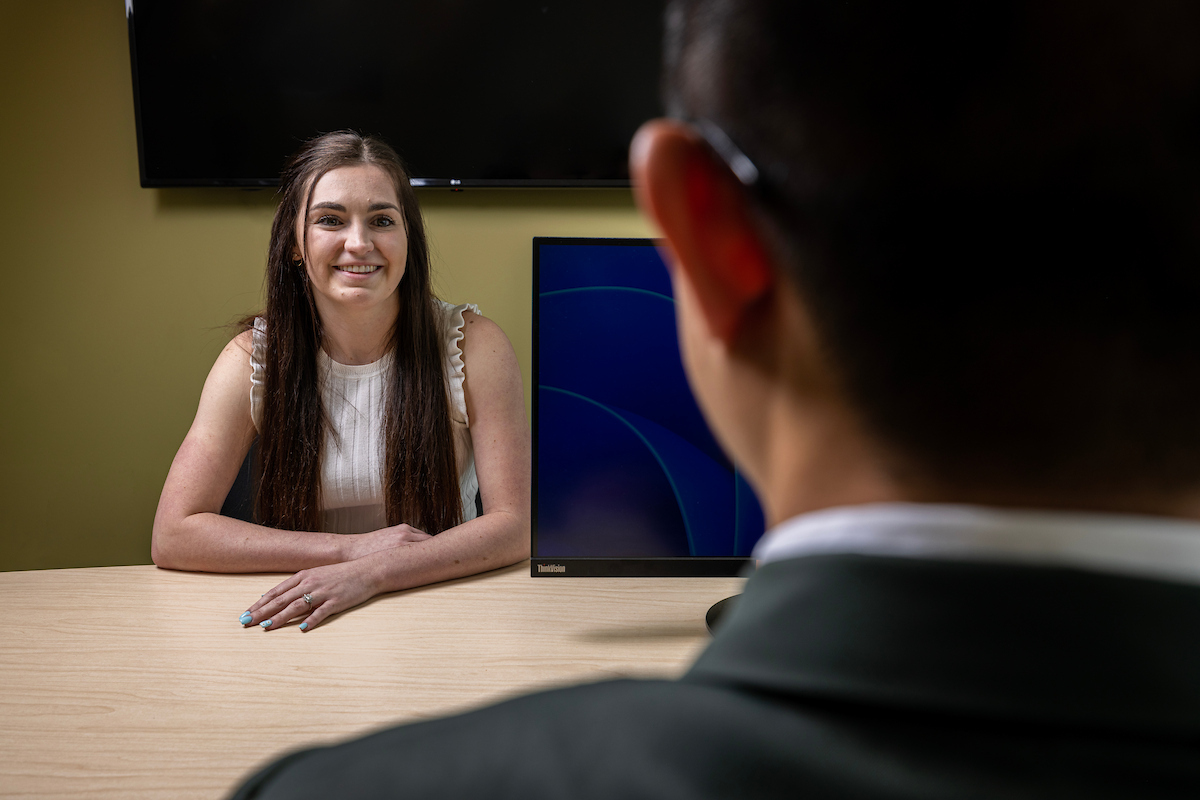
Person being interviewed for an office job

Note taking icon

Interview Types

Phone Interviews

  • Quiet location, no distractions
  • Double check the interview instructions to know if the company is calling, or if you are to call in
  • Make sure phone is fully charged
  • Have notes and resume' in front of you
  • Smile while speaking—your tone shows it
  • Avoid multitasking
  • If disconnected, call back immediately
  • Speak clearly, and pause slightly between responses
  • Don’t eat, chew gum, or type during the call

Video Interviews

  • Test camera, mic, and internet and ensure that computer is charged
  • Clean, well-lit, distraction-free background
  • Dress professionally
  • Look into the camera—not the screen
  • Sit upright in a chair---do not lounge on a couch or in bed
  • Close tabs and silence notifications

Setup Tips For Zoom, Microsoft Teams, or other platforms:

Virtual Background Setup

  • Use a neutral, professional background
  • Avoid fake/blurred backdrops when possible
  • Face a light source, not a window

Tech Prep

  • Test mic, camera, and connection in advance
  • Use a laptop—not a phone—if possible
  • Close other tabs and silence notifications

Performance-Based Interviews

These interviews test how well you perform job-specific tasks.

Common Examples:

  • Writing/editing tests
  • Coding challenges
  • Presentations or case studies
  • Teaching demos
  • Portfolio walk-throughs

How to Prepare:

  • Practice core skills
  • Review job description carefully
  • Bring a printed or digital portfolio
  • Use STAR to explain your process and impact
  • Ask in advance if a performance task is included

Group Interviews

  • Be collaborative, not competitive
  • Don’t interrupt—listen and contribute
  • Be professional with everyone
  • Show leadership and teamwork

For more guidance, check out our Group Interview Tips handout for detailed strategies and examples.

Group Interview Tips handout

Panel Interviews

  • Greet each person individually
  • Make eye contact with all panelists
  • Refer to names if possible
  • Ask a question that gives panel members a chance to share their unique perspectives

After the Interview

Follow-Up Emails (Post-Interview)

A quick thank-you note shows professionalism and gratitude.

Tips:

  • Send within 24 hours
  • Thank them for their time
  • Reaffirm your interest in the role
  • Reference something specific from the conversation

Follow-up Email Example:

Subject: Thank You – Marketing Coordinator Interview

Dear Ms. Thompson,

Thank you again for meeting with me today to talk about the Marketing Coordinator position. I really enjoyed our conversation and appreciated getting a better feel for your team and the direction Crestline is heading.

The more I learned, the more excited I felt about the role, especially the hands-on work with digital campaigns and the chance to collaborate across departments. That’s exactly the kind of environment I’ve been looking for. I can see how my background in content and strategy could really add value here, and I’d love the opportunity to contribute.

I also really respected the way you talked about leadership and team culture. It’s clear you care about your people and the work you do, and that left a strong impression on me.

Thanks again for your time and insight. Let me know if there’s anything else you need from me. I look forward to hearing from you soon.

Best,
Taylor Reed
[email protected]
(555) 123-4567

Typing on laptop icon

Learn from Every Interview

Even if you don’t get the job, each interview is valuable experience.

  • Reflect on what went well and what could improve
  • Write down questions or answers to revise
  • Keep practicing with mock interviews
  • Stay positive—your preparation is never wasted

Second Interviews & Follow-Ups

In a second-round interview:

  • Expect deeper, scenario-based questions
  • Prepare fresh examples (don’t repeat the same ones)
  • Show what you’ve learned since the first round
  • Be prepared for team introductions or a tour
  • Reaffirm your enthusiasm and fit for the company