Dr. Benjamin Coughenour, assistant professor of physics at Utah Valley University (UVU), has been awarded a $72,953 grant from NASA to study black holes and their dynamic properties through the NuSTAR Guest Observer (GO) Program.
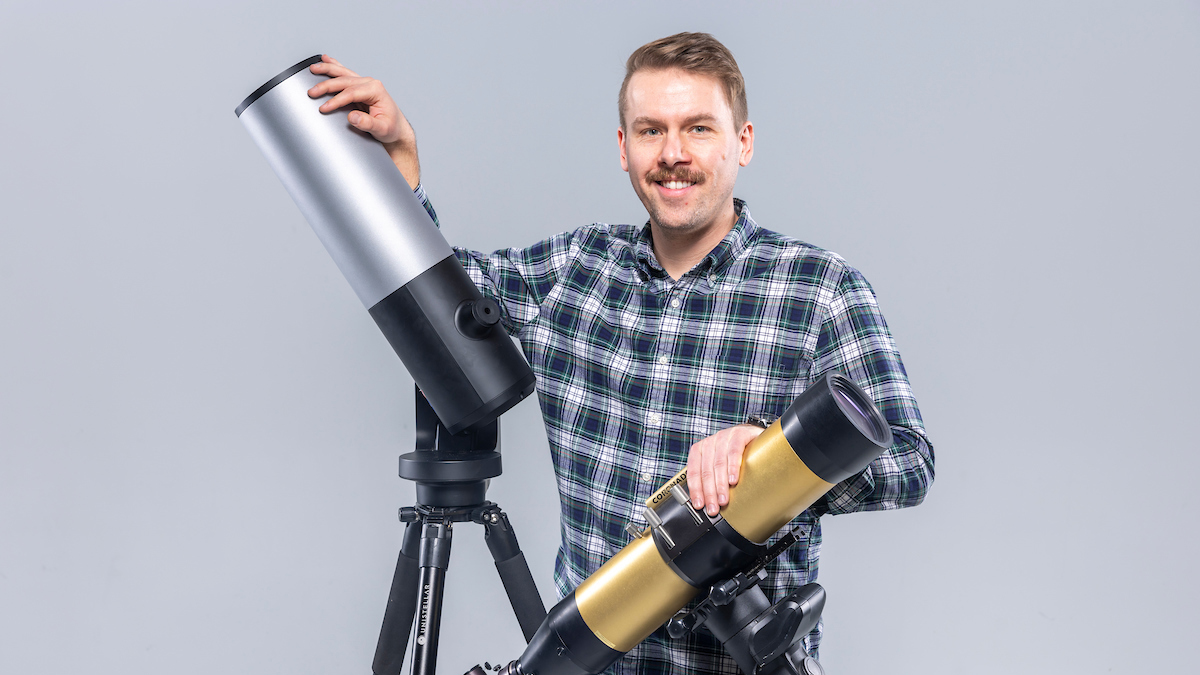
OREM, Utah — Dr. Benjamin Coughenour, assistant professor of physics at Utah Valley University (UVU), has been awarded a $72,953 grant from NASA to study black holes and their dynamic properties through the NuSTAR Guest Observer (GO) Program.
The funded project, titled “Spin and Reflection in a Black Hole Transient,” was selected through NASA’s highly competitive NuSTAR Cycle 11 observing program. Coughenour’s research aims to deepen understanding of how black holes interact with matter stolen from a nearby star in a process called “accretion,” which provides insight into some of the most extreme objects and environments in the universe.
NuSTAR, or the Nuclear Spectroscopic Telescope Array, is a space-based X-ray telescope that allows scientists to study the high-energy universe with unprecedented sensitivity, and it is the first mission capable of imaging high-energy X-rays. Through the GO program, NASA supports external researchers who use NuSTAR data to conduct original investigations that advance astrophysical science.
“This award provides a remarkable opportunity for UVU students to engage directly in high-level astrophysics research using data from one of NASA’s premier X-ray observatories,” Coughenour said. “Our goal is to measure the spin of a new or relatively unknown black hole and to measure properties of the infalling matter and the environment in the immediate vicinity around the black hole. This project will give UVU students experience working directly with brand-new, world-class scientific data before it goes out to the broader high-energy astrophysics community.”
Coughenour’s project highlights the UVU College of Science’s dedication to expanding undergraduate research opportunities, giving students the chance to contribute directly to real scientific investigations alongside faculty mentors.
“Dr. Coughenour is exemplary and exceptional in his scholarly work. His work not only demonstrates how faculty at Utah Valley University are making scientifically significant discoveries, but more importantly, he mentors students who will become the next generation of researchers,” said Dr. Bonnie Andersen, chair of UVU’s Department of Physics. “His NASA-supported project embodies UVU’s values of exceptional care, accountability, and results in every sense.”
NASA’s letter of award commended Coughenour’s proposal, noting that it was selected for funding following the agency’s Phase 2 cost evaluation process. The project’s success will contribute to ongoing scientific productivity within the NuSTAR program and help advance the field of high-energy astrophysics.

