When deciding which language to study, it’s hard to get more “hands-on” than American Sign Language (ASL).
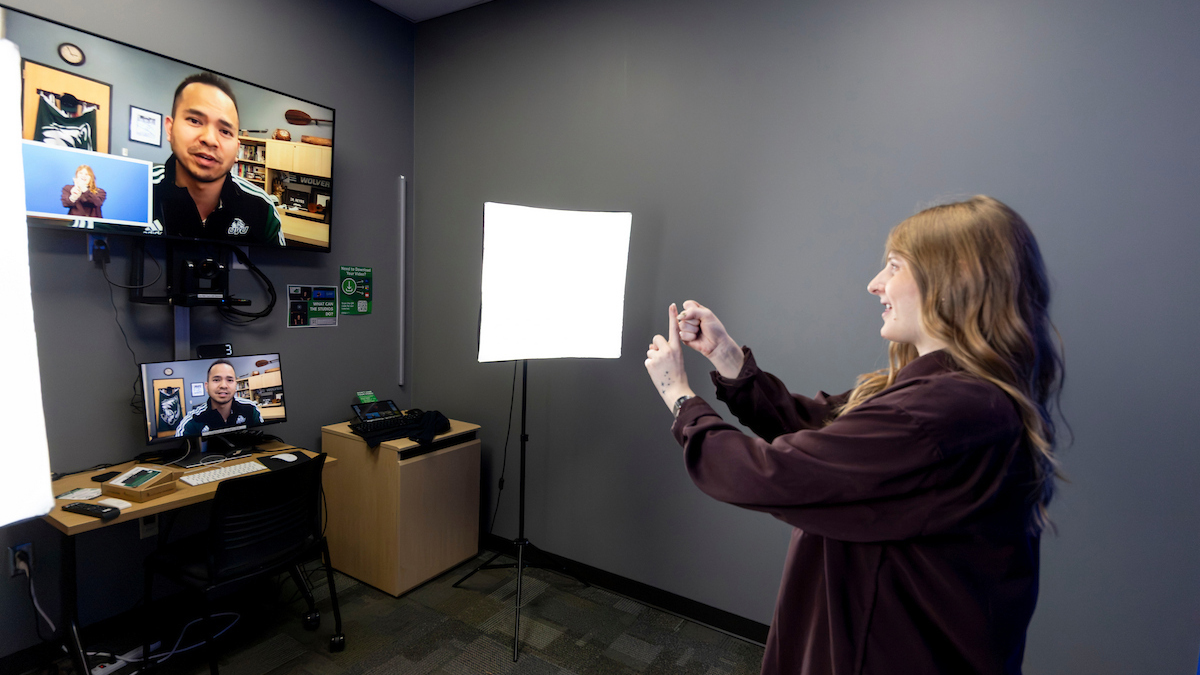
When deciding which language to study, it’s hard to get more “hands-on” than American Sign Language (ASL).
“ASL works in a different modality than the languages most of us grew up with,” Utah Valley University student Michael Tercero said. “English, Spanish, and French are produced with the voice and received through the ear, which is the auditory modality. ASL is produced with the hands, face, and body and received through the eyes, which is the visual modality.”
Tercero is majoring in Deaf studies at UVU, with an emphasis in interpreting. UVU is celebrating the 20th anniversary of its ASL and Deaf studies program this year.
“Most of us never think about it, because sound is the only channel we have ever needed,” Tercero said. “However, nature shows that communication can travel through many channels, such as movement for bees and scent for ants, and we tend to disregard them simply because we have never encountered them.”
September was National Deaf Awareness Month, and at UVU, ASL and Deaf Studies students participated in events and activities to raise awareness and help show that the Deaf community has a place here, too.
“We’d love to build up the Deaf presence on campus,” said Bryan Eldredge, Ph.D., professor of Deaf studies at UVU. “Whether those students are in the Deaf studies program, or whether they’re in graphic design or accounting or whatever, just having them on campus is a real benefit.”
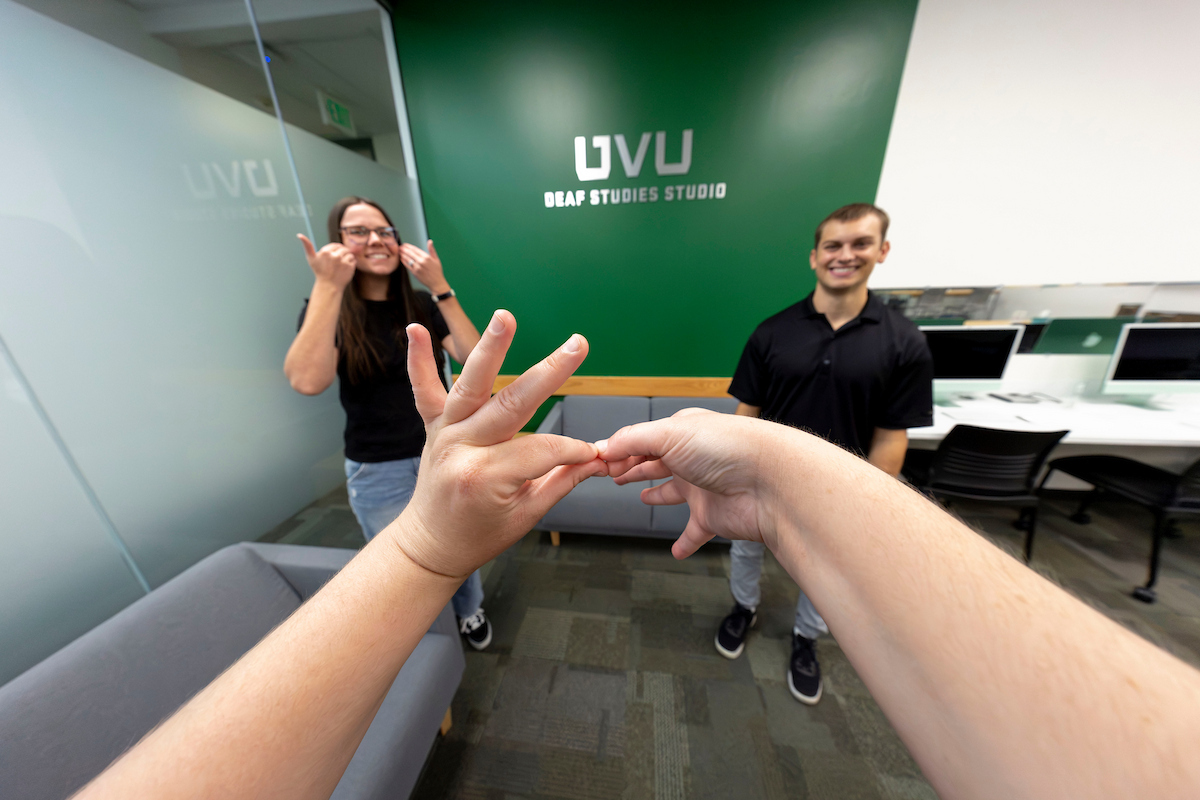
In 1998, Eldredge was hired as UVU’s first full-time faculty member teaching ASL. Since then, he’s seen the program grow and add classes, a minor, and in 2006, a full Bachelor of Arts in Deaf studies with emphases in general Deaf studies and interpreting. Approximately 800 students take ASL classes, with more than 200 declared as Deaf studies majors. Most recently, the program has added an academic certificate in ASL, which students can earn with 16 credits of upper- and lower-division work.
Eldredge said that growth is necessary to meet the consistently high demand for Deaf education and especially for ASL interpreters. In fact, many UVU students obtain state interpreter certification and jobs in the field before they even graduate.
“The Deaf community needs more interpreters,” Eldredge said. “They need that access. And the general Deaf studies program is great preparation for lots of things — careers, graduate work, and all sorts of things.”
Part of what helps UVU prepare its ASL students so quickly is its Deaf Studies Studio. The facility includes four dedicated recording studios, equipped with remote-controlled cameras framed for signing space and broadcast-quality lighting. The studio follows DeafSpace design principles, which prioritize clear sightlines, light and color, and seating and furniture arrangements that maximize visibility for everyone.
“It’s something that no other program in the country has — that level of equipment and facilities — that is there for our students to use,” Eldredge said. “We've got our students in the program training other students on how to use it, and also providing services across campus and editing videos and showing other people how to do productions.”
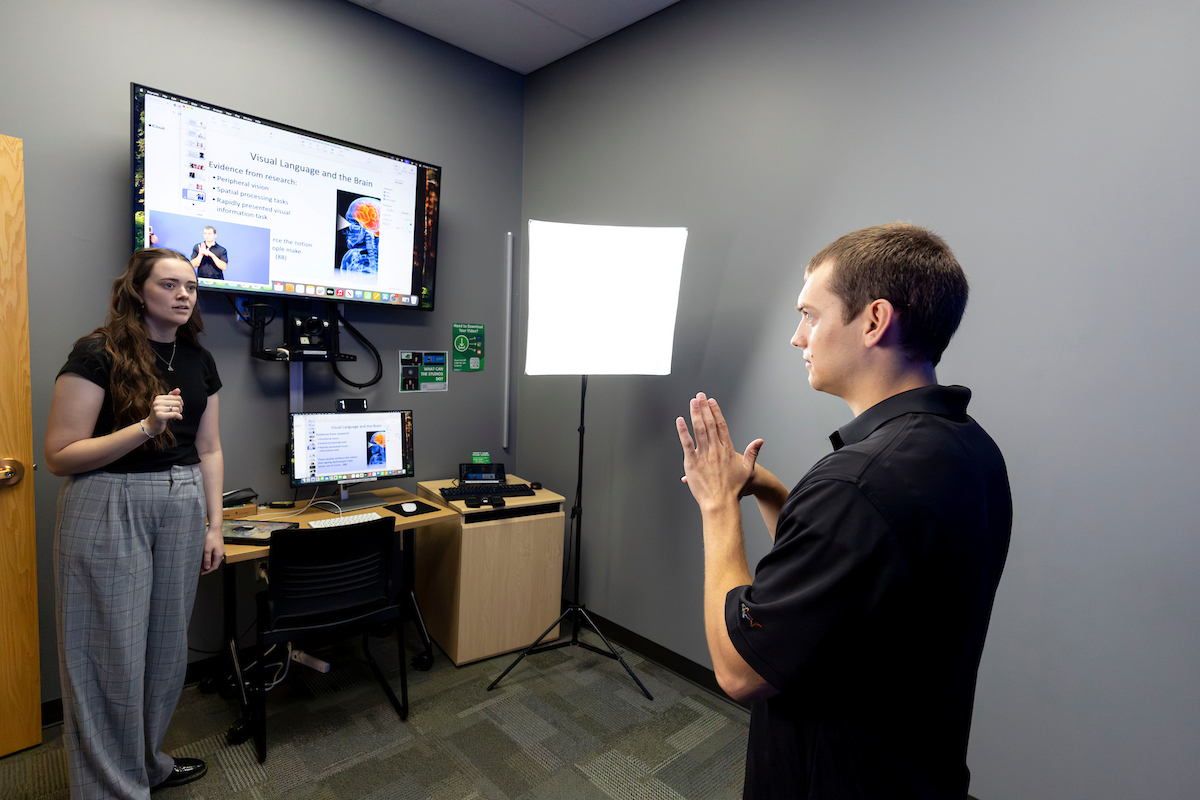
Deaf studies students at UVU quickly learn that, as with all languages, learning ASL also means learning about the culture of a specific community.
Each year, students in the Deaf studies program travel to Gallaudet University in Washington, D.C., the only liberal arts university in the United States primarily created for Deaf and hard-of-hearing students. They immerse themselves in campus life, including athletic events, the “Signing Starbucks” coffee shop, and the university’s Deaf Film Festival.
“This language comes with really rich culture and a lot of new ideas that challenge the way I would traditionally think,” said UVU student Sadie Sollars. “I chose ASL because it makes me view the world in ways that I would not if I did not have this experience.”
“Like any other language, ASL is not a ‘one size fits all,’” UVU student Michelle Angel added. “There are dialects, accents, codes, and registers that can influence how a person can express something in ASL.”
Clearing up those misconceptions is crucial for a community that is often overlooked, undereducated, and under-resourced, Eldredge said.
“There's a relatively large and thriving community of Deaf people in the state of Utah who often go unseen and unthought about,” he said. “These are contributing citizens. They’re great workers. They’re not disabled. They just use a different language.”
Eldredge said he knows Deaf people who will travel long distances to visit doctors and dentists and other services if they are ASL-capable.
“I know people who travel past 45 dental offices to go to the one with the guy who signs,” he said. “And word gets out. Like, oh, you know how to schedule an interpreter with your roofing company? Well, every Deaf person is going to come to you.”
“ASL awareness moves people from assumptions toward respect for a language and a community,” Tercero said. “For most of my life, I had never met a Deaf or hard-of-hearing person, which shows how easy it is to be unaware. Awareness is the first step toward access.”

