UVU’s Woodbury School of Business welcomed Divvy Co-Founder Alex Bean for the Reed and Christine Halladay Lecture Series, where he shared his entrepreneurial journey, lessons on building startups, and the principles of purpose, relationships, and legacy from his book Factory for Good.

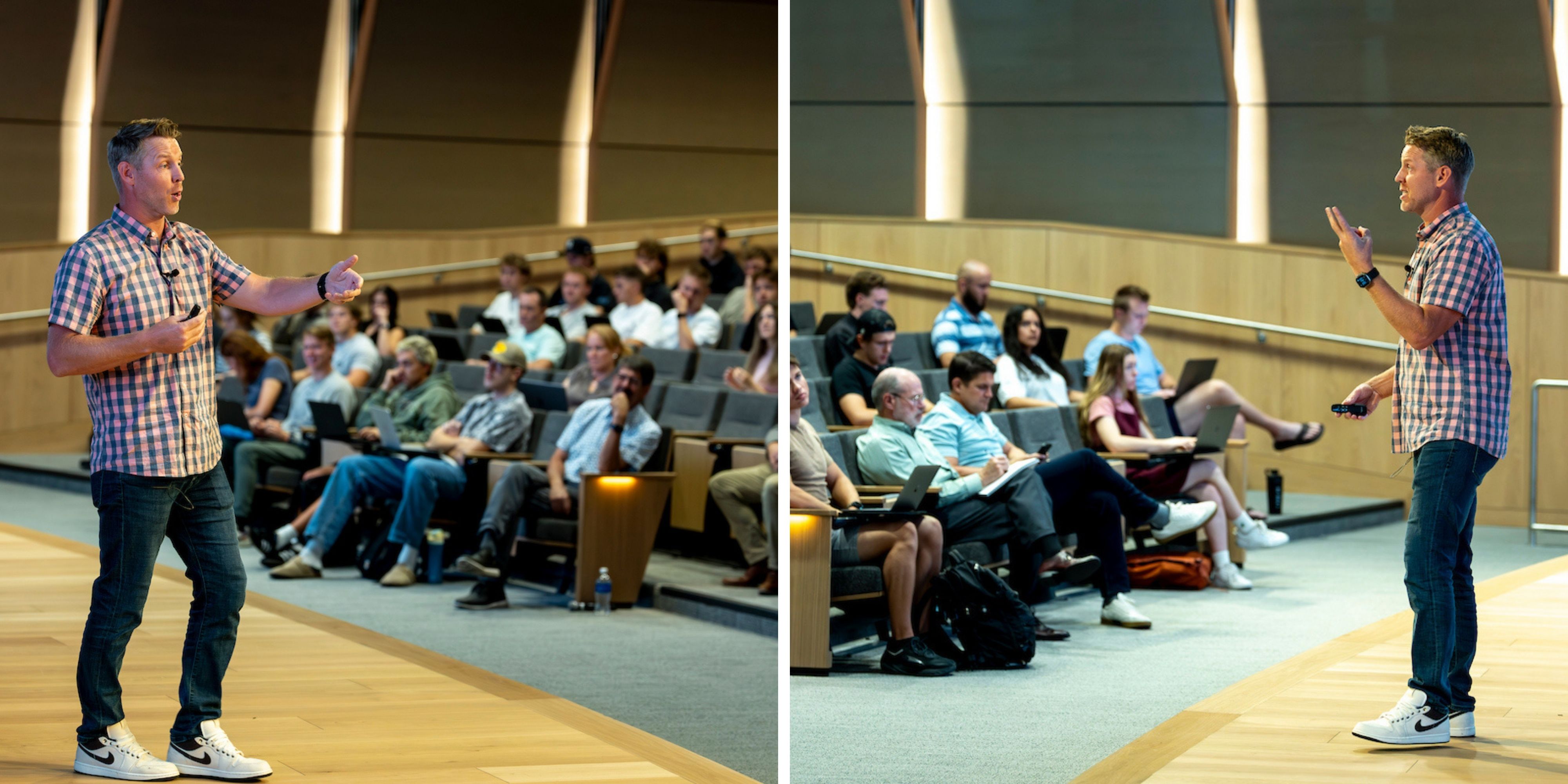
Alex was born into a family of entrepreneurs and shared that his passion for building businesses began early. While many of his peers worked traditional jobs in high school, he was already experimenting with his own ventures. He later studied geography at BYU, but it was in his twenties that he truly learned the discipline of entrepreneurship, often working long hours for very little pay in order to gain experience and knowledge.
In 2016, Alex co-founded Divvy, a smart credit card platform for businesses. He and his longtime friend, whom he first met playing paintball in the fourth grade, spent 18 months building the product before its launch. Reflecting on this, he told students that you never know when or how you will meet the people who may one day become your business partners.
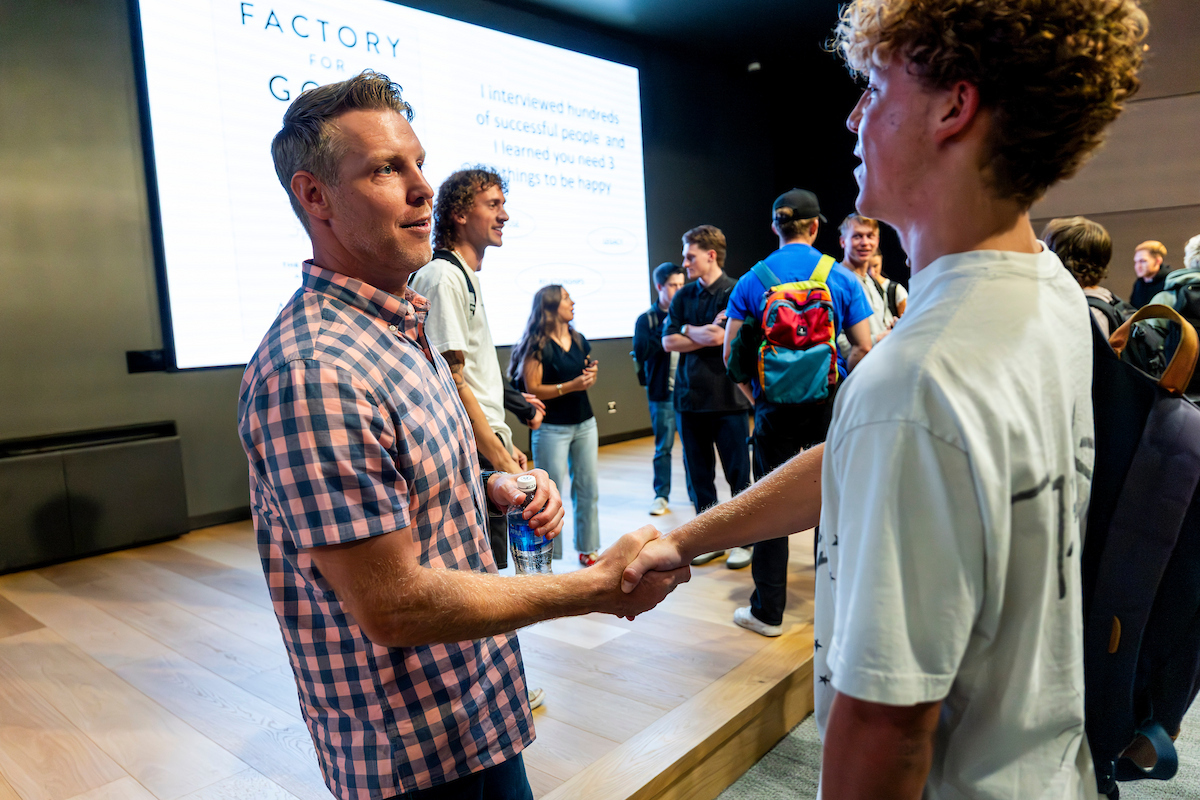

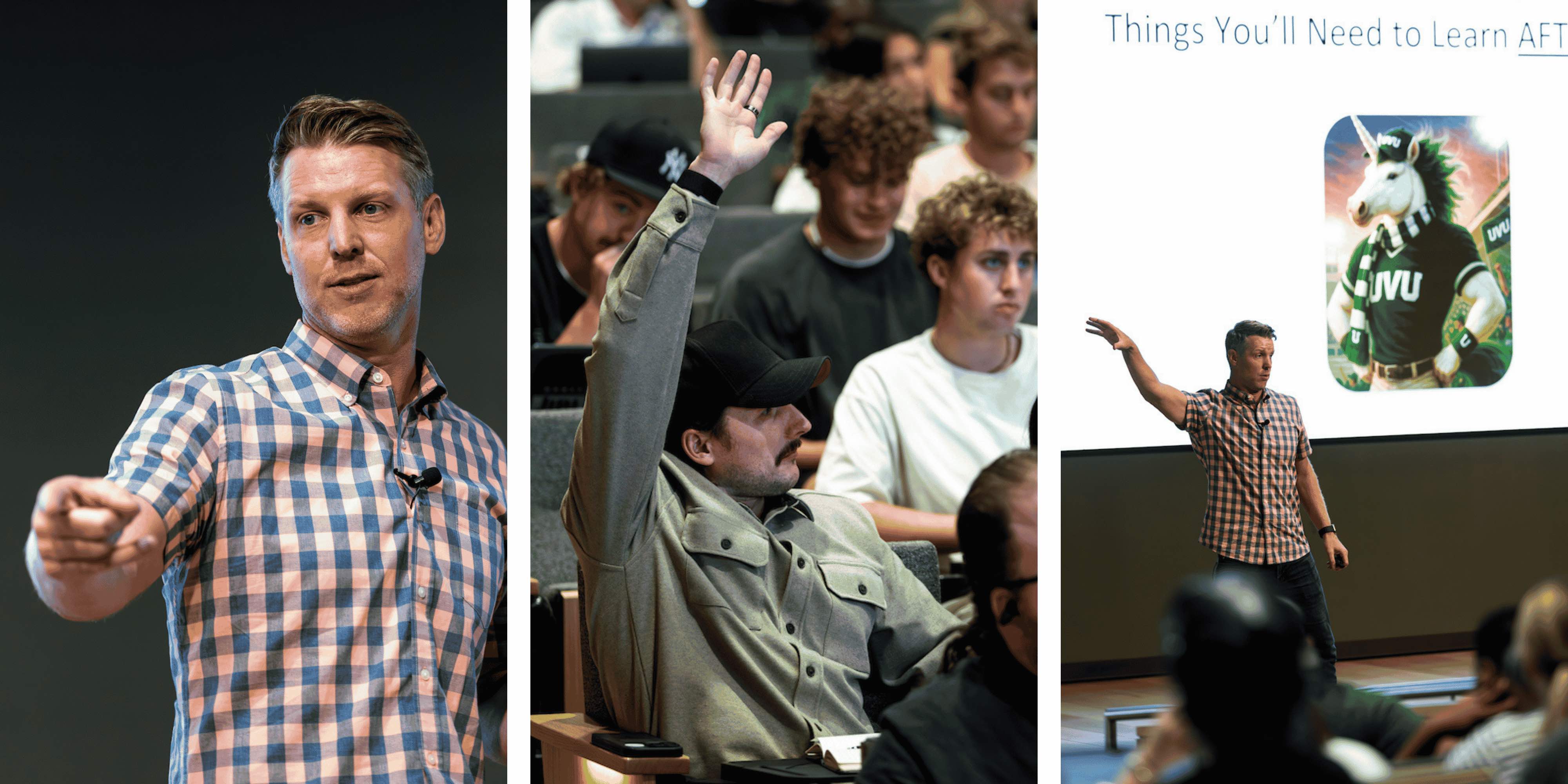
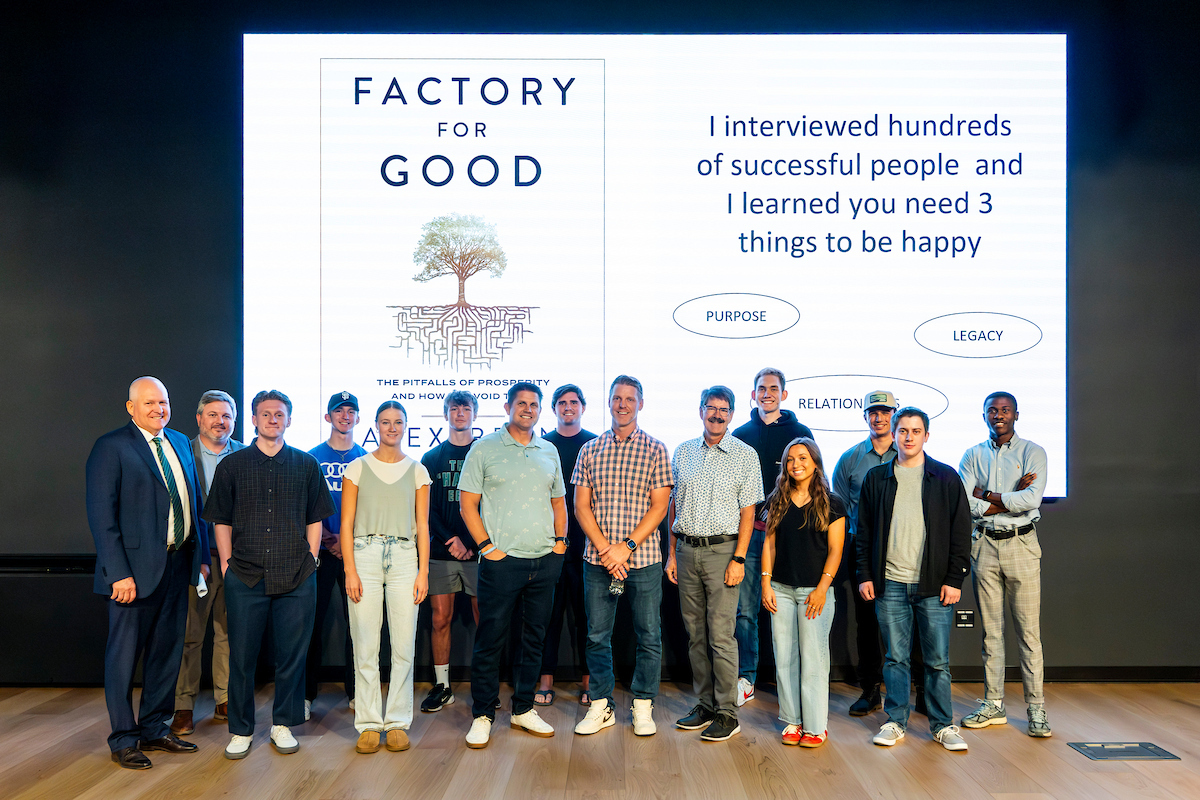
Alex reminded students that even after an exit, the pursuit of happiness continues. It is not found at the top but in the process of building itself, which he described as the most noble work you can do. In his book Factory for Good, he interviewed hundreds of successful leaders and found that lasting happiness comes from three things: purpose, relationships, and legacy.
During the Q&A, Alex advised students to pay attention to their energy when deciding whether to learn a skill or outsource it. If a task fuels you, take it on. If it drains you, find someone else who thrives in that area.
The Woodbury School of Business extends its gratitude to Alex Bean for sharing his entrepreneurial journey and insights with UVU students. His story was an inspiring reminder that success is built on resilience, focus, and knowing the unique strengths you bring to the table.
Want to catch every insight from this year’s Halladay Lecture Series?
Watch Alex Bean's full lecture below.

