Predator Armor founder, McKay Christensen teaches UVU students how to turn ideas into profitable ventures with lessons on zero-to-million strategies and key business principles..

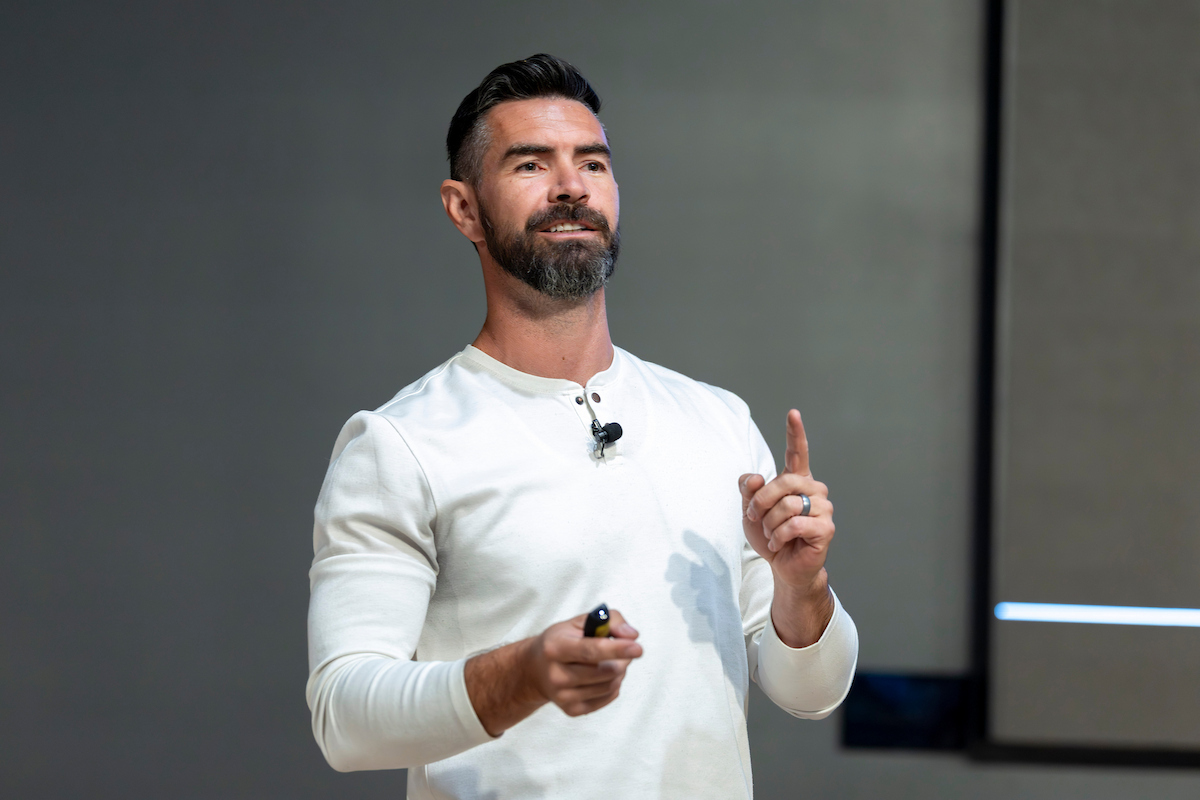
McKay is a husband and father of four who has built seven multimillion-dollar businesses, achieved three successful exits, and experienced many failures along the way. With a background in engineering and design, he shared his insights on what it takes to go from zero to one million dollars—turning an idea into something real and profitable.
The lecture began with a discussion on the definition of success. When students suggested that success means “accomplishing your goal,” McKay expanded on the idea, emphasizing that true success requires planning, action, and assessment. He reminded the audience that hard work alone does not guarantee success—but without hard work, success is impossible.
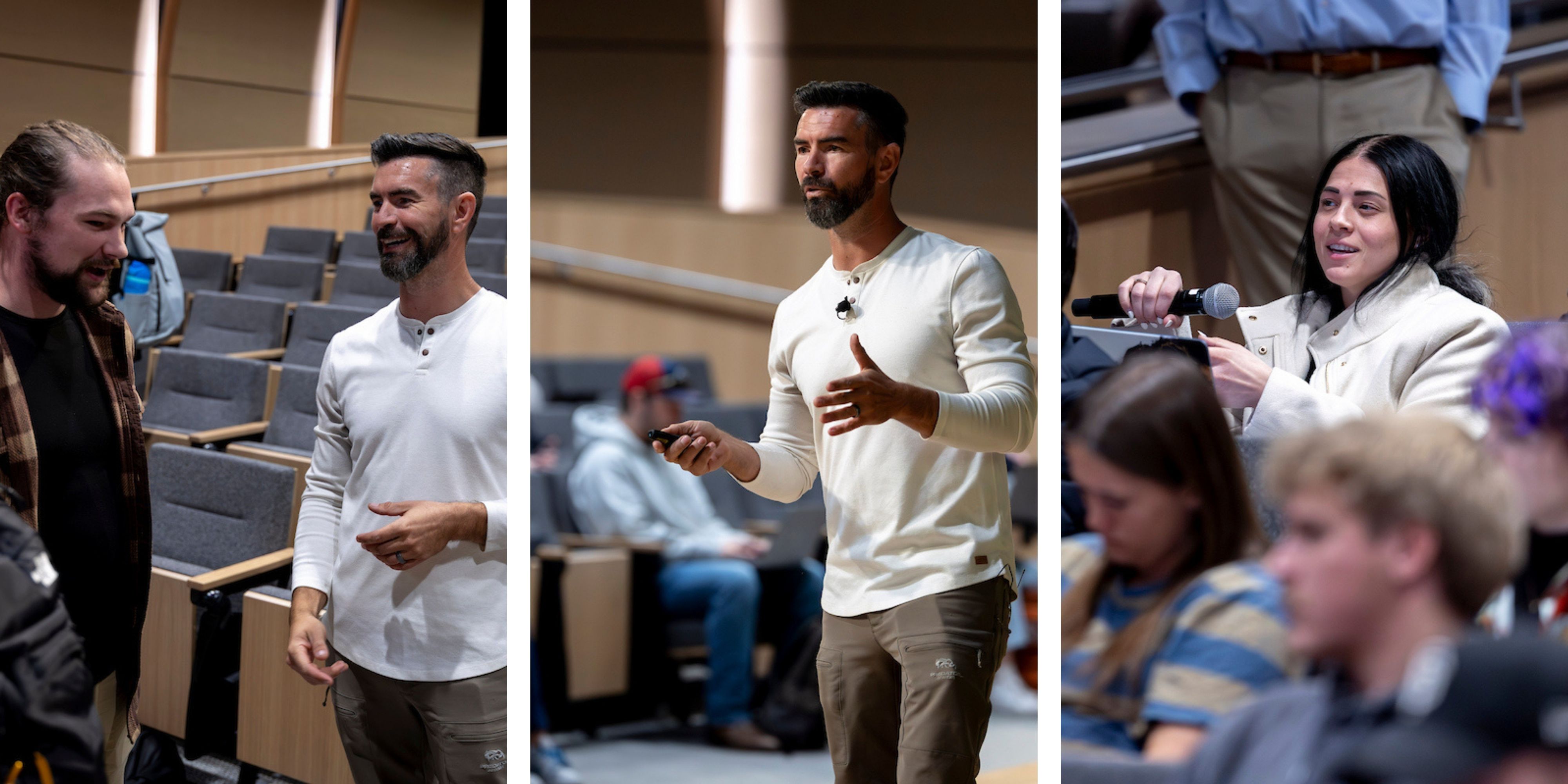
McKay shared the story of how he founded Predator Armor, a business born during one of the most challenging periods of his career. When the COVID-19 pandemic hit, his virtual reality company dropped to zero revenue for ten months. Around the same time, a close acquaintance was shot during the 2020 Provo demonstrations, inspiring McKay to explore the idea of body armor. He asked himself: What do I already know? What resources do I have? What makes me uniquely qualified to compete in this space?
Owning an industrial laser shop gave him a starting point—he could cut steel plates himself. With his team, he experimented with bending Kevlar steel and integrating fabrics to create a strong, reliable product. Quoting David Goggins, McKay reminded the audience, “Nobody cares, work harder.” Through relentless testing, innovation, and outreach to influencers, Predator Armor launched successfully and achieved $1.4 million in sales during its first year. A key part of their success, he noted, came from their ability to stand out—through thoughtful presentation, eye-catching product displays, and strong branding.

Reflecting on why the company succeeded, McKay highlighted several factors: resourcefulness in assembling the right team, good timing, and persistence in the face of obstacles. He stressed that successful businesses are built not only on great ideas but also on determination and execution.
McKay outlined four essential qualities every product must have:
He added that while not mandatory, it’s advantageous for a product to have a large market, low competition, scalability, high profitability (EBITDA), and ideally, a recurring purchase model.
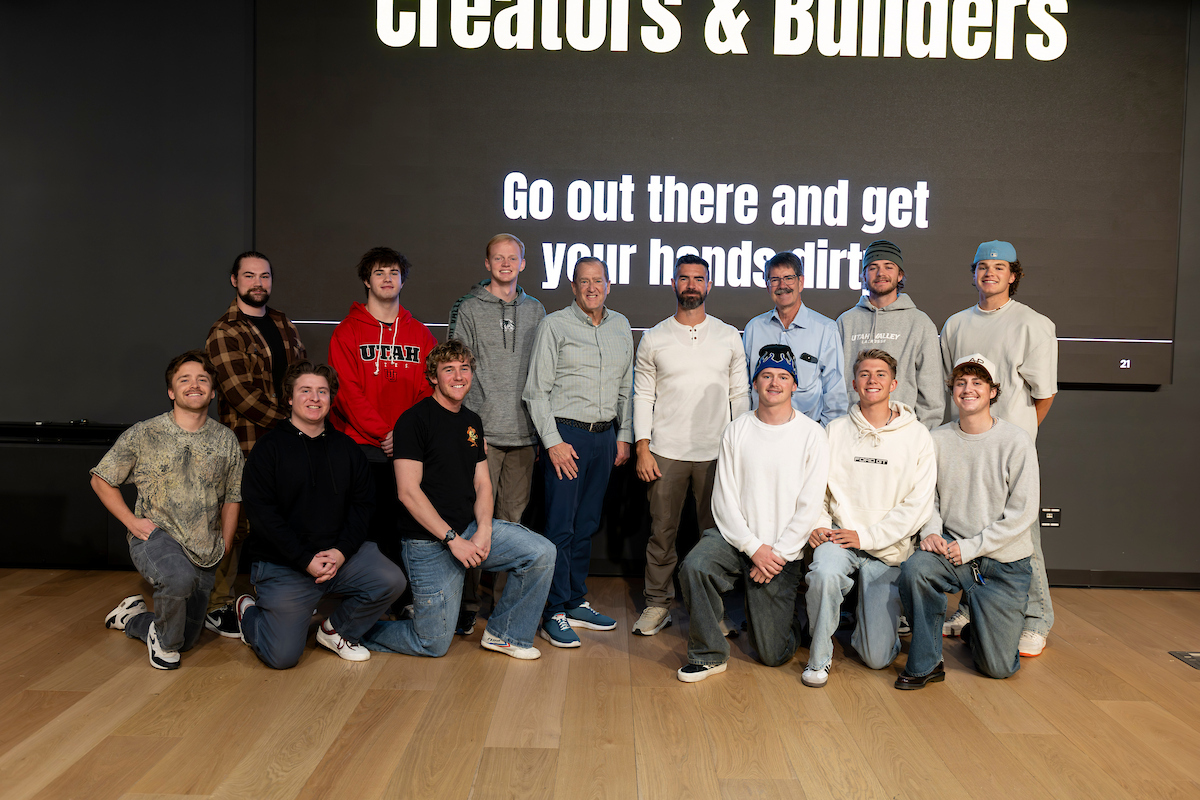
Closing his lecture, McKay encouraged students to embrace creativity and action. He emphasized that the country needs more creators and builders—people willing to roll up their sleeves, get their hands dirty, and turn ideas into reality.
The lecture concluded with an engaging Q&A session, during which McKay shared additional insights from his entrepreneurial journey.
The Woodbury School of Business extends its sincere gratitude to McKay Christensen
for sharing his time, experience, and wisdom with UVU students. We wish him continued
success in all his future endeavors.
Want to catch every insight from this year’s Halladay Lecture Series?
Watch McKay Christensen's full lecture below.

