At UVU’s Business Impact DEN event, Squire COO Jared Rohatinsky shared practical frameworks and real-world tools for managers—from goal-setting systems to accountability maps—proving that effective leadership is built on structure, not theory.
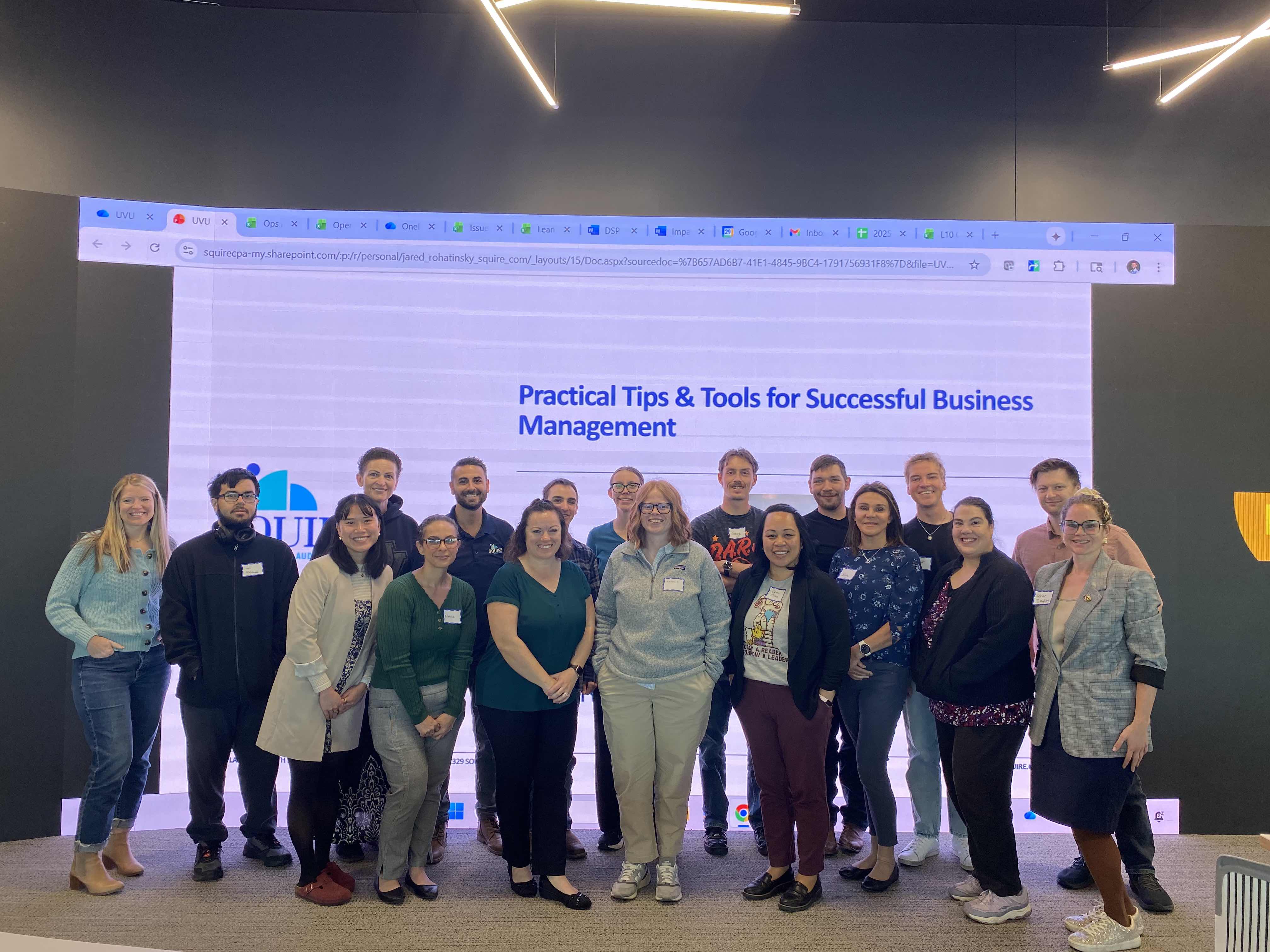
The latest UVU Business Impact DEN event took place on October 29, 2025, featuring guest speaker Jared Rohatinsky, Chief Operating Officer at Squire. His presentation, “Practical Tips & Tools for Successful Business Management,” gave attendees more than just ideas. It gave them real tools to make management practical.
What stood out most was how Jared broke down management into simple, actionable frameworks that anyone could apply. With his collection of templates, examples, and strategic modules, he turned complex management concepts into systems that teams can start using right away. From strategic planning to accountability mapping, every template he shared showed his deep understanding of what it takes to help organizations run efficiently and communicate clearly.
Jared also reminded us that meetings don’t have to be boring. When done right, they can actually be fun, focused, and productive. By using structured tools, like Issues Lists, clear agendas, and consistent follow-ups, teams can solve problems, make decisions faster, and leave meetings energized instead of drained.
He truly did a wonderful job making leadership feel less theoretical and more achievable—step by step, tool by tool.
Instead of adding another management theory to the pile, Jared focused on bridging the gap. His message was simple but powerful: good management isn’t about knowing more. It’s about having the right tools to act on what you already know.
Jared shared how his background in accounting shaped his leadership approach. After earning his bachelor’s and master’s degrees in accounting, he spent a short time in Big Four before launching a startup in the event technology space, later transitioning to venture capital, and now serving as COO at Squire.
He doesn’t regret studying accounting, in fact, he calls it “the language of business.” Understanding the numbers, he explained, helps managers make grounded decisions that drive strategy forward. At Squire, a firm known as a “business transformation partner,” Jared oversees teams that provide not only tax and audit services, but also outsourced CFO work, ERP implementations, wealth management, and software development.
Jared grouped his tools into two main areas—Strategy and Operations. He walked attendees through how to apply each one effectively in real-world management.
During his presentation, Jared discussed how his methods balance structure and autonomy. “A high-trust, high-accountability culture isn’t micromanagement,” he explained. Clear expectations allow people to thrive. His use of EOS frameworks, like quarterly Rocks and Level 10 meetings, ensures that priorities stay visible, decisions are documented, and meetings actually move work forward.
This event reminded all of us that great management isn’t about doing more. It’s about building better systems. Jared showed how structure, documentation, and consistency transform leadership from a concept into a daily habit. His thoughtful frameworks and accessible tools left everyone inspired to rethink how they plan, communicate, and lead.
“There’s no silver bullet in management,” Jared concluded, “but with the right tools, you can get 80–90% of the way there.”

