Entrepreneur Ashish Fernando, Founder and CEO of EDMO and iSchoolConnect, shares entrepreneurial insights on AI innovation, leadership, and teamwork at UVU’s Reed and Christine Halladay Executive Lecture Series.

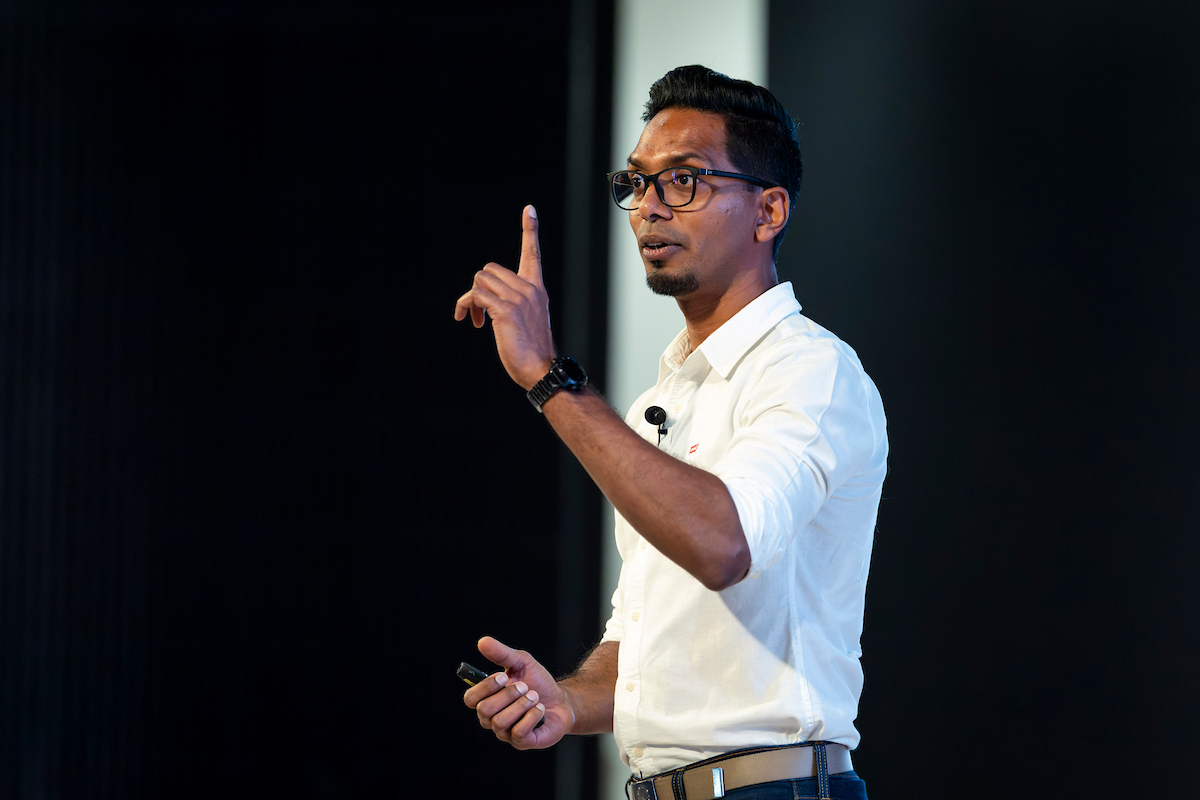
Ashish opened his lecture by reflecting on what he refers to as the “weird ego inside every entrepreneur”, the internal drive that keeps founders pushing forward when challenges mount. As Ashish explained, entrepreneurs are hunters by nature, constantly searching for new solutions, opportunities, and ways to move faster.
After immigrating to the United States, Ashish quickly identified a major problem within the system of higher education: a broken, inefficient student enrollment system. Instead of accepting this limitation as the norm, he created the world’s first ever AI-powered student enrollment interview platform. Through close partnerships with universities and increasing market demand, the technology empowering this initiative rapidly evolved. What began as an admissions tool would soon expand into AI-driven exam proctoring, capable of condensing three hours of exam footage into just thirty seconds for meaningful review. For Ashish, it was a powerful example of how focus, speed, and adaptability can drive innovation.

Throughout his talk, Ashish continuously drew back to a recurring Formula 1 racing analogy to illustrate what it takes to reach the finish line in entrepreneurship. In Formula 1 racing, he explained, the difference between victory and defeat is often just one second. Behind that margin are nearly 1,000 people, all working to improve two cars; each person, process, and detail matters significantly. With the right team, Ashish emphasized, progress that might normally take months can happen in a matter of weeks.
To drive this point home, he shared a video highlighting a single bolt used in Formula 1 racing. If that tiny bolt fails, it can compromise the entire car and endanger the driver. In business, Ashish noted, overlooked details and weak links can have similarly bleak consequences.
Ashish also shared his personal connection to racing, explaining that he started motor racing to escape the pressures of entrepreneurship. On the track, complete focus is required, and there is no room for distractions when your life is at risk. That same level of presence and accountability, he believes, is essential in leadership and decision-making.
When discussing company culture, Ashish stressed the importance of trust, listening, and what he described as “cross-pollinating culturally.” On his teams, success is not measured by hours worked, but by results delivered. He referenced the book Employees First, Customers Second, reinforcing his belief that organizations thrive when leaders prioritize their people.
Ashish also spoke candidly about failure and how leaders respond to it. Quoting Formula 1 engineer Paddy Lowe, he stated:
“Every time you have a negative response to an issue, you’re denying yourself the opportunity to improve.”
He followed this with insight from The Formula One Group automotive engineer, Rob Smedley, noting that blame-driven cultures often waste energy covering mistakes rather than solving problems and improving performance.
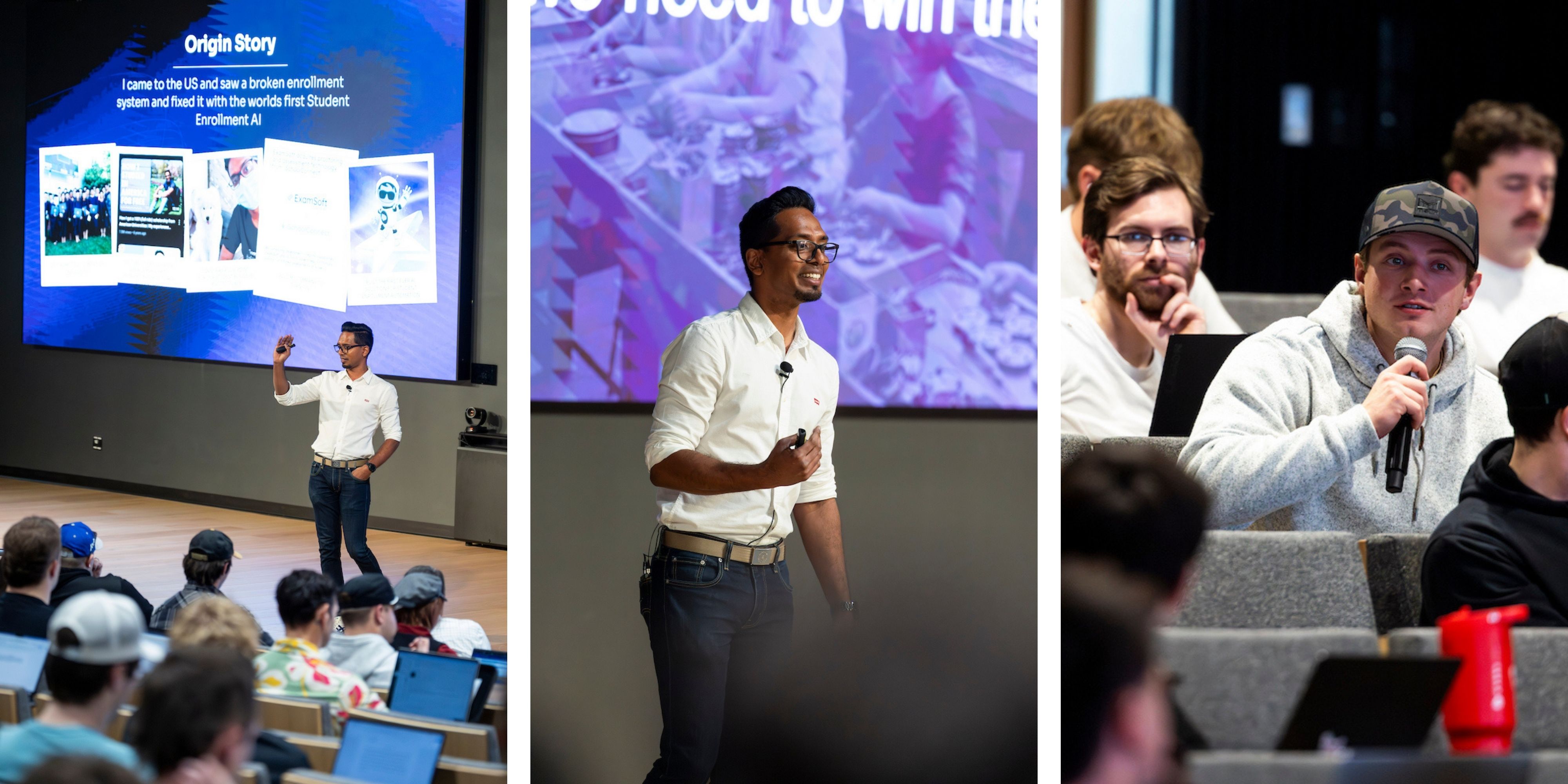
Encouraging students to challenge limitations, such as doubt and inertia, Ashish shared a quote from playwright and critic, George Bernard Shaw:
“People who say it cannot be done should not interrupt those who are doing it.”
On the topic of growth, Ashish encouraged aspiring entrepreneurs to raise capital when they don’t need it, allowing them to stay in control of the conversation. At the same time, he emphasized the importance of building profitable, revenue-driven businesses rather than companies reliant solely on investor funding. He shared his personal commitment to never laying off employees, underscoring his belief in long-term sustainability and loyalty.
He concluded by returning once more to the subject of Formula 1 racing, where he described how pit stops that once took over a minute with two people are now completed in under two seconds with carefully coordinated teams. In business, Ashish believes the key to success lies in a balanced approach: avoiding both understaffing and overloading problems with too many people.
Quoting former Formula 1 team leader, Claire Williams, Ashish closed with a leadership principle that defines his own strategy:
“Bring in lots of clever people and give them the freedom to do their jobs.”
He shared that his hiring philosophy reflects this belief; Ashish always recruits talent and doesn’t review résumés until the interview has concluded.
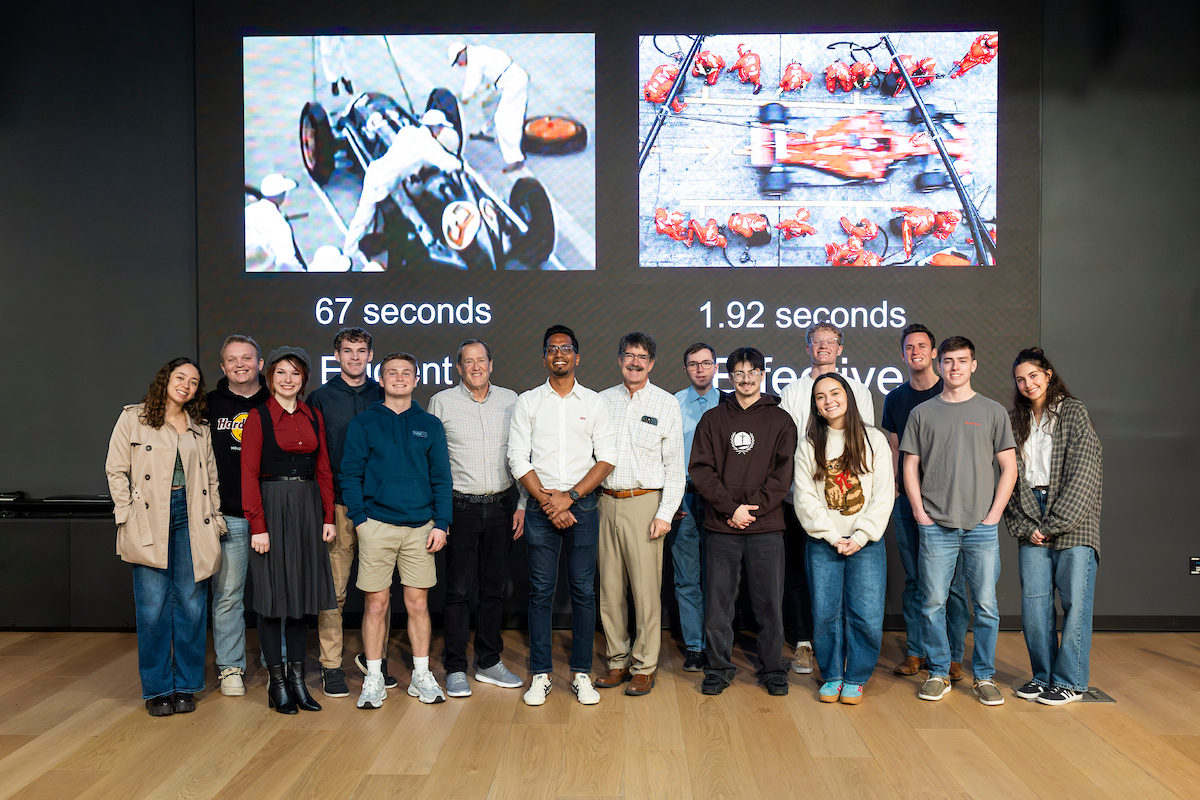
The Woodbury School of Business extends sincere thanks to Ashish Fernando for sharing his insights, experience, and powerful lessons on leadership, teamwork, and resilience. His message left students with a clear takeaway: in entrepreneurship, as in Formula 1, success is built through focus, trust, and relentless attention to the details that matter most.
Want to catch every insight from this year’s Halladay Lecture Series?
LEARN MORE ABOUT ALL SPRING 2026 HALLADAY LECTURE SERIES SPEAKERS HERE.
Watch Ashish Fernando's full lecture below.

