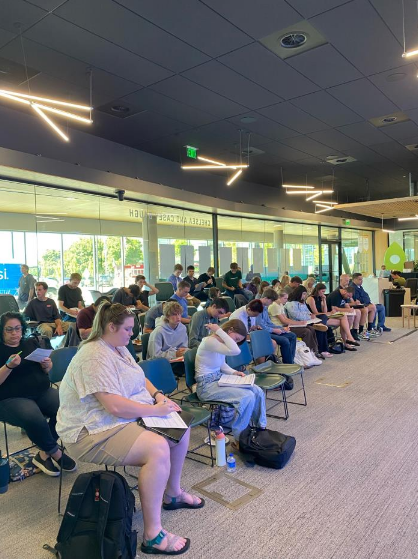
UVU accounting professor David Waite leads student entrepreneurs through an informative crash course on accounting basics for startups in a workshop titled, "Measuring Momentum: A Look at Cash Flow."

Accounting helps business owners turn financial information into better decisions. That was the starting point for Waite, now in his third year of coming to teach a workshop to entrepreneurs about small business accounting. Throughout the workshop, attendees applied the concepts to their own businesses—or businesses they hope to start—using a worksheet.
Waite encouraged students to understand four key parts of their business finances:
• Assets: Resources that provide future value, such as a computer or massage table.
• Liabilities: Obligations the business owes, including loans or services customers have already
paid for.
• Revenues: Money earned from sales, tracked separately for each revenue stream.
• Expenses: The costs of running the business, including recurring subscriptions.
Assets and liabilities appear on the balance sheet, while the income statement subtracts
expenses from revenue to show net income. Waite recommended tracking income by project
during the first few years to better understand which work is profitable.

A business’s first profitable month doesn’t tell the whole story. Before revenue arrives, owners often pay startup costs, purchase equipment, and cover operating expenses.
Waite illustrated this with a sample spreadsheet showing cumulative losses growing. Even when monthly revenue begins to exceed expenses, the business still needs to recover those earlier losses.
The takeaway: plan for the cash needed to keep the business running while it works toward breaking even. Waite also suggested tracking owner draws separately in a cash flow worksheet, so entrepreneurs can see how much cash remains after paying themselves.
Keeping financial records doesn’t require complicated software. An Excel spreadsheet, a printed worksheet, or a weekly routine of entering receipts can help owners stay organized.
Consistent tracking also makes it easier to spot unnecessary spending and find opportunities to cut costs. The goal is to build a habit that gives owners a clearer picture of their business.
Thank you to David Waite and everyone who joined us for the workshop.
Learn more about upcoming events and opportunities to get involved with the UVU Chelsea and Casey Baugh Entrepreneurship Institute.

