During the Claude Co-work 101 workshop at the Chelsea and Casey Baugh Entrepreneurship Institute, Kristen Hansen taught student entrepreneurs how to move beyond basic prompts and optimize artificial intelligence (AI) into a reliable, practical work system that saves time and generates real results.

At the Baugh Entrepreneurship Institute's Claude Co-work 101 workshop, Kristen Hansen showed students how artificial intelligence can become more than a place to ask occasional questions. Through live demonstrations and hands-on activities, she encouraged entrepreneurs to treat AI as a work system that can understand their goals, organize information, repeat useful processes, and help move a business forward. The session was designed for beginners as well as students already experimenting with AI. Hansen's main message was that the biggest gains do not come from finding one perfect prompt. They come from giving AI the right context and building a dependable way to use it over time.
Hansen opened by challenging the way many people approach AI. Because users are familiar
with search engines, they often bring the same habits into tools like Claude or ChatGPT:
ask a question, receive an answer, and move on. That approach can be useful, but it
only scratches the
surface of what the technology can do. Instead, Hansen told students to "think about
AI more as a system that can work for you and less like a chatbot." She compared an
AI assistant to an employee or intern who becomes more helpful as it receives structure,
examples, access, and feedback. For entrepreneurs balancing product development, customer
research, outreach, and day-to-day operations, that shift can turn AI into a practical
extension of their workflow.
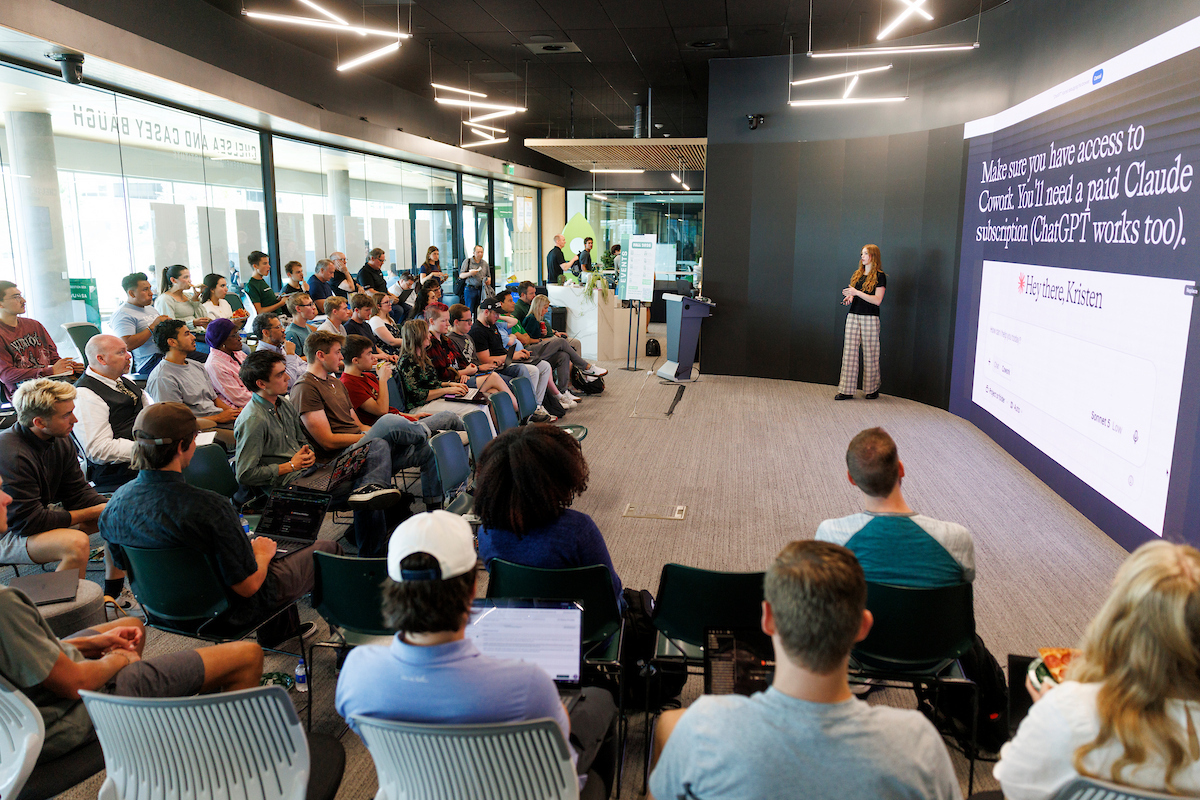
A central theme of the workshop was context engineering—giving AI the background it needs to make better decisions. Hansen encouraged students to lead with their desired outcome and then add relevant details, examples, and source material. Students practiced creating profile instructions about who they are, what they are building, and how they prefer AI to communicate. Hansen also recommended voice dictation as a quick way to provide context without writing a polished prompt.
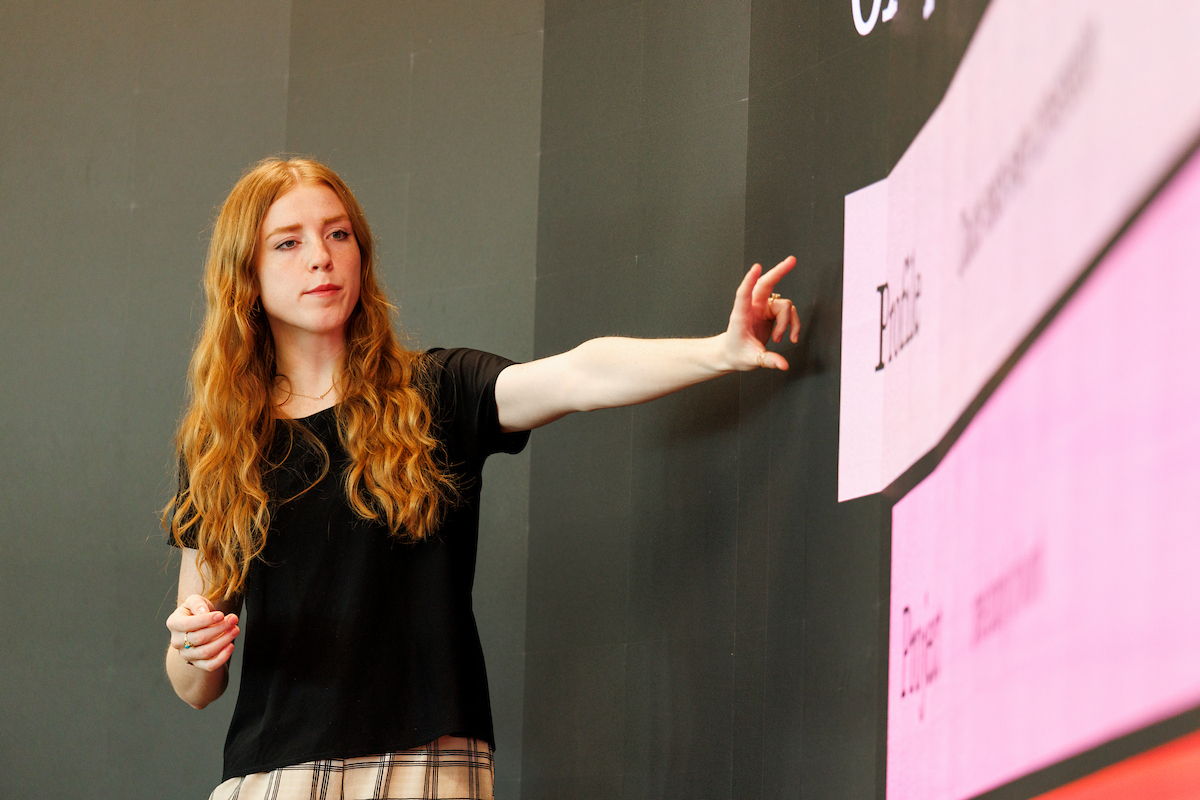
Hansen encouraged entrepreneurs to organize their work into projects and create reusable
skills and scheduled tasks. These systems give AI the context it needs, reduce repetitive
work, and save founders' time. Hansen emphasized that AI should support entrepreneurs,
not replace them. Users
should set clear goals, review its plans and output, and approve important actions
before AI completes them. Students left the workshop having learned a lot, and the
hands-on format meant many of them started building their own setups before the hour
was over. Thanks to everyone who came out, and we'll see you at the next event.
Learn more about upcoming events and involvement opportunities at the Chelsea and Casey Baugh Entrepreneurship Institute.

