Learn how mindset, clarity, and communication shape salary negotiations. Jo Dailami shares practical tools at UVU’s BIL D.E.N. event to help professionals know their value and advocate with confidence.
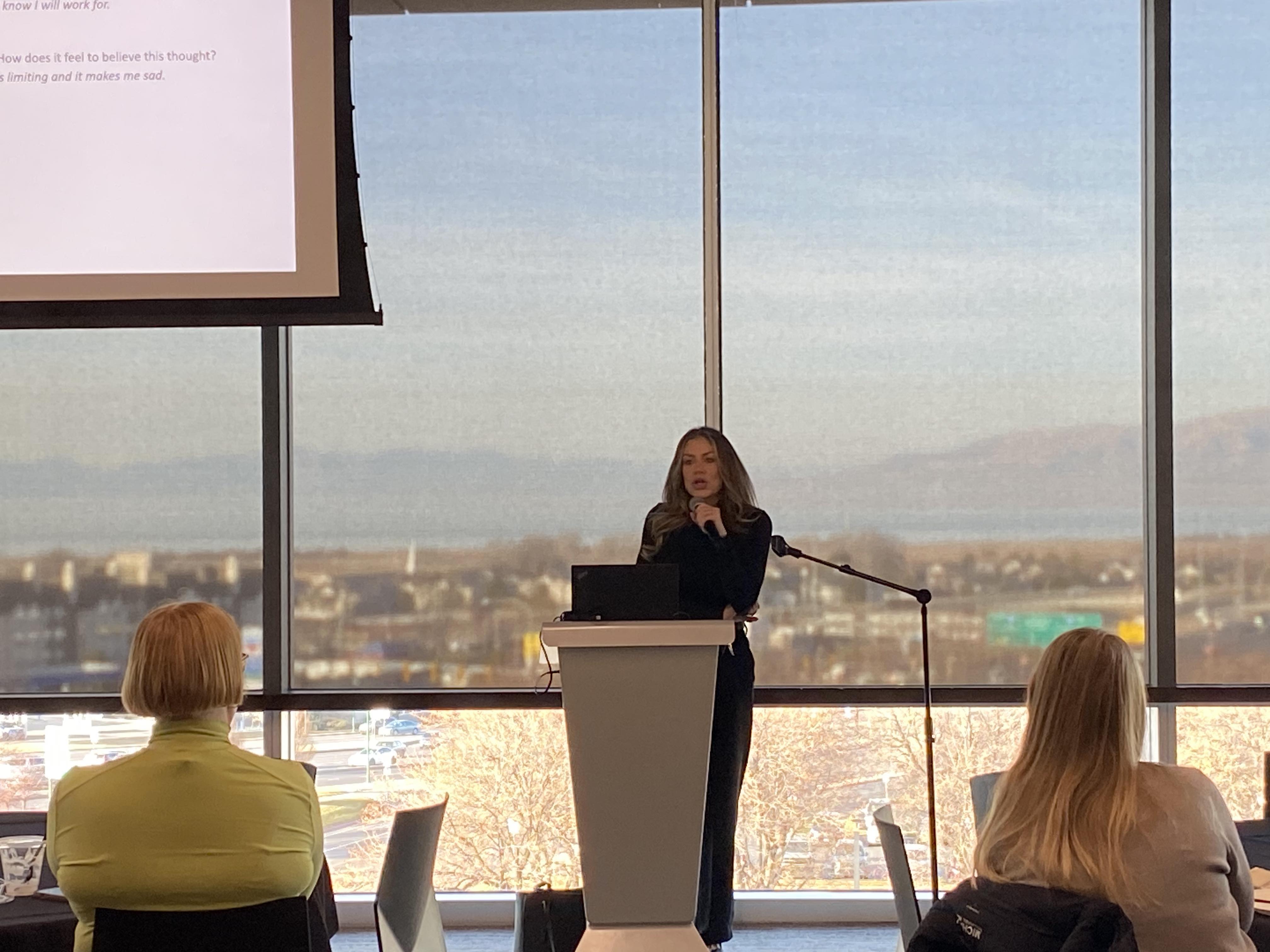
On January 21, Utah Valley University’s Business Impact Lab (BIL) hosted a D.E.N. (Develop • Engage • Network) session led by Jo Dailami, a leadership, learning & development, and talent management professional turned business owner. Drawing from years of hiring and negotiation conversations, Jo shared a practical and empowering message: salary and career growth conversations start long before you talk numbers. They start with beliefs, clarity, and communication.
Jo opened with a personal story that set the tone for the session. After achieving rapid growth early in her career, six promotions in seven years, she stepped away from corporate life when she became a mother. When she returned, she realized her skills and capacity hadn’t changed, but her beliefs had. Those beliefs led her to accept a role far below her ability and previous pay. Her point was clear: when our mindset shrinks, our choices shrink too.
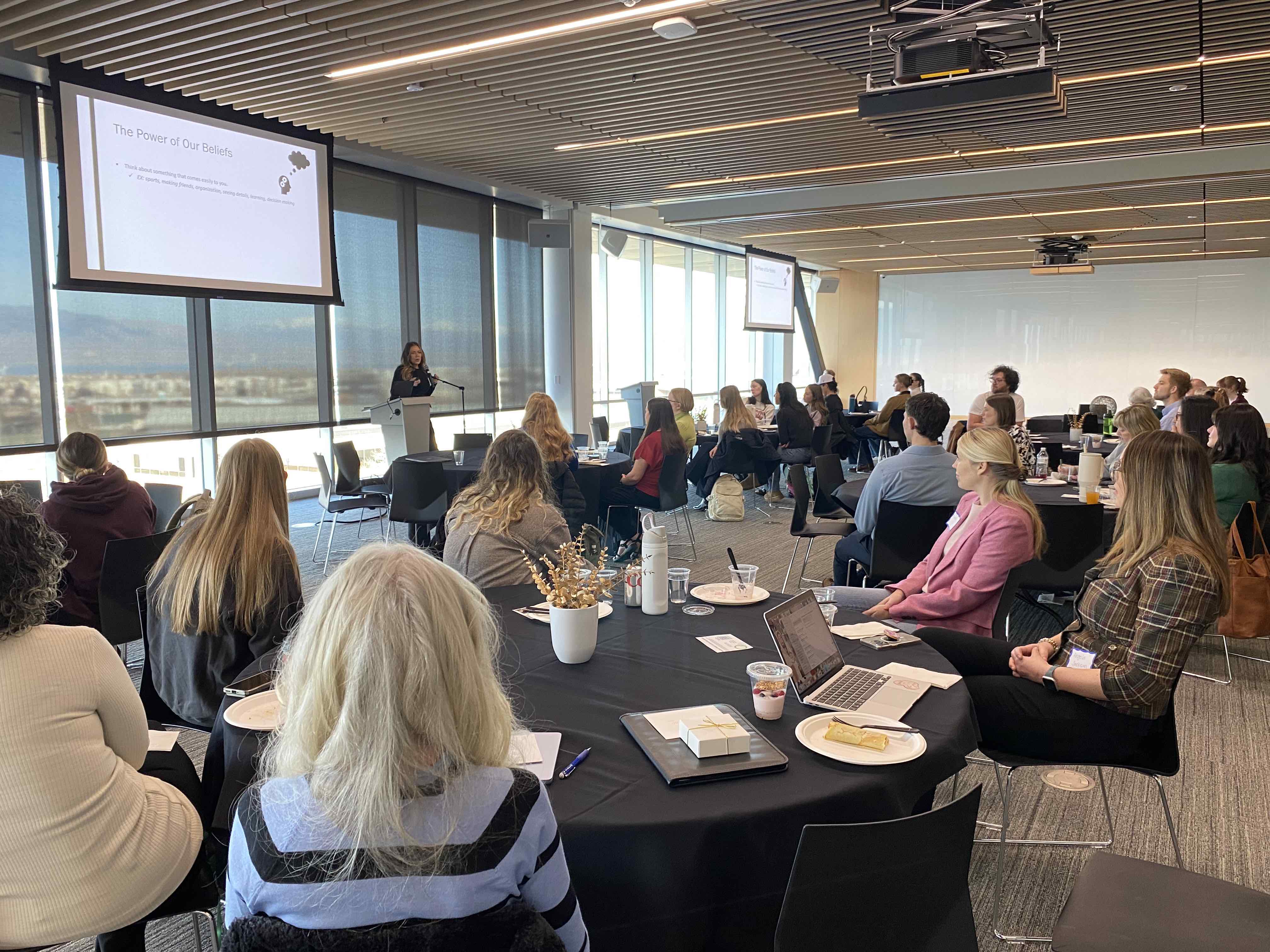
Jo defined bias as a natural “categorizing” process our brains learn early, shaped by culture and experience, yet it can quietly affect how we treat ourselves at work.
Participants did a quick exercise comparing:
The goal wasn’t to judge those beliefs, but to recognize them, and remember we can rewire them through practice.
Jo invited us to identify one belief that creates anxiety in interviewing or salary conversations (examples included: “I don’t have the right to ask,” “I should just be grateful,” “I’m desperate for the job,” “I don’t have enough experience.”)
Then she walked the group through three powerful prompts:
This shift matters because the same person can bring radically different energy into a negotiation depending on what they believe is possible.
Next, participants wrote one belief they want to embody, such as:
Jo emphasized that empowerment isn’t a one-time moment, it’s a practice. She suggested simple daily habits like a two-minute visualization before interviews or negotiation conversations.
Jo reminded us: “Just because it comes easy doesn’t mean it isn’t wildly valuable.” Participants were asked to notice moments of “flow” (work that feels energizing, natural, and even enjoyable) and name what they were doing (mentoring, streamlining processes, building content, solving problems, communicating with clients, etc.).
Jo encouraged us (especially those early in their careers, returning to work, or with nontraditional experience) to recognize “power skills” built through life:
She gave a strong example of how to translate a non-title-based action into measurable value: rallying a team to streamline a process and improving invoice turnaround time.
Tip she gave: keep a running “Yeah, I did that” document on your computer so you don’t forget wins when it’s time to interview, ask for a raise, or update your resume.
Jo taught a hiring-manager-friendly way to communicate value: STAR
Situation – Task – Action – Result
Instead of listing duties, you communicate business impact (ideally with numbers). She shared a clear example of converting a management routine into a measurable result (team revenue), then polishing it into one strong sentence.
Finally, Jo addressed a fear many participants shared: “Someone else is more experienced than me.” Her response was practical: if you can name what you’re still building, and show your plan, your “gap” becomes a growth signal, not a weakness.
Jo invited participants to rate themselves across key areas, including leadership, business acumen, and communication, and then identify one area for improvement and one concrete action step.
The Q&A reinforced that confidence often comes from preparation:
Key takeaways (what attendees left with)
By the end of the session, Jo anchored the event with three “do-now” priorities:
Jo’s closing reminder was simple but powerful: your money matters, your trajectory matters, and your confidence is trainable. When you know your value and speak it well, you don’t just negotiate better, you build a career that fits who you are.
Watch the full BIL D.E.N. event recording on YouTube:

