UVU’s Jessica Ballard explores how women in event management can build lasting careers through strategic leadership, mentorship, and shared experience.
Earlier this summer, I read Barbara Scofidio’s Skift Meetings article, “Gendered Ageism: The Events Industry’s Chronic Issue.” As someone who has spent nearly two decades working in and around the events industry—and who now teaches the next generation of event professionals—it prompted me to think about a contradiction within our profession.
Events is a women-majority industry. Recent academic research estimates that women comprise 75–80% of the events workforce, yet only 16–27% of CEO, director, or managing director-level roles in the UK events sector are held by women. The same research describes an industry in which women can encounter barriers to leadership development at multiple stages of their careers.
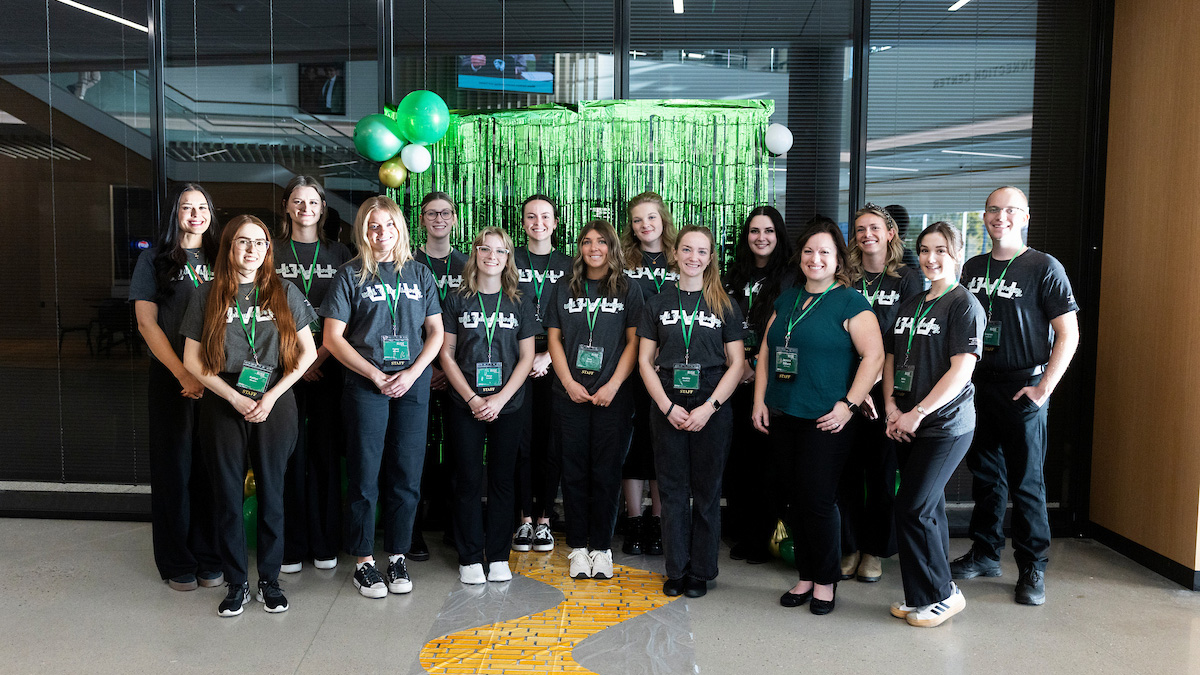
Those numbers particularly stand out to me because the students in my Event Management classes are also predominantly women.
We spend considerable time preparing students to enter the industry. But perhaps there is another question we should be asking: Are we preparing women simply to execute exceptional events—or to eventually lead the strategy behind them?
Early in my career, I learned that having a leadership title did not necessarily mean having a leadership voice.
Even with “Director” in my title, I was often brought into event conversations after many of the strategic decisions had already been made. The purpose, venue, date, budget, or overall direction had been determined, and my role was to ‘just’ execute the plan.
The challenge was that execution often revealed problems that could have been prevented during the strategy phase: a venue that wasn't feasible, a budget that didn't align with expectations, or a date that conflicted with another major community event.
I knew enough to see the problems, but I wasn't always in the room early enough to prevent them.
It took time—and repeatedly advocating to be included in those conversations—before I consistently had a seat at the strategy table.
Years later, I recognize that my experience was not necessarily unique. Research published in Tourism and Hospitality Research examining women's leadership development in events found that some event work traditionally associated with women can be perceived as less strategic or less valuable. The researchers identified a corresponding tendency for strategic and technical responsibilities to be associated more often with male colleagues.
That distinction matters.
The ability to execute is essential in events. Great strategy means very little if someone cannot turn it into reality. But execution and strategy should not represent separate career tracks. The professionals closest to event operations often possess exactly the knowledge organizations need when making strategic decisions.
As educators and industry leaders, we should be intentional about helping emerging professionals develop both.
Preparing professionals for leadership also means looking beyond their first job or next promotion.
Event careers can be demanding. PCMA's 2025 Convene Salary Survey of approximately 275 event professionals found that more than half of respondents worked 41–50 hours per week, while another 19% reported working 51–60 hours. Fifty-five percent rated the intensity of their workload an eight or higher on a 10-point scale.
Those demands can look different at different stages of a career.
I experienced that shift personally when I became a parent. There were evenings when I picked my daughter up from daycare and brought her back to my office while I finished preparing for the next day's event. At other times, she came along to rehearsals or walk-throughs because that was what was necessary to make both work and family responsibilities fit.
Eventually, an opportunity to move into higher education allowed my career to evolve while keeping me closely connected to an industry I loved. At the time, I wondered whether changing paths meant stepping away from the professional trajectory I had worked hard to establish. Today, I see it differently.
Successful careers don't always follow a straight line.
Career sustainability may mean moving between roles, sectors, responsibilities, or ways of contributing over time. Organizations benefit when talented professionals can evolve rather than feeling that their only options are to maintain the same pace indefinitely (which may feel unsustainable) or leave the profession entirely.
That is especially important in an industry that depends so heavily on knowledge gained through experience.
After years in events, I've come to appreciate that some of the most valuable professional knowledge is difficult to capture on a résumé.
So much of event management is learned by doing.
You learn from the event that went perfectly—but perhaps even more from the one that didn't. You learn from budgets that suddenly change, unexpected weather, vendor problems, stakeholder personalities, technology failures, canceled flights, and the countless surprises that no textbook or production schedule can fully anticipate.
Over time, you build what I think of as a “library in your head.”
It is a collection of problems, solutions, relationships, failures, successes, and unexpected situations that you can pull from when the next challenge arrives.
My students occasionally ask me, “How did you even know that?”
Often, the answer is simply that something happened at an event years ago that forced me to figure it out.
PCMA's 2025 survey offers an interesting picture of how much experience exists within the profession. Respondents averaged 17 years in the industry, with an average age of 47. One-third were in their 50s, and another 30% were in their 40s.
That experience should be an organizational asset.
It is also one reason relationships across career stages matter. Emerging professionals benefit from experienced practitioners willing to share the knowledge they have accumulated, while established professionals can learn from the technologies, perspectives, and ideas newer professionals bring. In my own teaching, connecting students with industry mentors is one way I try to begin that exchange before they graduate.
The goal shouldn't simply be to bring talented people into events. It should be to create an industry where they can continue learning, contributing, and advancing throughout their careers.
Reading about gender and age in the events industry ultimately made me think less about any one career stage and more about the full arc of a career.
We spend a great deal of time helping young professionals land their first jobs. Perhaps we should spend just as much time thinking about what helps talented people stay, grow, lead, and continue contributing decades later.
That means giving emerging professionals opportunities to develop strategic skills rather than limiting them to execution. It means creating organizational cultures where careers can evolve through different seasons. It means creating opportunities for knowledge to move between generations. And it means recognizing experience as an asset rather than allowing it to become a limitation.
When I look at the predominantly female students sitting in my Event Management classrooms today, I don't simply hope they graduate and find great jobs.
I hope they build careers that last.
I hope they become directors, vice presidents, executives, entrepreneurs, educators, and industry leaders.
I hope they earn a seat at the strategy table.
And I hope they're holding the door open for the next generation to join them.
________________________________________________
Sources
Abson, E., Kennell, J., Rowley, C., Haynes, N., & Frew, E. (2025). The Triple Threat to Women’s Leadership Development in Events: A Gendered Organization Perspective. Tourism and Hospitality Research.
Atanassova, M., & Russell, M. (2025). Salary Survey 2025: Payment Due? PCMA Convene.
Scofidio, B. (2026). Gendered Ageism: The Events Industry’s Chronic Issue. Skift Meetings.

