Don’t know how to complete a grant application? For step-by-step instructions on how to apply for funding, please review the following video:
Note: All application signatures must be completed for the application to be submitted. All signatures are dependent on the one prior and can only be completed in succession.
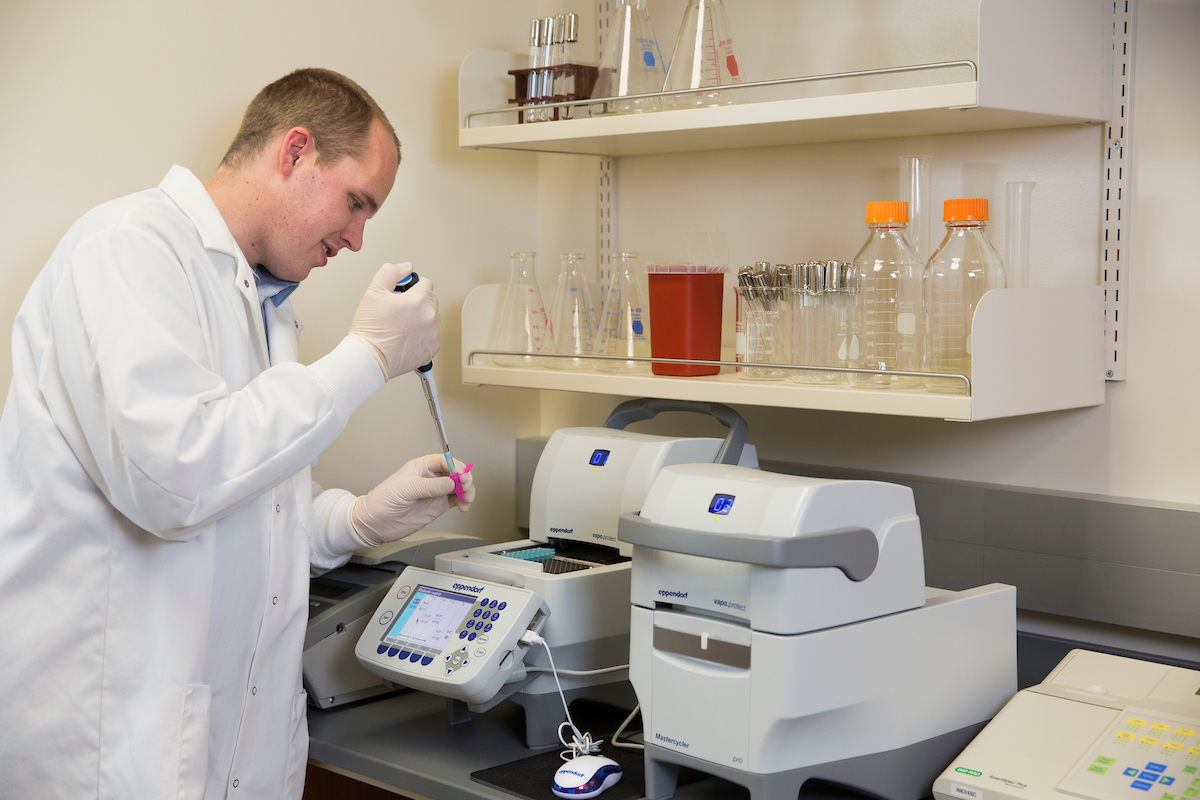
Research is an investigation into the world around us that leads to better understanding. Humans have being doing research for thousands of years, and their discoveries have lead to a variety of improvements in society. Research is done in a variety of ways but consists of asking questions, investigating, and reporting the findings.
Research looks different in all disciplines and goes beyond just the sciences with beakers and test tubes. In disciplines like the Arts and Humanities and beyond the term "Practice as Research" is coined to show that putting into practice the knowledge learned, can answer questions and produce an outcome and/or product to advance the discipline.
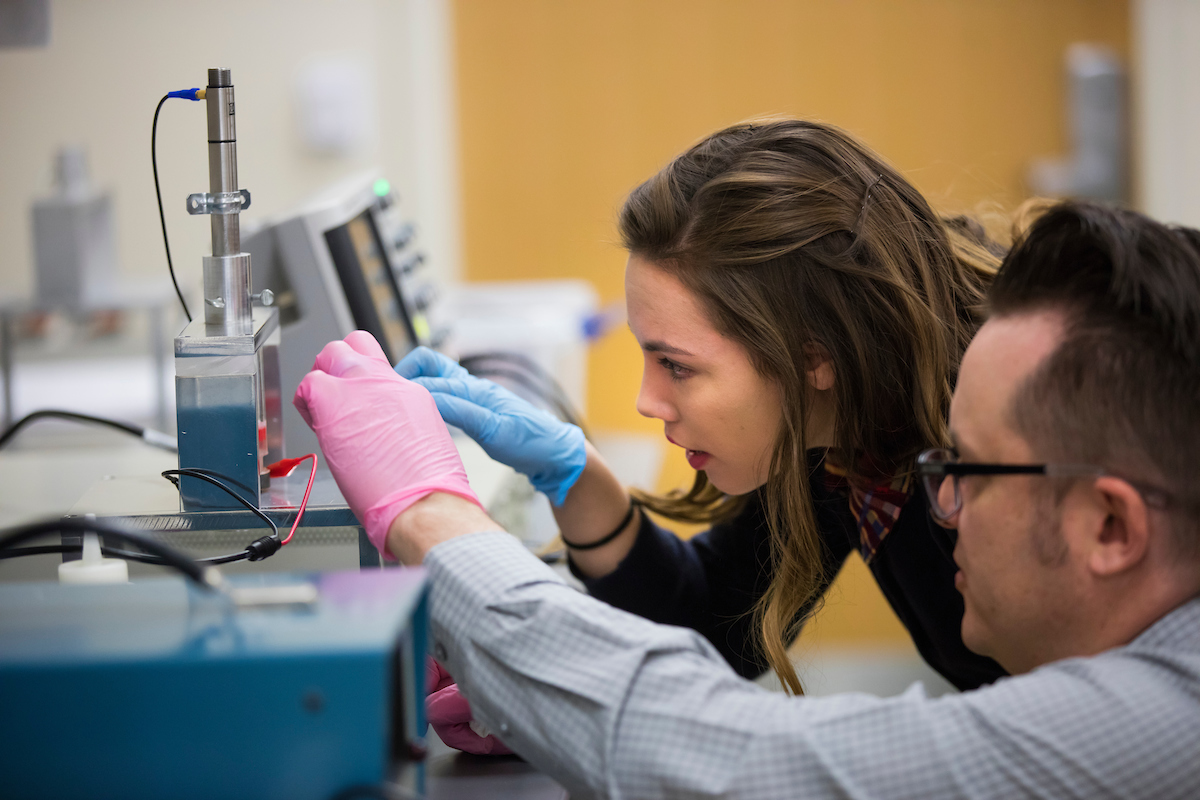
There are many opportunities that come from conducting projects/research. One major benefit is that students can enhance their competitiveness for graduate or professional school admission or employment. Students also have the opportunity to:
Conducting projects/research you will have the opportunity to build relationships and make a difference in the world as well as learn to:
Research confirms, that academic performance increases considerably, when faculty mentor undergraduate students. This relationship maximizes the student’s ability to engage in quality, independent, and rigorous research and creative projects. Mentoring includes:
Once you have identified a faculty member you are interested in doing research with, send them an email describing your research project and objectives. Visiting during office hours is a good way to meet faculty too. Prepare a resume and a copy of your research idea and bring them with you when visiting.
The Indispensable Guide on Undergraduate Research by Drs. Hudley, Dickter, and Franz will help you to find resources offered by the university to carry out successful research projects. Chapter 4 particularly, will provide you with information on the role of faculty, as well as tips on how to find a faculty mentor for your undergraduate research.
Once you have connected with a faculty member it is time to apply for grants that will help you carry out your research and publish and present your findings. Faculty mentors will help you to apply for these grants. Some of these are:
The scientific method is a procedure that will lead you through the research experience. It has been used since the 17th century and consists of formulation and testing of hypotheses.
After you have analyzed your data it is time to report your findings. There are many ways to publish your work. Common examples are publishing in scholarly journals or presenting at scholarly venues. It is important to note that you cannot publish or present your findings unless you have the proper approval (IRB or IACUC). Working with your mentor will be a vital aspect of publishing or presenting.
Reporting, publishing, and presenting the findings of your work is important in order to:

The first step towards reporting your work is to create a product that shows what your research is about. This is commonly done through scholarly articles or scholarly presentations. There are many undergraduate research programs that accept and publish undergraduate articles. To review a complete list of undergraduate research journals visit the Council on Undergraduate Research website.
UVU also has many journals that students are encouraged to publish in.
It can be difficult to know how to write a research paper or article. However there are many resources that can help you to construct and produce scholarly work. Helpful resources are your mentor, faculty, and the UVU Writing Center. It is important to know which writing format your work should be written in.

Every discipline has multiple undergraduate research conferences that you can attend. It is important that you speak with your faculty mentor to know which conference matches your field of study. Don’t be afraid to think out of the box or apply to new conferences. Each publication and presentation will add to your experience and resume. It is important to understand that if you do apply to a conference you are sending the message that you intend to go if you are accepted. Make sure to check dates and locations before submitting your application.
Utah Conference on Undergraduate Research (UCUR) and the National Conference on Undergraduate Research (NCUR) are two common undergraduate research conferences. They span across all disciplines and occur annually. With NCUR you can also publish your results. It is important to be up to date with deadlines and application requirements. UCUR’s application deadline is in late October/early November. The conference is usually held in February. NCUR’s application deadline is late November/early December, and the conference is usually held in April.
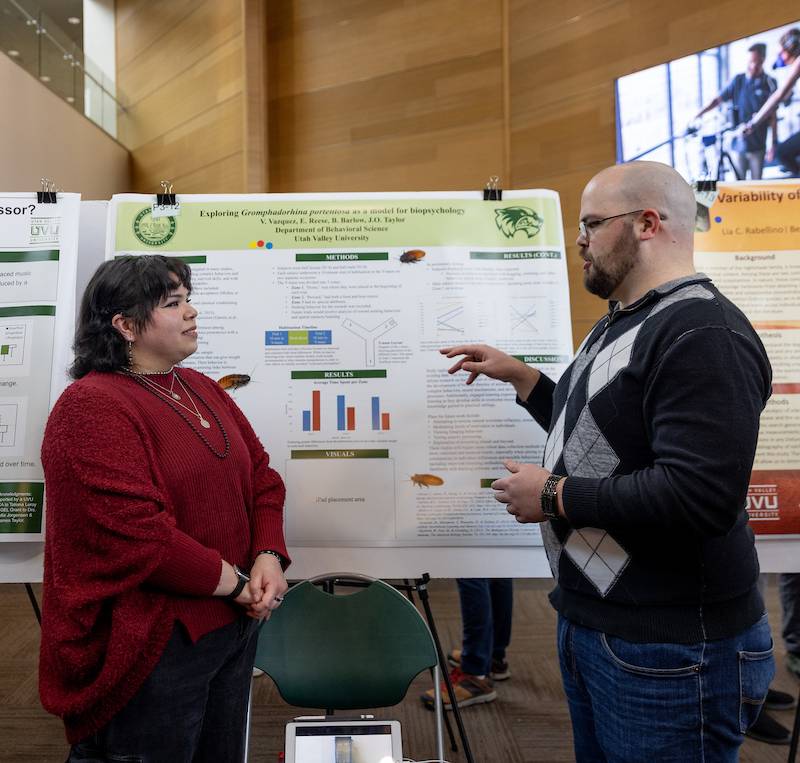
Presentation formats differ across conferences, however presentations and poster sessions are the most common ways of presenting. Be sure to check with your conference about specific details for your presentation.
Presentations are usually between 10-60 minutes long, and are given in front of other conference attendees. The outline for the type of presentation that you will give will differ depending on the conference being attended, but many presenters use PowerPoint for their presentations. Sometimes there will be a question and answer session after your presentation. This can be intimidating, however your faculty mentor can help to make sure that you are prepared. Practice your presentation several times before the conference. This will insure that your presentation meets the time requirement. It is best to practice in front of a group of people, asking for feedback upon completion. If you have technology needs check with the conference organizer.
Poster sessions occur in a show floor room and usually last 30-90 minutes. You will prepare a poster that summarizes your research methods and outcomes. It is important that you make your poster engaging and interesting. Use colors on your posters because they are eye catching. During the entire session, make sure that you or someone form your group is standing by the poster and can discuss it with anyone that visits. The conference organizer will tell you the appropriate dimensions for the poster and any special instructions. Make sure your poster can be hung up with push pins and rolled up into a tub for easy transportation. It is also a good idea to bring tape and push pins in case the conference does not supply them. The campus copy center (CS 101G) or an off campus copy shop can help you print a large poster.
Get involved today using the resources at the UVU library. The Fulton Library supports information access, student learning, and knowledge creation.

