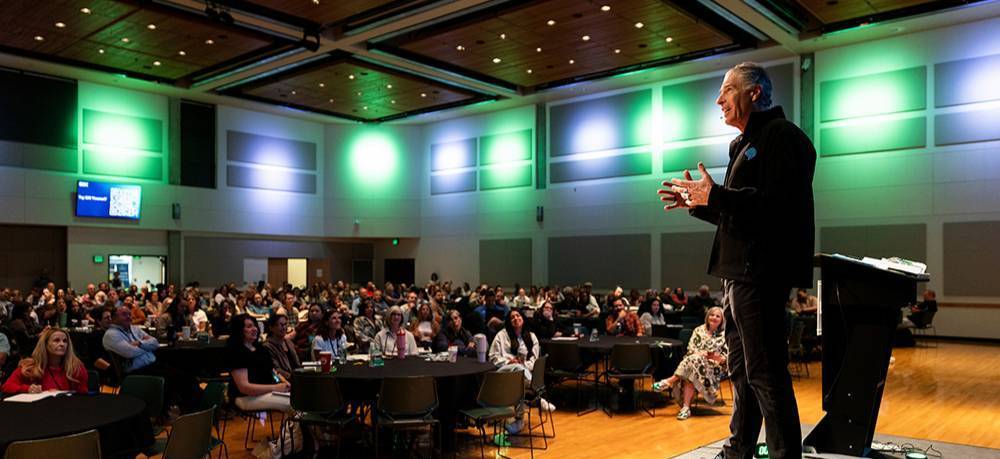
The Utah Valley University Conference on Mental Health invites proposals for presentations, workshops, and panel discussions that equip mental health professionals with evidence-informed strategies to address today’s most pressing mental health challenges.
As behavioral health needs continue to evolve, mental health professionals are seeking practical approaches that translate research into meaningful outcomes for the individuals, families, and communities they serve. The 2027 conference theme, Evidence to Action: Effective Approaches Across the Continuum of Care, highlights the critical connection between research, best practices, and real-world application.
This conference brings together mental health providers, social workers, counselors, psychologists, educators, healthcare professionals, students, and community leaders committed to advancing mental health care through prevention, assessment, intervention, treatment, and recovery-support services.
We welcome proposals that provide participants with actionable tools, clinical insights, innovative approaches, and evidence-based practices that can be immediately integrated into professional settings.
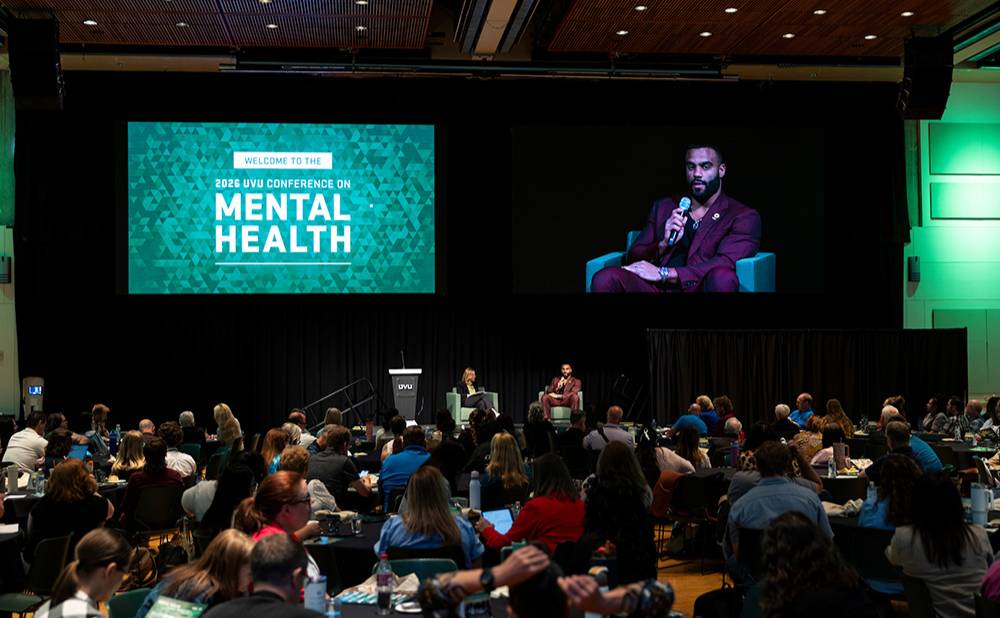
Priority will be given to proposals that provide practical takeaways participants can use in their work, as well as sessions that address and fulfill ethical considerations.
Conference Topics
Additional Topics of Interest
We also welcome proposals addressing:
Proposal Criteria
Competitive proposals will:
Presenter Qualifications
Presenters must possess appropriate academic credentials, professional licensure, and/or certification relevant to the proposed topic. The conference seeks presenters who can provide evidence-informed content, practical application, and professional development opportunities for mental health practitioners.
The UVU Conference on Mental Health does not provide honoraria, speaker fees, travel reimbursement, or lodging accommodations for accepted presenters. Presenters receive complimentary conference benefits as outlined below.
Individual Presenters
Accepted presenters will receive:
Presentations with Multiple Presenters
For sessions with more than one presenter:
Presenters are encouraged to designate a primary presenter at the time of submission. The primary presenter will serve as the main point of contact and receive the complimentary conference registration.
Educational Presentation (60 minutes)
Description: Educational presentations share evidence-informed research, best practices, innovative programs, or clinical approaches relevant to mental health professionals. Sessions should include practical applications and actionable takeaways.
Expected engagement:
Best for:
Interactive Learning Session (60 minutes)
Description: Interactive learning sessions engage participants through discussion, applications, case studies, skill-building exercises, demonstrations, or collaborative problem-solving. Presenters should focus on providing practical tools and strategies that attendees can immediately apply in professional settings.
Expected engagement:
Best for:
Panel Discussion (60 minutes)
Description: Panel discussions bring together multiple experts to examine a topic from diverse professional perspectives. Sessions should encourage dialogue and provide attendees with insights, strategies, and practical considerations related to mental health practice.
Expected engagement:
Best for:
To help make the submission process easier, please review the information below and have all required materials prepared before beginning your online proposal submission. The online proposal form does need to be completed in one sitting and having the following information ready will streamline the process.
You will be asked to provide:
Primary Presenter
You will be asked:
Biography & Photo
Please have the following prepared:
Multiple Presenters
If multiple presenters, then you will need to provide each presenter's:
As part of the proposal submission process, you will be asked to select one presentation format. Please determine which format best aligns with your proposed session before beginning your submission.
Educational Presentation
Educational presentations share evidence-informed research, best practices, innovative programs, or clinical approaches relevant to mental health professionals. Sessions should include practical applications and actionable takeaways.
Interactive Learning Session
Interactive learning sessions engage participants through discussion, applications, case studies, skill-building exercises, demonstrations, or collaborative problem-solving. Presenters should focus on providing practical tools and strategies that attendees can immediately apply in professional settings.
Panel Discussion
Panel discussions bring together multiple experts to examine a topic from diverse professional perspectives. Sessions should encourage dialogue and provide attendees with insights, strategies, and practical considerations related to mental health practice.
For more detailed Information, please refer to presentation formats above.
You will be asked to provide:
Presentation Title
Presentation Title exactly as you would like it to appear in conference materials
Presentation Abstract
Please provide a clear and engaging description of your proposed session (150-250 words). This abstract will be used by the conference review committee to evaluate your proposal and, if accepted, may be published in the conference program, website, conference app, and promotional materials. Abstracts should accurately describe the session content, learning outcomes, and practical value for attendees. Please avoid references such as "this presentation will discuss" or "participants will learn" and instead write in a manner suitable for publication.
Evidence Base
Please describe the evidence, research, best practices, clinical framework, program evaluation, or other evidence-informed approaches that support your presentation.
Continuum of Care
You will be asked:
Options:
Conference Track
You will be asked:
Ethics, Law, or Technology Credit
You will be asked:
Please prepare three measurable learning objectives.
You will be asked:
We recommend preparing your biography, photo, presentation abstract, evidence-based support information, and learning objectives before beginning the submission form. If your proposal includes multiple presenters, gather all co-presenter information in advance to ensure a smooth submission process.
We will accept proposal submissions through November 1, 2026. Once the submission portal closes, all proposals will be sent to the conference committee for review. Submitters can expect to hear back from us by November 15. Presenters will then need to accept or decline their invitation to present by December 1, 2026.

