If you are interested in any of these areas, please contact the Physics Advisor, or
Department Chair.
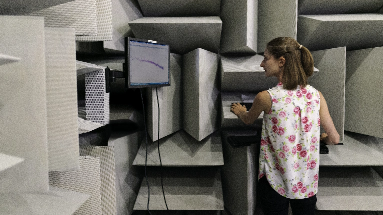
Acoustics
Acoustics studies the production, transmission, and effects of sound, exploring phenomena
like vibration, resonance, and the behavior of waves in various media.
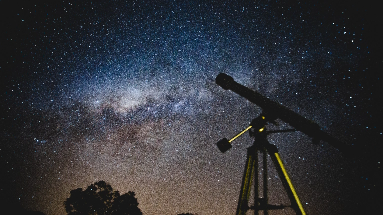
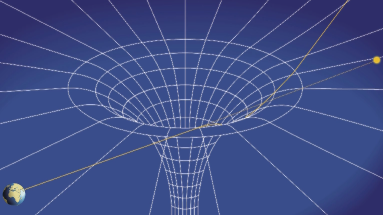
Astronomy
Astronomy investigates celestial objects and phenomena beyond Earth, including stars,
galaxies, and cosmic events, to understand the structure and evolution of the universe.
Atmospheric Physics
Atmospheric physics focuses on the study of Earth's atmosphere, examining its composition,
dynamics, and interactions to understand weather patterns and climate processes.
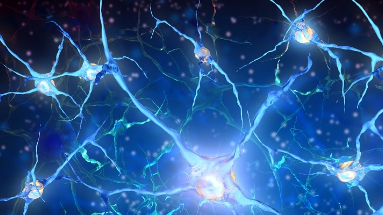
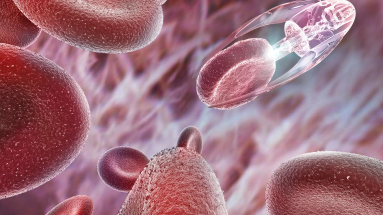
Biophysics
Biophysics applies the principles and methods of physics to understand biological
systems, examining the physical mechanisms underlying biological phenomena and structures.
Computational Physics
Computational physics involves the use of numerical simulations and computer algorithms
to solve complex physical problems, facilitating the study of phenomena that may be
challenging to observe experimentally.
Experimental Physics
Experimental physics involves conducting experiments to explore and verify physical
theories, often using sophisticated instruments and measurement techniques.
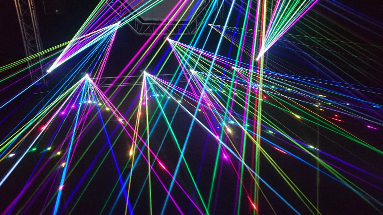
Laser Physics
Laser physics studies the principles and applications of lasers, including the generation,
amplification, and manipulation of coherent light for various scientific and technological
purposes.
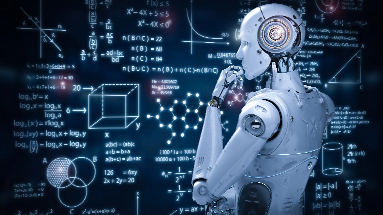
Machine Learning
: Machine learning applies computational algorithms to analyze data and make predictions,
with applications in physics ranging from data analysis to pattern recognition.
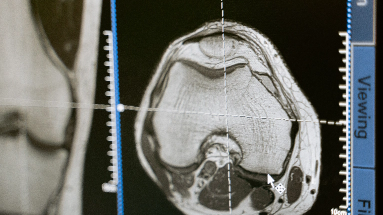
Medical Imaging
Medical imaging utilizes physics-based techniques, such as X-rays and magnetic resonance,
to create visual representations of the interior of the body for diagnostic purposes.
Nanotechnology
Nanotechnology explores the manipulation of materials and devices at the nanoscale,
applying principles of physics to create innovative technologies and materials.
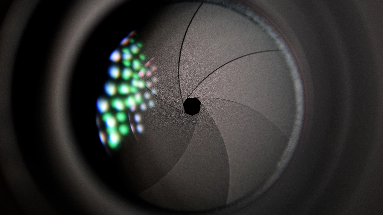
Optics
Optics investigates the behavior of light and its interactions with matter, encompassing
the study of lenses, mirrors, and the principles underlying the design of optical
systems.
Particle Physics
Particle physics explores the fundamental particles that make up the universe and
their interactions, often studying high-energy collisions in particle accelerators.
Physics Education
Prepares the student to teach high school physics and AP physics. The program allows
for those interested to supplement their studies with extra courses in physics or
other science through elective upper division credit. A seminar course provides the
student with exposure to careers in physics.
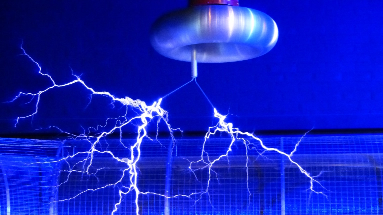
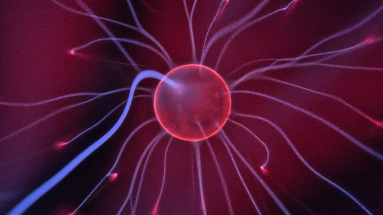
Plasma Physics
Plasma physics studies the properties and behavior of ionized gases (plasma), exploring
its applications in fields such as fusion energy and astrophysics.
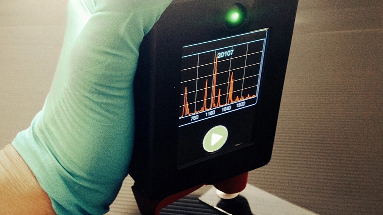
Raman Spectroscopy
Raman spectroscopy uses laser light to analyze the vibrational and rotational modes
of molecules, providing information about molecular composition and structure.
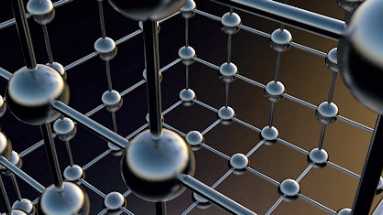
Solid State Physics
Solid state physics examines the properties of solid materials, including semiconductors
and crystals, to understand their electronic and structural characteristics.
Theoretical Physics
Theoretical physics involves the development and application of mathematical models
and theories to explain physical phenomena, often guiding experimental research and
exploration.
Mentored Research
Get Started!
Start early in your degree - maybe in your sophomore or junior year (many faculty
will not bring on seniors into their research labs).
Carefully study the faculty research members and their research areas. Click on the
different links to explore the different professors and their research interests.
Choose a few faculty members whose research seems most appealing to you.
Be proactive in investing time in studying the faculty’s research, journal articles,
etc., and be prepared to ask questions and comment on his/her research.
Contact the faculty member via email for more information about opportunities in their
lab and schedule a time to meet them. If they don't respond to an email/phone call, drop by
their office!
Many times, you will begin as a volunteer until you have gained enough experience
to merit credit/pay.
Once you have sufficient experience, you will be eligible for research credit (494R),
for every 1 credit you wish to earn please plan on spending at least 3 hours per week.
You also can work towards funding for research projects (for example: URSCA, TEELS, etc. and SAC )