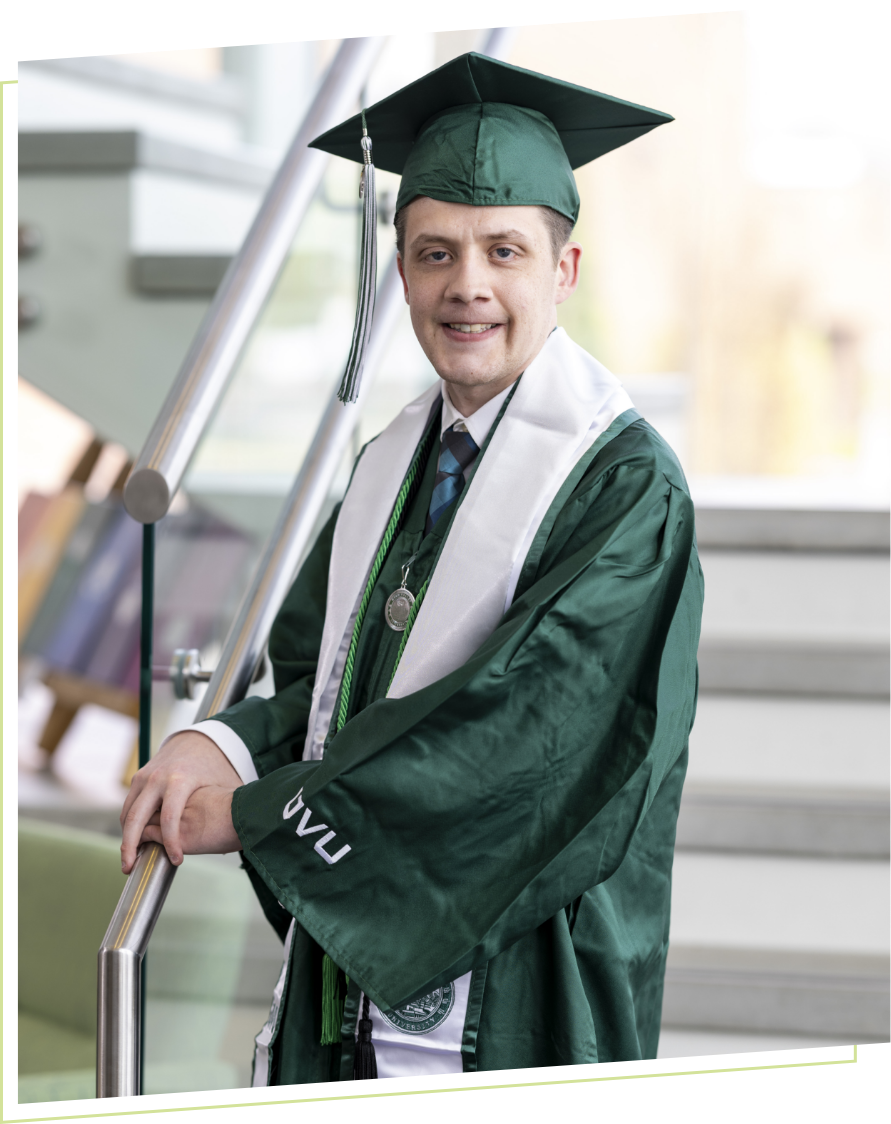
Like 76% of current UVU students who work while in school and 12% who support children under 18, balancing daily life and education was challenging for Holli and her four children. But she knew this was the path to a better life.
With no money left after that semester, she expected to forfeit her dreams of finishing school. But her situation changed when faculty and staff helped Holli find the many donor-funded scholarships the university had to offer. These scholarships transformed Holli’s future, keeping her in school and changing her life.
Holli went on to earn her associate degree with honors in 1995, and later earned a bachelor’s degree and an MBA at other universities. All four of her children have graduated from college, and several of her grandchildren are pursuing degrees. Her decision to attend college has resulted in a “big change in our trajectory as a family.
“We’re never too old to stop learning,” Holli said. “Life is full of incredible, joyful moments to embrace. But we need opportunity. That is what UVU gave to me. The opportunity to rise from the cycle of poverty — to rise and succeed.”

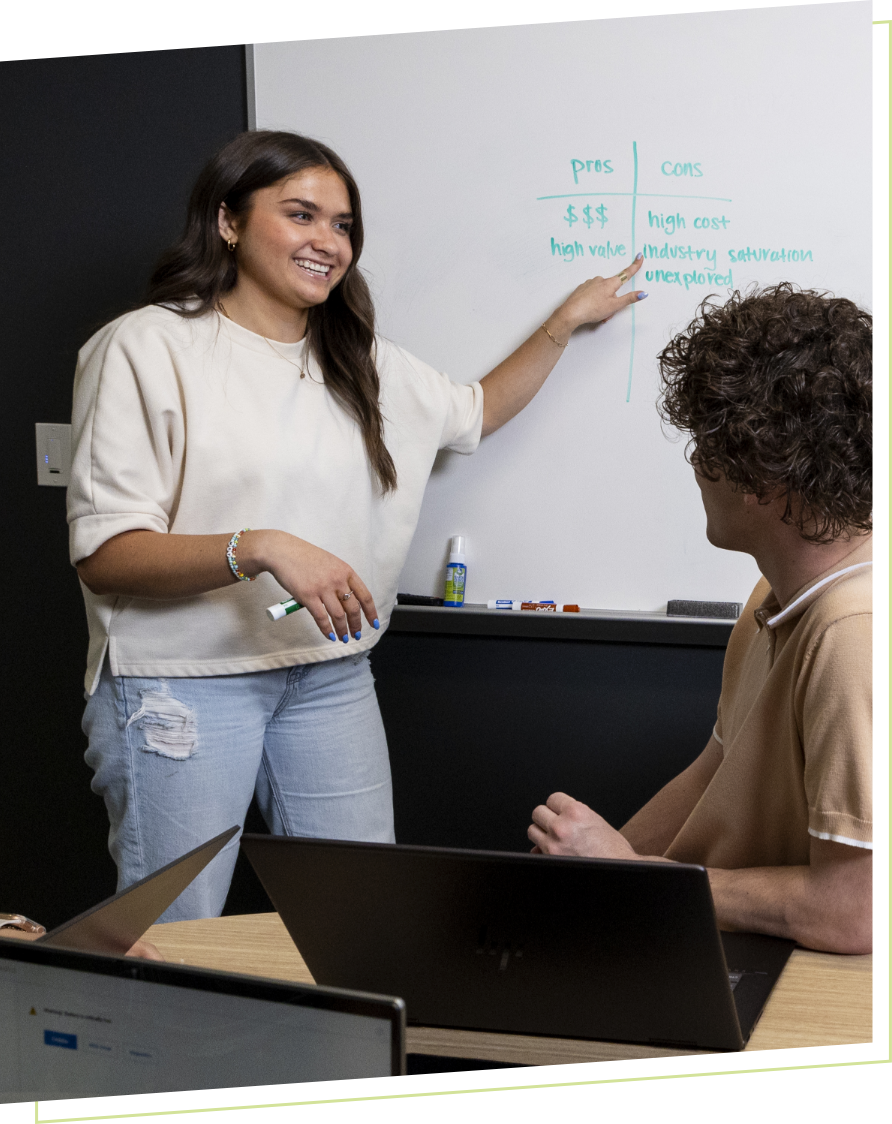
Chelsea and Casey Baugh Entrepreneurship Institute
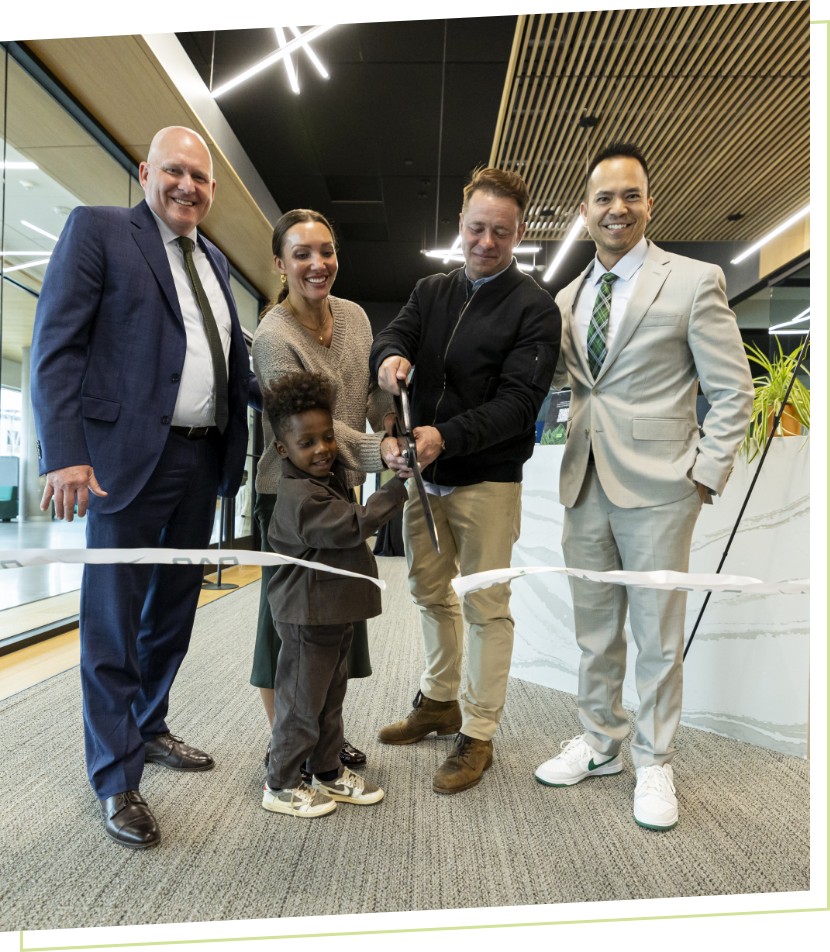
From day one, UVU’s entrepreneurship programs have been built on action: pitch, test, sell, iterate then scale. That ethos gained a bold new home with the Chelsea & Casey Baugh Entrepreneurship Institute (BEI), a donor-powered hub in the Woodbury School of Business that moves students from idea to income with hands-on courses, mentoring, and real funding opportunities. At the ribbon cutting in March 2025, leaders underscored what makes the model different: students don’t just study entrepreneurship, they launch companies, often inside credit-bearing “Build a Business” courses that emphasize traction over theory.
The institute’s programming is deliberately practical, and it is only possible with the support of donors from the community. Students get coached by founders and operators, step onto a trade show floor at VentureCon to sell and learn, and stand before judges in ZinnStarter or Wings pitch events to win seed capital, equity-free. Taken together, those touchpoints turn the campus into an early market and the community into a living accelerator. The institute supports more than 150 active student businesses at any given time, and it sits within the state’s largest business school, an ecosystem advantage that helps student ventures find teammates, customers, and mentors quickly.
The professor challenged students to start a business with just $1. Minor had a little tube of beads at home, so she began making and selling jewelry. That course assignment soon became her job. “When an opportunity comes, you can take it, or you can not take it, but you have the rest of your life to think about what could have happened,” she said. Minor turned to UVU’s Entrepreneurship Institute to take things to the next level. The Entrepreneurship Institute director encouraged Minor to compete in Seed for Startups, a business competition that she won, securing initial funding. Today, Minor owns the store Beadology in Provo, where anyone can make a beaded accessory or jewelry piece. She was also named one of Utah Valley BusinessQ’s 40 Under 40 in 2024. “UVU is a place where you can make amazing things happen,” Minor said.


UVU Ranked First in the Nation
for the number of grads who opened businesses in the same state as their alma mater
80% of students and alumni launched their business in Utah
Source: Switch on Business

Beadology
Maysen Rollo
Minor ‘23

&Collar
Ben Perkins
‘19

Gooey Gourmet
Brownies
Jensen Reynolds ‘18

Nectar
Trevor
Larson ‘18

Pura
Richie
Stapler ‘15

Waffle Love
Adam Terry
‘09
Wandrd
Ryan Cope
‘13
The Baugh family’s philanthropic investment is intentionally catalytic: it expands capacity for courses, mentors, and small grants that help students cross the risky “first revenue” threshold. UVU students within the institute generate tens of thousands of dollars in sales, and in some cohorts, hundreds of thousands. This is evidence that experiential pedagogy plus targeted micro funding accelerates learning and lifts confidence. “Game-changing, ” is how the director of the institute, Seth Jenson, describes the Baughs’ support, because it sustains the programs that turn classroom ideas into viable enterprises.
Beyond headline numbers, the institute reflects UVU’s dual mission promise: inclusive access to career-relevant learning. Nearly half of the participants identify as women entrepreneurs;
many are first-generation students who use the institute’s no-nonsense playbook to build a business that pays for school. The institute leverages Utah’s “Startup State” momentum by integrating with statewide competitions, campus clubs, and alumni networks, ensuring students gain authentic market feedback early and often.
Momentum is visible in the brand, too. Because donors believe in the power of the institute, UVU can put founders with founders, funding behind prototypes, and students in front of customers so learning shows up as revenue and confidence. With the Baughs’ support, UVU scales a high-touch, highimpact pipeline where more students validate their ideas, learn by doing, and create value in Utah’s economy while still in school.

4,500+
Students served

150+
Current student
businesses

65+
Active members
Source: Baugh Entrepreneurship Institute
 Chelsea and I have always believed in the power of entrepreneurship to transform lives,
and UVU played a key role in our journey.
Chelsea and I have always believed in the power of entrepreneurship to transform lives,
and UVU played a key role in our journey.
Casey Baugh, UVU Donor and Entrepreneur

College of Health and Public Service
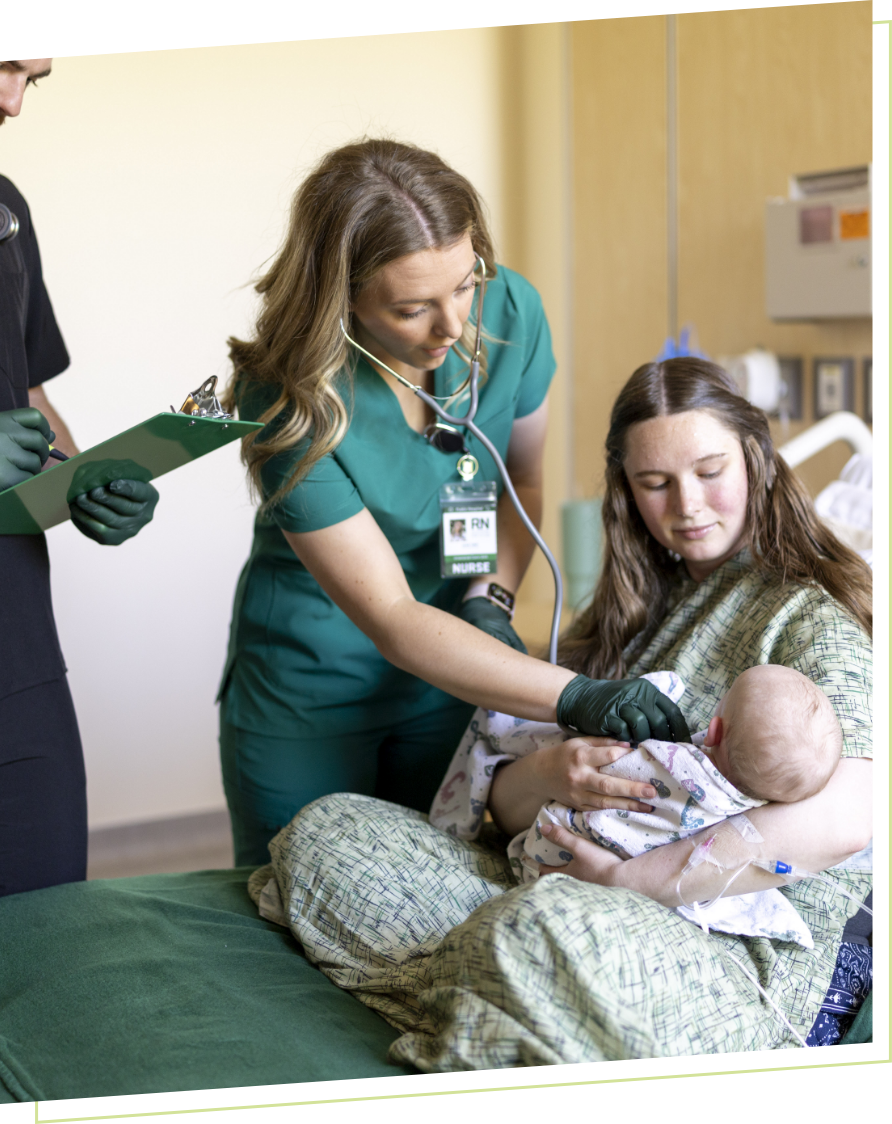
UVU’s Lehi Campus expansion for the College of Health and Public Service (CHPS) was a decisive answer to Utah County’s urgent demand for health and public safety professionals. The university opened a purpose-built home at Lehi that brings respiratory therapy, dental hygiene, paramedic training, and the UVU Police Academy under one roof, placing highdemand programs closer to rapidly growing communities and shortening the distance between learning and the workforce. The opening emphasized how this facility will serve as a hands-on training ground where students move directly from classroom to clinical skills labs and scenario-based learning, then into internships and jobs across the region.
For students, the Lehi site is access made visible. CHPS already spans a constellation of applied facilities, from the Emergency Services Administration Building and Environmental Technology Building to the Health Professions Building on West Campus, and Lehi adds a strategically placed node in northern Utah County’s innovation corridor. Students can find advising, program pathways, and a wide range of credentials, certificates, and degrees, designed around real roles in nursing, allied health, public health, criminal justice, EMS, and fire. The new Lehi facility extends that breadth with proximity and modern equipment that matches industry expectations.
Multidisciplinary training is built into the CHPS model, where EMS, respiratory therapy, dental hygiene, and police academy cadets can share simulations and crossdisciplinary workshops that mirror the realities of field response and patient care. The Lehi building’s program mix makes it an ideal venue for inter-professional education exercises, trauma scenarios requiring paramedic teams, respiratory therapists stabilizing airways, and policing students managing scene safety, all within a single campus footprint.
While those learning designs are part of CHPS’s everyday DNA, they scale when programs are colocated, and Lehi was expressly introduced as the new home for these disciplines.
The EverGREEN Campaign’s throughline, access that becomes excellence, is alive here. Lehi is a blueprint for how UVU grows: place programs where they are needed most, align facilities with workforce realities, and scale the applied learning that defines the university

“With my degree, I hope to one day save lives and help people. Every day, I see individuals struggling due to health challenges, and it has become impossible for me to stand on the sidelines and not do anything. I want to provide basic medical knowledge to those without access to health education. I not only want to be a caregiver, but an educator as well. By helping me, you have saved more lives than you may ever know. Thank you from the bottom of my heart.”
Michael Perez ‘25, Respiratory Therapy

CARE Hub
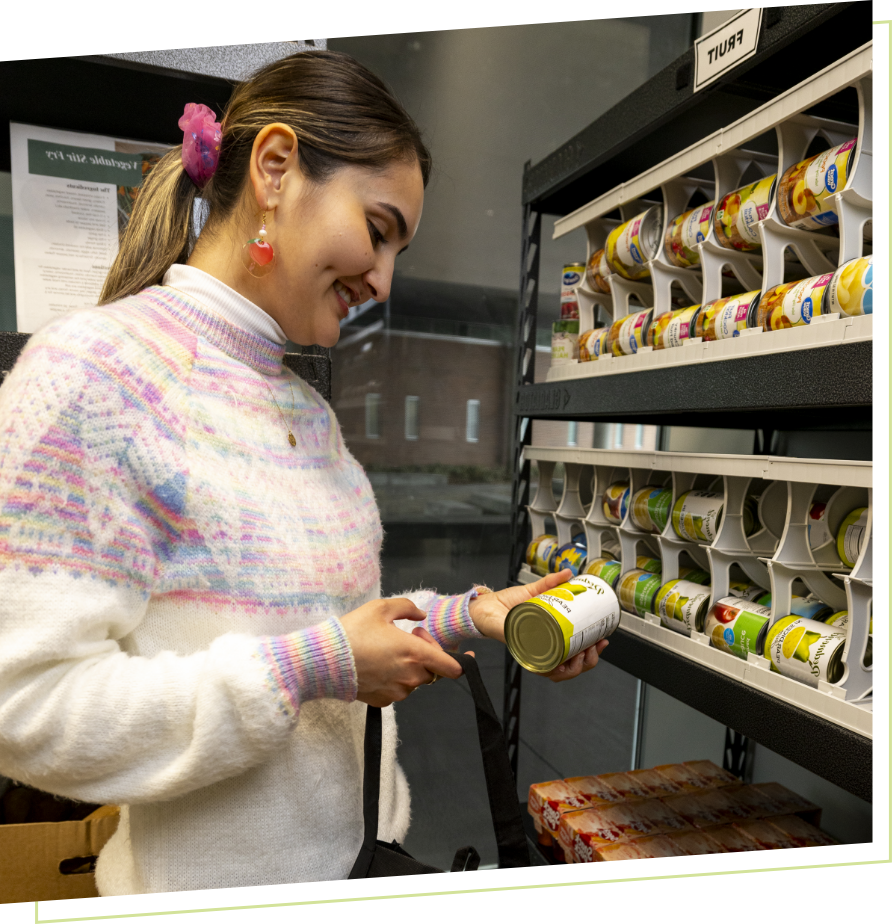
When basic needs are met, persistence and completion rise. In fact, UVU students who utilize the CARE Hub’s resources have a 13% higher retention rate than the university average. UVU’s CARE Hub is built on that truth, coordinating food, housing, health, childcare, safety, financial assistance, and academic resources so students can focus on learning. The hub’s mission, “to foster an inclusive environment for Wolverines to access food, housing, health, and safety,” shows up in a comprehensive slate of services: a walk-in pantry with fresh produce, emergency scholarships, case management, mobile outreach, and volunteer opportunities that knit the campus community together. It is only through donor gifts that the CARE Hub can provide this level of support to UVU students.
In 2024, the CARE Hub served thousands, evidence that basic needs support is an academic strategy as much as a humanitarian one. These numbers translate directly into time on task, reduced stress, and better odds of graduation for student parents. The hub also provides hundreds of one-on-one resource meetings, illustrating its role as a front door where a food question can lead to broader support for housing, mental health, or safety.
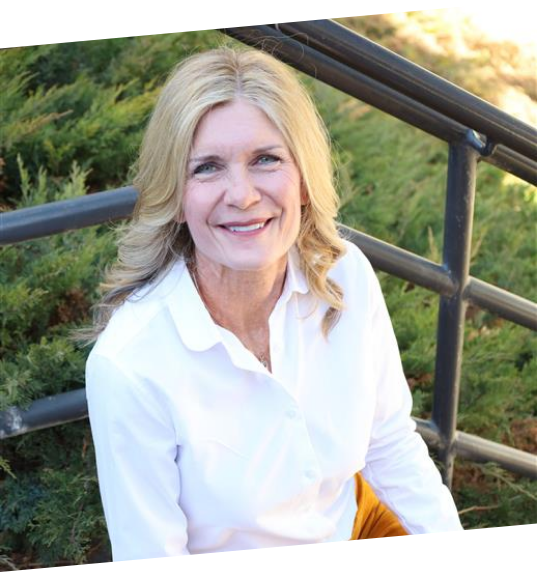
“As we learned about how CARE Hub kept students in classes that have come up against difficulties as small as needing gas for the week or as big as needing a place to live, it just hit home that this is a need that we could help with. This is the place, these are the students, and I knew this was something that we wanted to be involved in.”
Melissa Layton, UVU CARE Hub Donor
During the winter, my landlord sold my residence after assuring me I would have time
to find a new place, but the new owners gave me only 48 hours to leave. Without a
vehicle, I relied on friends for rides and a place to stay while trying to keep up
with my classes. The scholarship funds helped me move my belongings and pay rent until
I found permanent housing. It was extremely difficult to balance moving, school, and
finding a job, but I completed the semester, secured employment, and learned I am
more resilient than I realized.
Anonymous, Emergency Fund Scholarship Recipient
The CARE Hub is constantly iterating. It focuses on multichannel access, emergency vouchers, online orders, delivery, and mobile pantry options for satellite sites, plus awareness campaigns, classroom presentations, and volunteer engagement that multiply touchpoints across campus. This evolving, multimodal approach is what allows the CARE Hub to meet students where they are, in time, place, and dignity.
UVU donors can see a direct line from gift to outcome: a stocked pantry means fewer empty fridges; a short-term housing placement prevents a stop out; an emergency scholarship clears a bill that might have ended a semester. The CARE Hub’s public mission captures the philosophy: remove barriers, create belonging, and build resilience. The result is student success that shows up in data and in quieter stories of relief, stability, and momentum regained.
72,327
childcare hours
supported through
the Wee Care Center
$54,000
awarded in
Emergency
Scholarships
52,000+
pounds of food
distributed
7,500
people served
Source: UVU CARE Hub

Wolverines Elevated
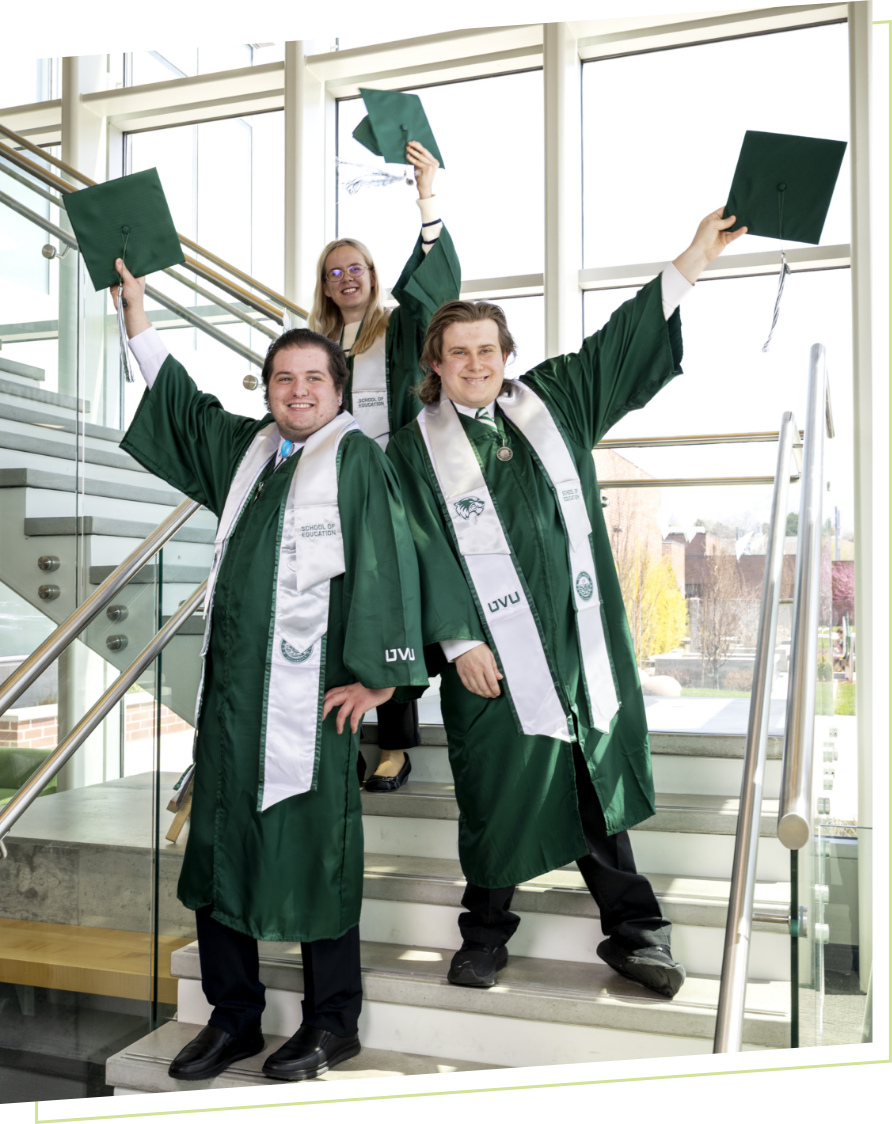
UVU’s Wolverines Elevated is changing who college is for and how it works. The three year program supports students with intellectual disabilities as they pursue a certificate in Integrated College and Community Studies, with options to stack an industry-recognized credential in their field of interest. The model blends credit-bearing coursework, career practicums each semester, peer mentoring, and full participation in clubs and campus life.
The program’s growth has been steady and meaningful. Launched in 2021, Wolverines Elevated celebrated its inaugural graduating cohort in 2024, a milestone widely covered for its demonstration of what high expectations plus structured supports can deliver. Leaders note the program’s U.S. Department of Education TPSID grant origins and a holistic approach that pairs time management and academic support with social integration and career planning. Opportunity, rigor, and belief are backed by results that show students with intellectual disabilities succeed in college when given access and tools.
Wolverines Elevated creates pathways previously unavailable to students with intellectual disabilities. The program is a vivid example of access realized: comprehensive structures, meaningful expectations, and outcomes that echo well beyond graduation. Donor support strengthens peer mentoring, employer partnerships, and practicum placements; it also sustains the day-to-day coaching and coordination that make excellence durable. The program’s own language is plainspoken and proud: Wolverines Elevated is “more than just a college experience, it is college.”

9 graduates
As of 2026

$ 1,714,477
Contributed to the program
Jayson Heath has always been focused on education. “I wanted to go to college my whole life.” He had many interests like aviation, computer science, and space.
“Due to my disabilities, school has been a challenge for me, but my parents and I did research and found Wolverines Elevated, and it has been very good to me,” he said.
Jayson took courses on stress management, majors and careers, self-determination, career development, and English. He graduated in the first cohort in 2024.
For his mother, Megan, seeing her oldest child persevere and be able to attend college has been a dream come true.
Everyone deserves the chance to learn if they want to, and no one puts more time and
effort into learning than Jayson. For him to be enrolled in college classes, learning
skills — it is incredible to see.
Megan Heath, Mother of a Wolverines Elevated graduate