There’s a saying among those who work to help, understand, and provide resources for the autistic community: If you’ve met one person with autism, you’ve met one person with autism.
There’s a saying among those who work to help, understand, and provide resources for the autistic community: If you’ve met one person with autism, you’ve met one person with autism.
“Everyone who has autism is different, just like everyone without autism is different as well,” said Suzy Ahlman, program manager for the Wolverines Elevated program at the Melisa Nellesen Center for Autism (MNCA) at Utah Valley University (UVU). “Everyone's brain works a little bit different.”
In practice, that means that meeting the needs of the autistic community requires an individualized approach — one that sees each person, each student, and each family as deserving of care.
“I think for individuals and for parents, sometimes it can feel like you are alone and that you don't know where to start, because it can be a little overwhelming,” said Laurie Leibowitz, senior director of the MNCA. “And one of the things we're here to do is to help make sense of that.”
Leibowitz said she saw UVU rise to the needs of Utah’s autism community years before the MNCA opened. Originally, UVU hosted a community symposium on autism, which quickly turned into an annual conference. And as experts gathered, the lack of a centralized community resource became clearer.
“There were hardly any services available, and people were trying to scramble to understand the best ways to support anyone experiencing the difficulties that might be associated with autism,” Leibowitz said. “So having access to incoming content from content experts across the country and in our state, having that start coming together really helped.”
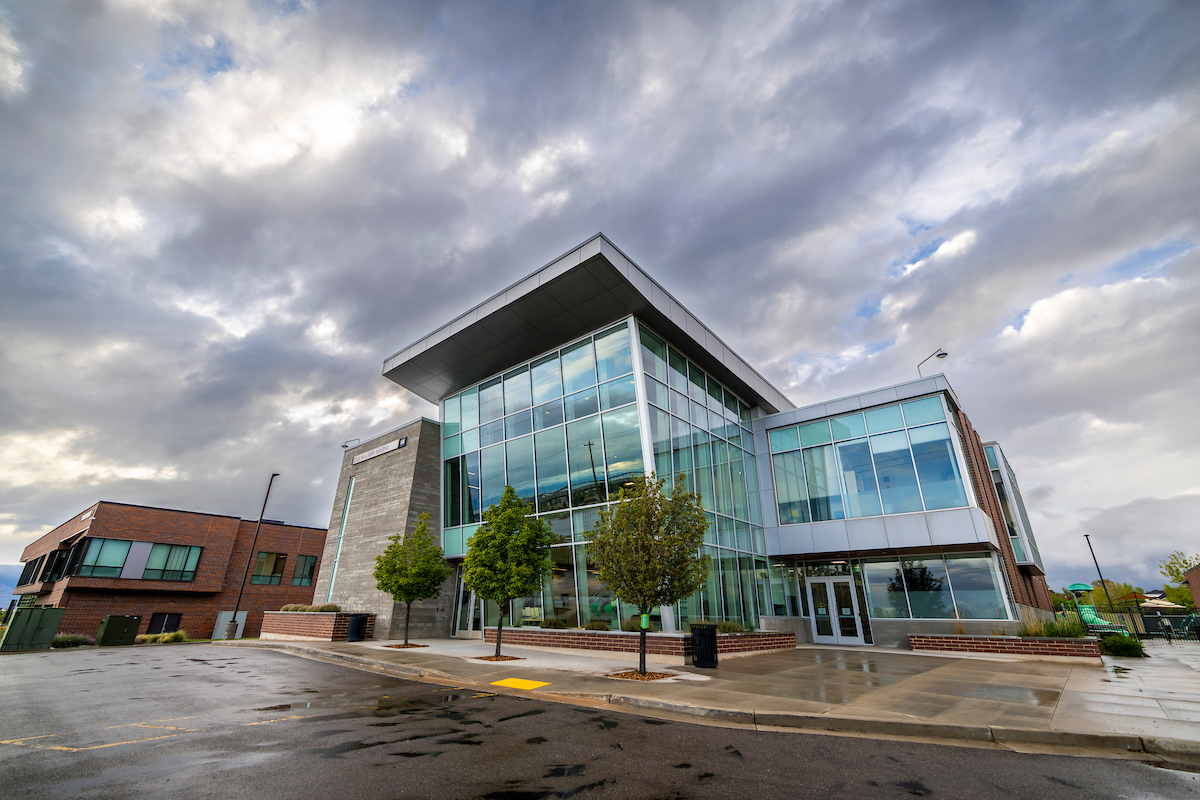
By the time the MNCA opened the Cole Nellesen Building on UVU’s Orem Campus in 2017 — fueled by more than $8 million in private donations, including a namesake gift from the Nellesen family — UVU already featured courses on understanding and studying autism, as well as the Passages program for autistic young adults.
“UVU has been a very responsive and supportive place to respond to those needs and to recognize that we can do something,” Leibowitz said. “Several big donors brought their influence, but there were over 600 people that donated to create this building that we have, which is still 100% funded through donations.”
For many people with autism or intellectual disabilities, the support they see as teenagers falls off after high school. It’s known as the “services cliff.”
MNCA offers several support options for individuals with autism and/or intellectual disabilities who desire to access postsecondary education. Passages is a recognized autism-specific college support program that provides individualized, targeted assistance for autistic students.
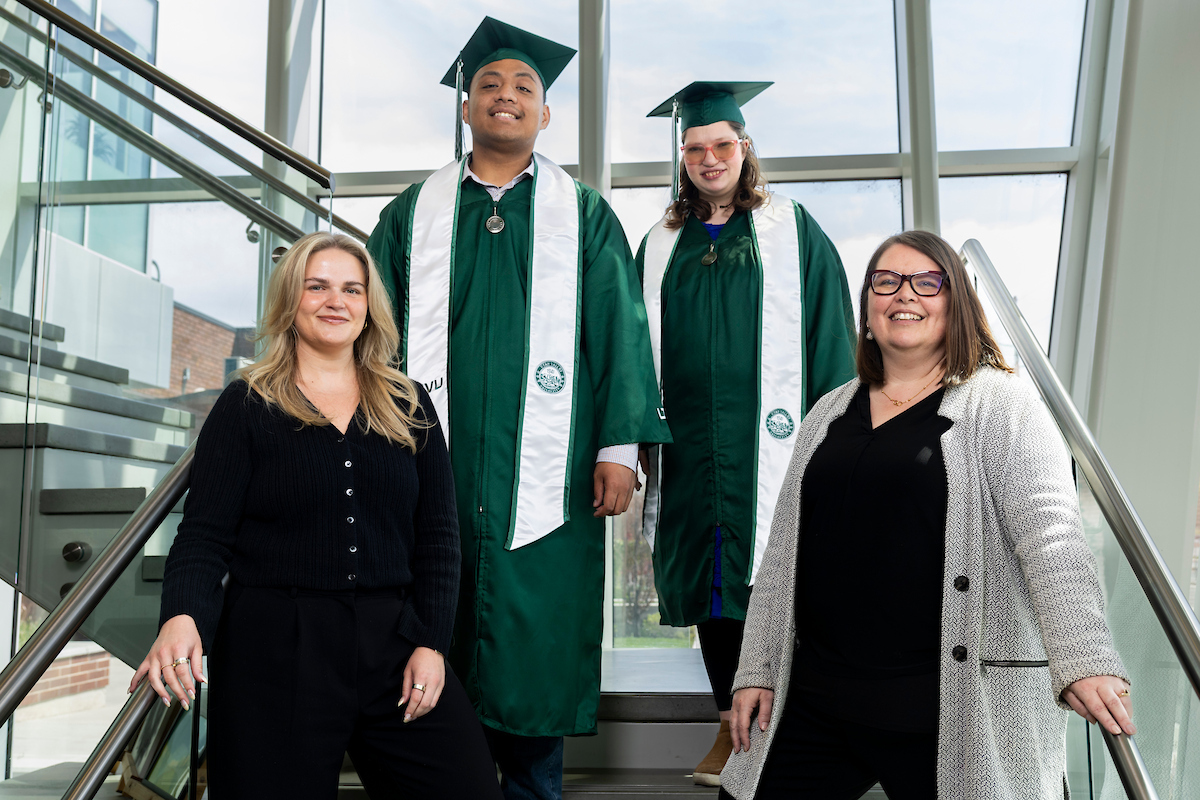
Wolverines Elevated, another program offered at the MNCA, is a three-year certificate program designed to support students with intellectual disabilities who want to attend college as a pathway to obtaining competitive, integrated employment and prepare for self-determined futures.
“There’s been this stigma, like, once you're done with high school and you hit that services cliff and you no longer can receive special education services, you're just going to live in your parents' basement, and it sort of is what it is,” Ahlman said. “So our program really is helping, I think, change that stigma of being like, ‘No, there's other options out there for you to be able to access college and have a career.’”
Ahlman said she was drawn to a career in autism and other related disabilities after growing up with three autistic brothers, who have a wide range of needs and capabilities. She is a UVU alum, with a bachelor’s degree in special education and a minor in autism studies through the MNCA, followed by a master’s degree in legal studies.
“My passion really lies in being able to help teach those with autism or intellectual disabilities how to advocate for themselves,” Ahlman said.
Leibowitz said the MNCA’s resources are available to the entire community, not just UVU students or those who are part of any organized program.
“Once someone leaves high school, they don't have access to the same types of supports that they had, especially with a disability,” she said. “I like to tell people when they come to our building that this building is for you. There's a place for you here. And now that you've come, you have a friend here. So what is it that you need? We would like to help with that.”
As the number of people diagnosed with autism increases, the staff at the MNCA said it’s important to recognize that support goes beyond simple awareness.
“It’s a humanity issue,” said Holli Child, associate director at the MNCA. “It’s across all cultures. It doesn’t matter where you live or what your economic status is. And therefore, we all need to be aware of it, but not even just aware. We need to figure out how to accept and embed supports within every aspect of our community.”
For the MNCA, that means a calendar full of activities open to the public, such as the Moving Mountains soccer camp in the summer, or a “quiet Santa” activity in partnership with University Place.
“When someone belongs, the community does better,” Leibowitz said. “So if you feel like you belong in school, you get better grades. If you feel like you belong professionally, you earn more money. If you feel like you belong in a community, we see healthier people.”
Removing barriers so those opportunities are available to everyone is what the MNCA is for, she said, emphasizing that autism is an “invisible” disability, and that those extremely unique, individual needs aren’t always apparent at first glance.
“Whether you know it or not, autism impacts our whole community,” Leibowitz said. “Disability is part of the human condition. So when you are creating something, whatever that is, if you could just take a minute to think about disability from the beginning, you're going to make that more accessible to so many people. And all of us are going to benefit from that.”
For more information about the MNCA and the programs and resources offered, visit uvu.edu/autism.