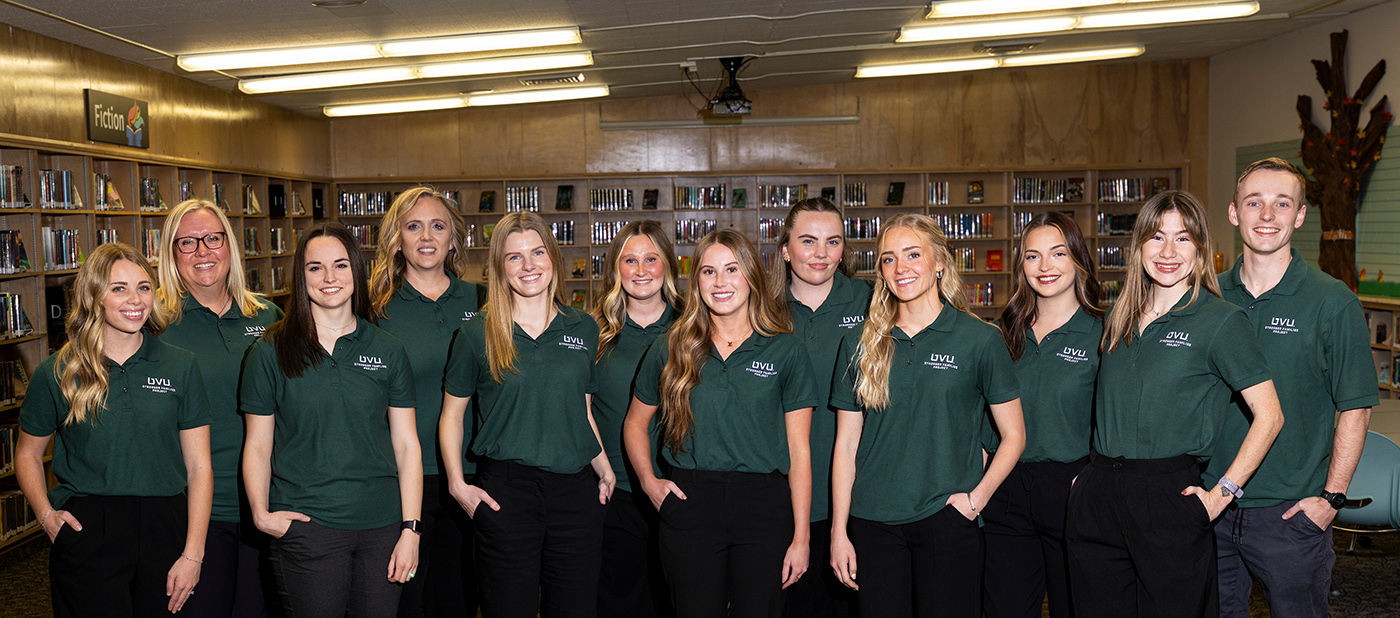
Allows students to collaborate with the community in a real-world context to increase their professional competence and confidence.
This family life education program is designed for Family Science majors/minors and should be considered first when applying to internships. This program allows students to collaborate with the community in a real-world context to increase their professional competence and confidence. Students in other Behavioral Science majors, such as Psychology and Sociology, and students from other universities in related majors living in Utah Valley may also find this internship beneficial as part of their capstone experiences! Talk to your advisor or apply below to see if this internship might be a good fit for you!
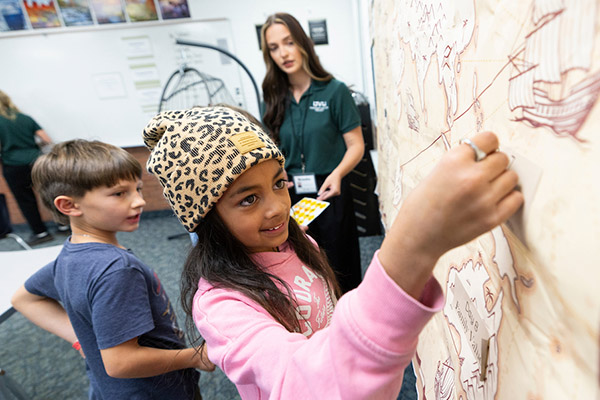
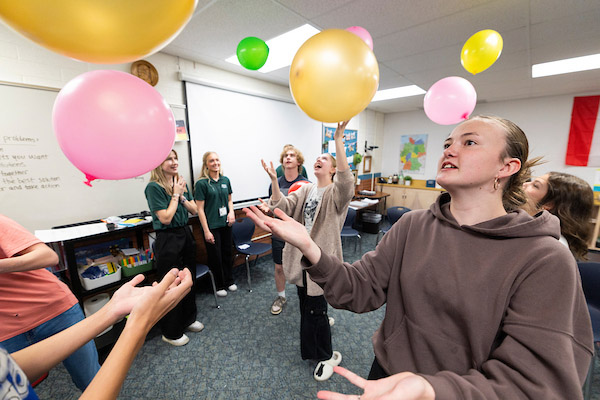
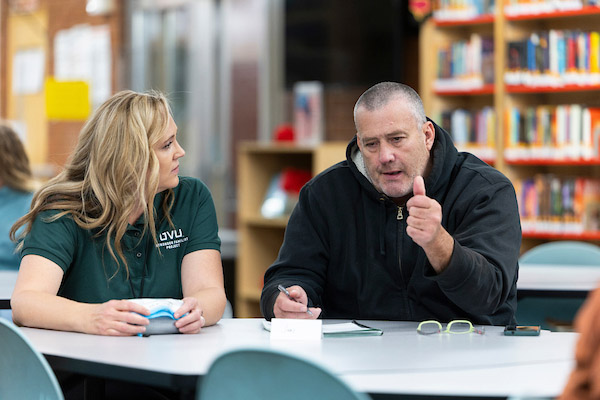
The program includes both a family class and individual classes based on participants' ages. Classes are taught by interns twice a week on Tuesdays and Thursdays evenings. Interns are on site from 6:00- 8:15 p.m. Site locations are in Utah County. Interns co-teach these classes using curriculum that is evidenced-based and are supervised by UVU faculty and staff. Interns also work one-on-one with assigned families to personalize the program, help the families set and achieve goals, and address lingering concerns and offer resources as needed.
Do I Qualify for this Internship?
UVU or Other Universities
Interest in Family Life Relationship Education
Live in Utah Valley
Family Science or Related Majors
Talk to your advisor or apply below to see if this internship might be a good fit for you!
Teaching family life education classes serve as the capstone experience for the Family Science major. The major is aligned with the Certified Family Life Educator credential offered by the National Council on Family Relations. Students develop knowledge in ten different content areas and achieve key student learning outcomes in preparation for this experience.

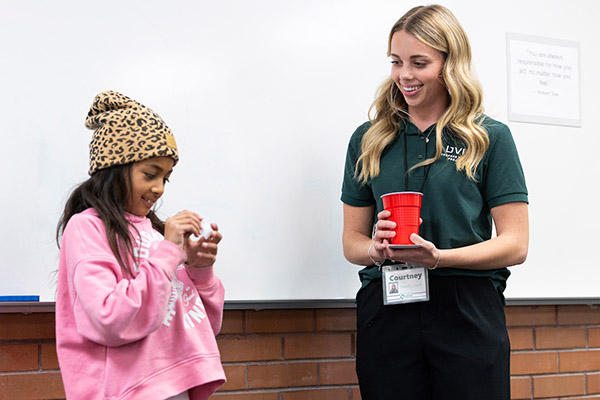
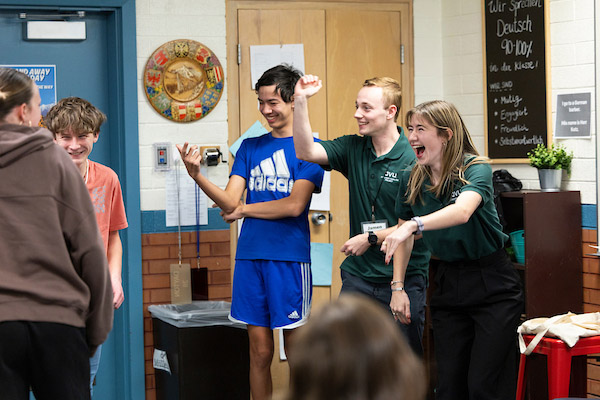
Prior to this internship, Family Science students complete FAMS 4500, Family Life Education Methods, and are recommended to complete either FAMS 3000, Social Work Practice I, or FAMS 3050, Clinical Skills for Helping Professions. In these classes, students complete many relevant assignments such as a literature review, needs assessment, lesson guide, fact sheet, even writing their own curriculum and practicing best teaching methods to a variety of audiences. However, this internship allows them to combine everything they have learned into a single, engaged, real-world environment. Students from other majors and universities will be paired with a Family Science student to co-facilitate a class and be trained and supervised every week to succeed in the field.
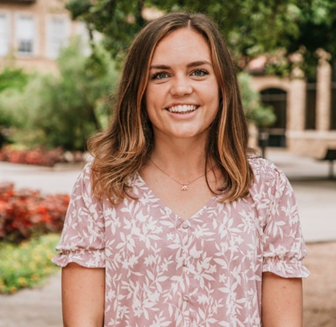
“The Stronger Families Project helped me grow so much, personally and professionally. I learned listening and creating win-win situations—things I now use every day as a couples and family therapist. I’m incredibly grateful for the Stronger Families Project. It truly shaped who I am.”
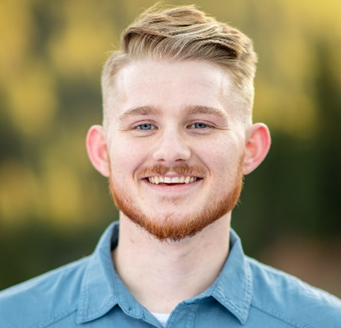
“The Stronger Families Project gave me the confidence to work with families—something I’ll carry with me forever. You don’t just learn theories; you apply them and see how real families grow when they’re given the tools to thrive. I heard powerful stories and witnessed real change.”

"My internship experience was transformative for me. I marvel at the capacity of this program to strengthen both families and interns simultaneously. It was a privilege to interact with both colleagues and families weekly, and to support each other through the lessons."
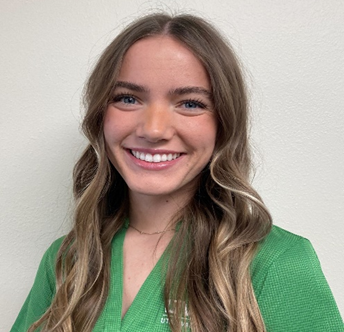
“One part of the Strong Families Project that has really impacted me was working with and educating families. This experience grew my desire to pursue graduate school and become a therapist.”
This is a special internship where you will have the opportunity to bring together everything you’ve learned and apply it into a single, engaged, real-world environment. Using an evidence-based, nationally recognized curriculum, you will teach both parents and children how to improve emotional patterns and enhance family interactions. Along the way, you’ll build essential pre-professional skills—including case management, goal setting and outcome measurement, advocacy, teamwork, collaboration, and marketing and recruitment. Regardless of your career path, this internship will help position you for success, strengthen your confidence, expand your competence, as you collaborate with the community you serve.
UVU Family Science students are required to successfully complete FAMS 4500 before participating in SFP. Some students may receive an exception and be allowed to take FAMS 4500 concurrently with the SFP Internship. It is preferred that students have also completed FAMS 3000 or3050 Clinical Skills for Helping Professions before participating in the internship.
It is preferable that student interns from other schools and programs have taken a family life education methods class, but it is not required.
Family Liaisons are assigned to work with individual families acting as advocates and mentors. As a Family Liaison you are responsible for making mid-weekly phone calls to your assigned families. This ongoing “coaching” helps the families establish and execute goals, allows you to check the family’s progress with homework, and encouraging their participation in the program.
Family Liaisons also teach individual classes with a co-coach. You may be assigned to function as a “Parent Class Coach” teaching the parent class, a “Teen Class Coach” teaching teenagers, a “Children’s Class Coach” teaching a children’s classes.As a UVU 3-credit intern, it is expected that you will spend approximately 8 hours per week (a minimum of 120 hours) actively participating in training and in-field work. For most UVU 3-credit interns as well as interns from other institutions, you will be assigned to teach 2 different nights, often a different class each night, to provide you with a variety of teaching experiences. It is also expected that 1-2 hours a week will be spent completing online assignments related to professional development. Credit hours vary for interns from other universities and you will need to coordinate with your academic advisor and the SFP Managing Director to ensure you receive the hours to earn academic credit.
There is a specific document you will receive called “Hourly Breakdown” that maps exactly how you will receive credit and is based on the successful completion of each of the required activities. Most of your hours are earned by preparing and teaching family life education classes, making mid-week phone calls, and completing weekly progress reports. Completing the required activities in their entirety, and within the designated timeframe, will ensure that you get the hours required to obtain internship credit.
If there are any changes to your schedule, or to the condition of your health, that may interfere with your accessibility or with the physical demand of the internship, please contact the SFP Managing Director immediately.
Early in the internship you will be given access to a digital folder with all curriculum for the program. It is a revised version of the Family Wellness program “Survival Skills for Healthy Families” curriculum from FAMS 4500: Family Life Education Methods. UVU students will be familiar with it and certified to teach it. Students from other universities who intern with the program will be provided the curriculum and will team-teach with a certified student.
These lessons are copyrighted and should not be shared or distributed to anyone. You will sign a disclosure agreement that indicates you understand that the lessons used in SFP are copyrighted and cannot be used for any other purpose other than what is associated with the UVU Stronger Families Project. At the end of the program, your access to the folder will be revoked.The first few weeks are a little hectic but keep contact with your site supervisor (SEC) and they will let you know what time you need to be at the site. Generally, for most interns, you need to be at your site by 6:00, dressed and ready to go.
Business casual with dark pants or skirt (black, dark brown or dark gray) no jeans or leggings. Pants or skirt need to be a solid color, no prints. You will wear SFP polo every week along with your nametag on the lanyard.

