Capitol Reef Field Station, in partnership with Capitol Reef National Park, promotes and supports engaged learning, environmental ethics, and research and creative work through the exploration of the Colorado Plateau.
Beyond the paved roads, 2.5 miles past the end of the aptly named Scenic Drive, our buildings sit atop a mesa in the heart of Capitol Reef National Park. Amidst unobstructed views of postcard-perfect scenery, one can hear the calming sounds of Pleasant Creek as they loft over historic pastures. The sun rises over the last mountain range in the continental United States to be mapped, the Henry Mountains, framed by towering sandstone cliffs. To the west lies Boulder Mountain, which supported small glaciers during the last ice age. Looking up, casual stargazers and serious astronomers alike appreciate the amazing night sky, for which Capitol Reef National Park recently received a Gold-Tier International Dark Sky designation. Our incredible location provides an unparalleled opportunity for place-based learning. Only 3.5 hours from UVU and the Wasatch Front, CRFS welcomes students and faculty from institutions of higher learning who seek to experience the natural and cultural legacies of the Colorado Plateau.
Loading Directory data....
The success of our mission is made possible through the partnership between UVU and Capitol Reef National Park. This unique partnership allows CRFS to provide its visitors with educational experiences that are as remarkable as the landscape in which they occur. CRFS is property of the National Park Service and is operated under the direction of UVU and the park in accordance with our General Agreement.
2024-2025 Annual Report
2024-05 Annual Report
2023-2024 Annual Report
2023-2024 Annual Report
2022-2023 Annual Report
2022-2023 Annual Report
2021-2022 Annual Report
2021-2022 Annual Report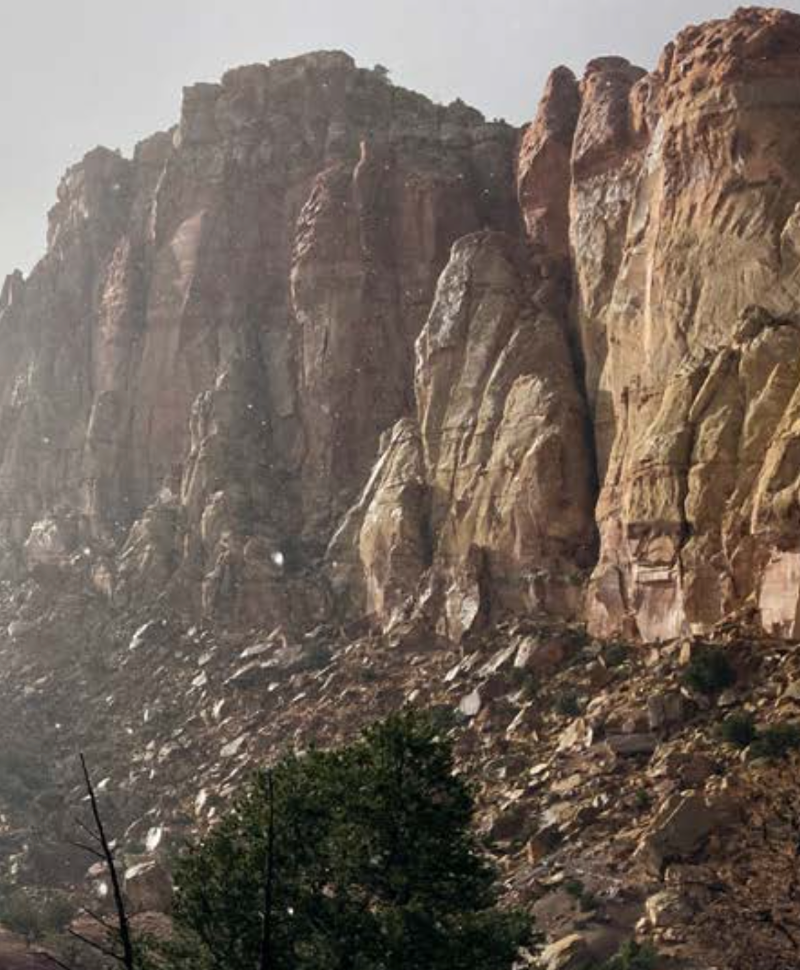
2020-2021 Annual Report
2020-2021 Annual Report
2019-2020 Annual Report
2019-2020 Annual Report
2018-2019 Annual Report
2018-2019 Annual Report
2017-2018 Annual Report
2017-2018 Annual Report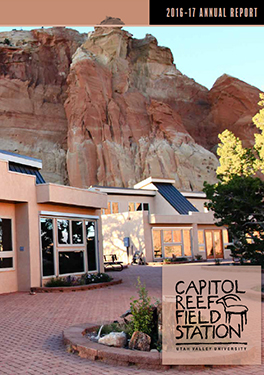
2016-2017 Annual Report
2016-2017 Annual Report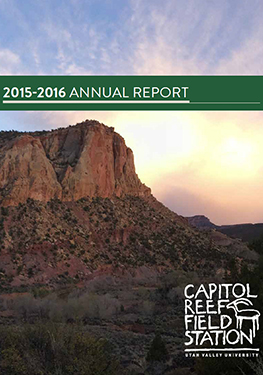
2015-2016 Annual Report
2015-2016 Annual Report
2014-2015 Annual Report
2014-2015 Annual Report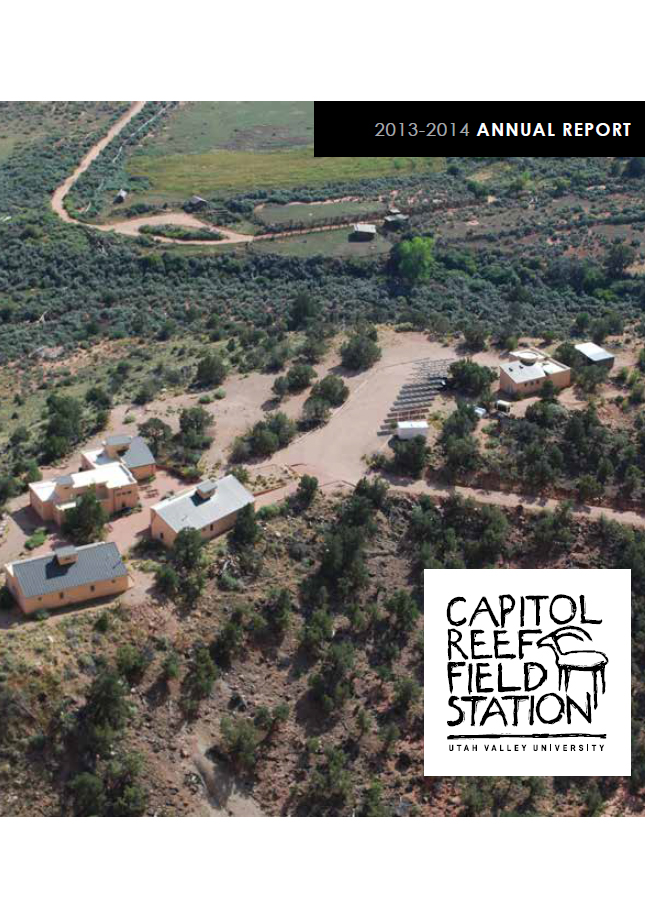
2013-2014 Annual Report
2013-2014 Annual Report
2012-2013 Annual Report
2012-2013 Annual Report
2011-2012 Annual Report
2011-2012 Annual Report
2010-2011 Annual Report
2010-2011 Annual ReportWhere Pleasant Creek breaks free of its narrow canyon walls upstream from the Capitol Reef Field Station and before it cuts through the Waterpocket Fold downstream, it nourishes a small oasis of tall grasses, wildflowers, shady cottonwoods, and aromatic sagebrush. Pleasant Creek has been sanctuary for a very long time. Over millennia, it has been used by late Paleo-Indian, Desert Archaic, Fremont, and Numic-speaking (Ute and Paiute) peoples...

