Russian Studies
Program Options & Courses

Meet Dr. White, who introduces UVU’s unique Russian Studies program and explains how Russian language skills and regional expertise can open doors to careers in diplomacy, national security, international business, and global affairs.
Design your own major by combining the Russian Studies minor with a second minor that fits your career goals. This flexible program lets you pair language and regional expertise with fields like national security, business, cybersecurity, or STEM—giving you a competitive edge for global careers.
Complete two years of Russian in just two semesters and reach intermediate proficiency faster than the traditional path. This immersive program builds real communication skills quickly, helping you move into advanced courses, study abroad, and career opportunities sooner.
Section 1: MTWR 10:00-10:50am CRN: 31578
Section 2: MTWR 12:00-12:50pm CRN: 41631
Offers an introduction to basic Russian. Uses various methods of instruction that focus on the development of functional competence in listening, speaking, reading, and writing. Provides comprehensive explanations of basic Russian grammar along with structural practice for building language accuracy.
MTWR 9:00-11:00am
CRN: Contact Dr. White
Complete 8 credit hours of Beginning Russian (I & II) during the fall semester while developing practical skills in speaking, listening, reading, and writing. Through immersive instruction and structured grammar practice, students build a strong foundation in Russian communication and language accuracy.
MTWR 12:00-12:50pm
CRN: 14885
Offers a continuation of basic Russian. Reviews and builds additional skills from 1000-level language courses. Uses various methods of instruction that focus on the development of functional competence in listening, speaking, reading, and writing. Introduces authentic texts and provides discussions based on reading. Provides comprehensive explanations of basic Russian grammar along with structural practice for building language accuracy.
MW: 1:00-2:15pm
CRN: 10617
Designed for non-native Russian speakers, who, as a result of foreign residency or similar exposure to the language, have attained a fairly good mastery of basic Russian. Targets major grammatical concepts with a focus on oral proficiency development. Overviews Russian culture and gives an introduction to Russian literature
MWF 11:00-11:50am
CRN: 41632
Teaches Russian business terminology and prepares students to take the Business Russian Proficiency Tests sponsored by the Russian Chamber of Commerce.
MTWR: 10:00-10:50am
CRN: 23912
Offers novice Russian speakers opportunities to enhance their speaking proficiency in the target language by focusing on oral verbal production. Teaches how to improve authentic pronunciation, reduce errors in authenticity of language structure, generate thought in the target language spontaneously as a substitute for translation, and sharpen listening comprehension for natural conversational flow.
MTWR: 11:00-11:50am
CRN: 11587
Offers a continuation of basic Russian. Uses various methods of instruction that focus on the development of functional competence in listening, speaking, reading, and writing. Provides comprehensive explanations of basic Russian grammar along with structural practice for building language accuracy.
F 11:00-11:50am
CRN: 41701
Offers novice Russian speakers opportunities to enhance their speaking proficiency in the target language by focusing on oral verbal production. Teaches how to improve authentic pronunciation, reduce errors in authenticity of language structure, generate thought in the target language spontaneously as a substitute for translation, and sharpen listening comprehension for natural conversational flow.
MTWR 9:00-11:00am
CRN: Contact Dr. White
Complete 8 credit hours of Intermediate Russian (I & II) while strengthening practical skills in speaking, listening, reading, and writing. Through immersive instruction, authentic Russian texts, discussion-based learning, and focused grammar review, students build greater fluency, confidence, and accuracy in real-world communication.
MTWR 11:00-11:50am CRN: 15197
Completes the study of basic Russian. Reviews and builds further skills learned in previous courses. Uses various methods of instruction focusing on the development of interpretive, interpersonal, presentational, and intercultural communicative competence. Includes comprehensive explanations of basic Russian grammar along with structural practice for building language accuracy. Explores socio-cultural aspects of Russian-speaking society through diverse language materials and activities.
F 10:00-10:50am CRN: TBD
Offers lower division / novice Russian speakers opportunities to enhance their speaking proficiency in the target language by focusing on oral verbal production. Teaches how to improve authentic pronunciation, reduce errors in authenticity of language structure, generate thought in the target language spontaneously as a substitute for translation, sharpen listening comprehension, and develop conversational strategies such as circumlocution and managing a conversation with useful expressions for starting a conversation, gaining time to think, helping the other speaker, seeking agreement, etc.

MWF 11:00-11:50am CRN: TBD
Introduces translation as a discipline. Develops the special skills needed for translating and interpreting, and to achieve mastery of the contemporary spoken and written language. Discusses basic theory, principles and tools of translation. Employs the tools of translation: dictionaries, glossaries, grammars and computerized resources. Focuses on the extensive practice of translation and interpretation from English to Russian and from Russian to English.
Online; Does Not Meet CRN: 37650
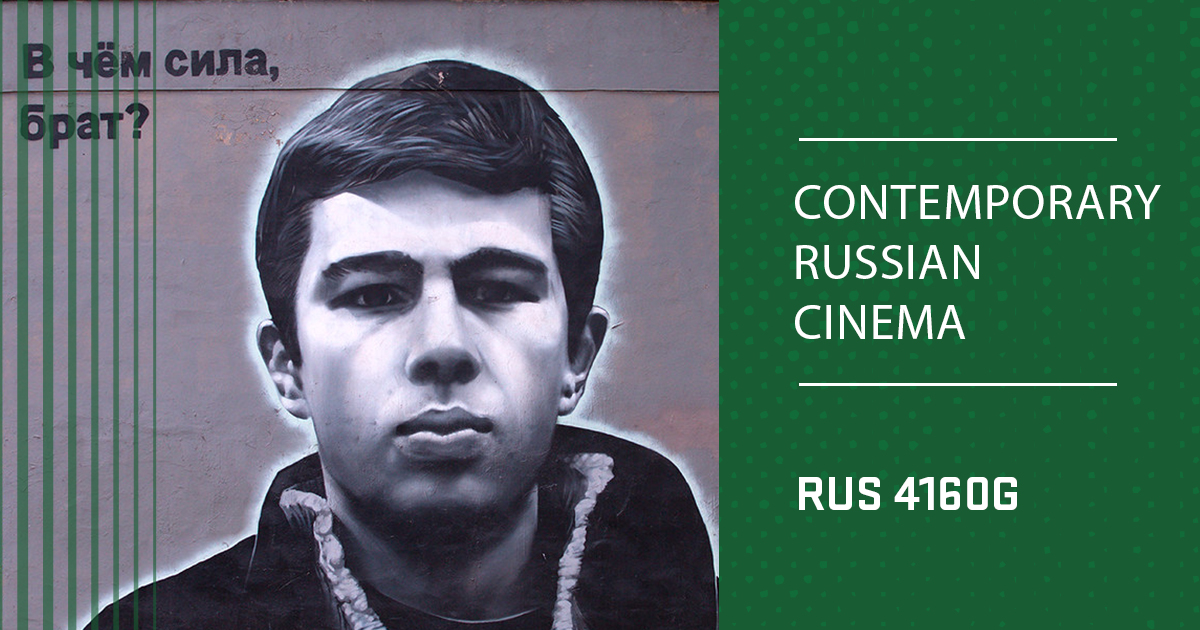
Examines visual media with special attention paid to the embedded cultural discourse that can only be understood with references to Russian history, language, and cultural identity. Explores Russia's depiction of and relationship with its past, present and future. Explores certain questions about visual media in contemporary Russian society: the function of cinema in the new Russia; how cinema offers what reality cannot -- a goal for people to live up to at a time when politics and ideology fail to provide direction; how cinema articulates the reality of contemporary Russian life.
MW 2:30pm - 3:45pm
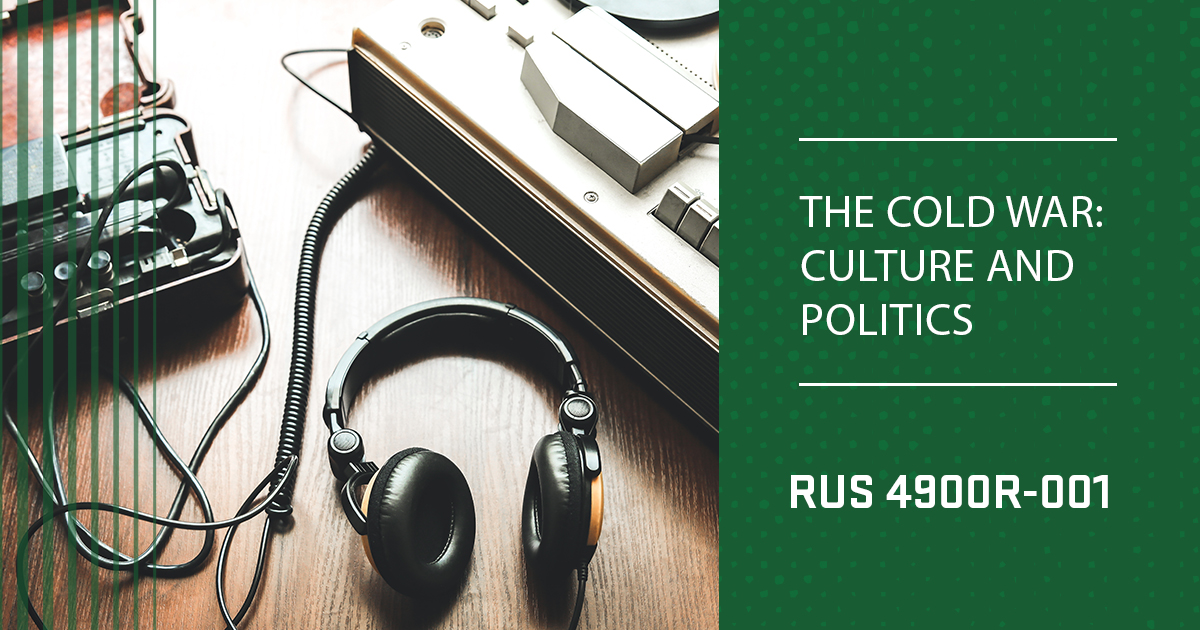
Examines the confrontational environment of the Cold War that influenced geopolitics for nearly five decades. Explores the Cold War as a global process – its politics, history and cultural impact, facilitated by the confrontation between capitalism and communism. Investigates the origins of the conflict, the formation of opposing blocs, and the relationship between the center and the global periphery of the conflict.

TR 1pm-2:15pm
Introduces contemporary lifestyles in the post-Soviet space through examining Russian-language films of different genres. Develops the ability to analyze films by investigating their plot, structure, conflicts and main characters. Builds on intermediate and advanced level skills including interpretive listening, reading, speaking, and writing while expanding cultural competence. Strengthens skills in various modes of discourse such as narration, description, comparison, explanation, and summary through task-based, inquiry-based, and project-based activities.

The Russian Studies Program at UVU allowed me to transform a niche personal interest into an academic focus. I was awarded a scholarship to complete the Accelerated Russian Language Program, which enabled me to gain four semesters of language instruction in just two, fast tracking my BA language requirement. From there, I expanded my studies through Russian history and the Cold War with two outstanding professors and deepened my cultural understanding through courses such as History of Russian Film, Contemporary Russian Cinema, and The Cold War: Culture and Politics. I was able to explore my interest in Political Science through a unique Russian lens with classes like Post-Soviet Politics and Russia Under Putin. The program provided both a strong foundation and flexibility to turn my curiosity into a clear career path. I am deeply grateful for my experience at UVU and for the mentors and professors who supported and guided me along the way.

The Russian Studies Program has been an incredibly formative part of my time at UVU. Through courses and opportunities like the Accelerated Russian Language Program, I developed strong language skills and gained meaningful cultural experiences. I was able to travel to Latvia, connect with Russian-speaking communities, and create lasting memories. A major highlight was traveling to New York City to visit the United Nations and meet with representatives of former Soviet Republics, which gave me valuable insight into global issues and diplomacy. I am deeply grateful for how the program has prepared me for my future and enriched my education.

